Maltese Food Guide for Tourists: What to Eat Beyond Hotel Menus
Maltese cuisine doesn't get the attention it deserves. Sitting at the crossroads of Europe, North Africa, and the Middle East, Malta has absorbed centuries of Arab, Sicilian, Spanish, French, and British culinary influence and distilled it all into something entirely its own—hearty, coastal, flavour-driven food that costs almost nothing when you know where to find it. Hotel menus offer a pale version. Here's the real one.
Why Maltese Food Shines
Malta spent centuries as the Mediterranean's most fought-over strategic island, and every occupying power left something behind in the kitchen. The Arabs brought spices, citrus, and pastry techniques. The Sicilians brought pasta and ricotta. The British brought pies, marmalade, and an appreciation for the kind of hearty baked dish that survives being kept warm for hours. The result is a cuisine that's genuinely distinct from anything else in the Mediterranean and almost entirely absent from international food culture—which means most tourists land with zero knowledge of what to order and end up eating generic hotel food for a week.
"That stops here."
Maltese Culinary Icons
Pastizzi: The Snack of Malta
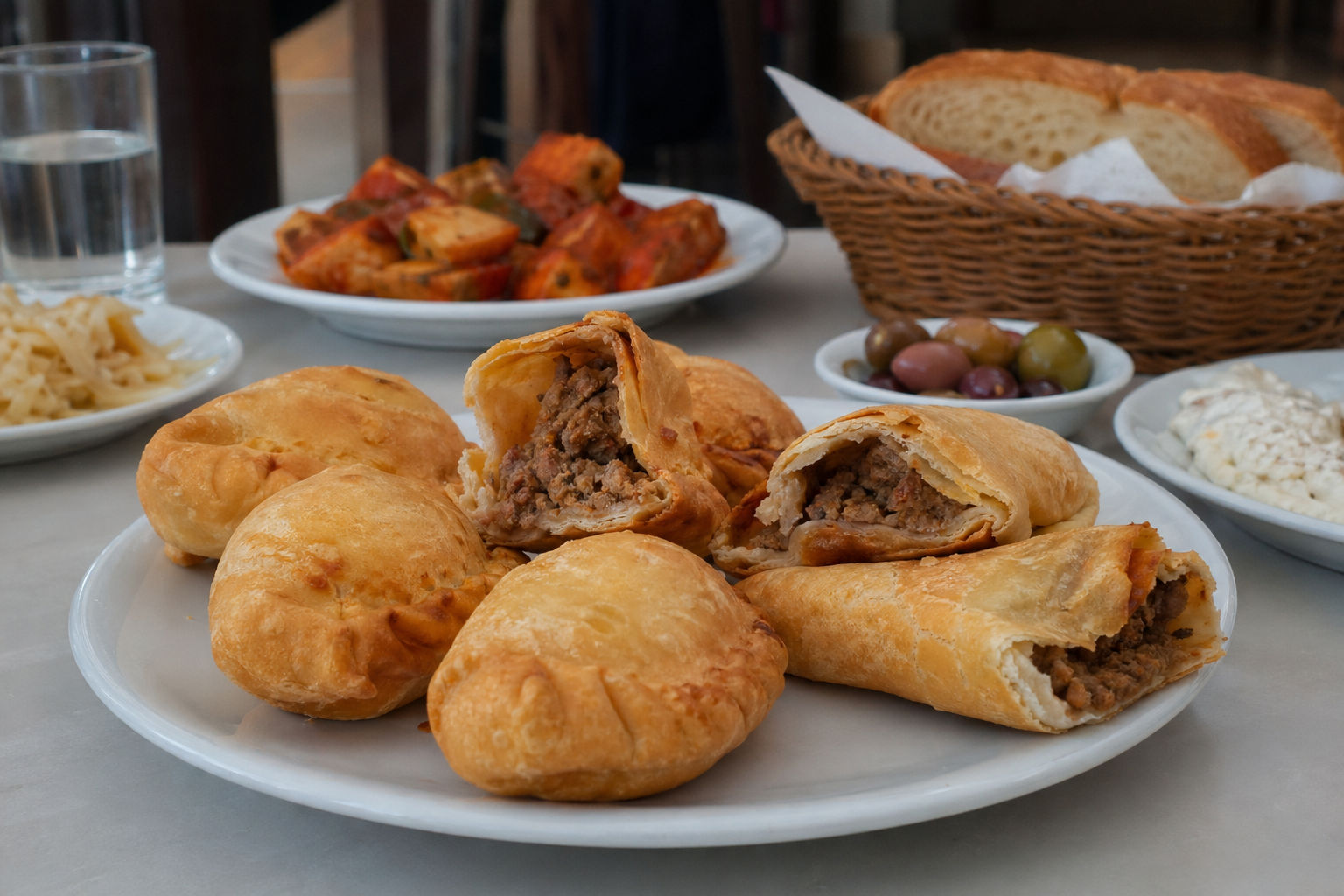
If you only eat one thing in Malta, make it a pastizz. This small, flaky diamond-shaped or round pastry filled with either ricotta cheese (tal-irkotta) or curried mushy peas (tal-piżelli) is the true heartbeat of Maltese food culture. It's eaten for breakfast, mid-morning, as an afternoon snack, and after a night out. It costs between €0.50 and €1. It is one of the most satisfying snacks in the entire Mediterranean.
"The pastry itself is the skill—layers of flaky dough that shatter at first bite, slightly greasy in exactly the right way."
Where to find the best: Crystal Palace Bar in Rabat (just outside Mdina's main gate) is widely considered the finest pastizerria on the island and permanently has a queue of locals. In Valletta, Is-Serkin on Merchants Street is another institution. In truth, any pastizerria with locals inside is the right choice.
Ftira: The Maltese Sandwich
Ftira is Malta's great underrated contribution to world bread culture. It's a thick, crusty Maltese sourdough roll with a distinctive irregular shape, filled with tuna, capers, olives, sun-dried tomatoes, and gbejniet (local sheep's cheese) in any combination the baker or customer chooses. No butter. No lettuce. No mayonnaise. Just excellent bread, excellent olive oil, and excellent Mediterranean toppings.
The full Maltese ftira at Nenu the Artisan Baker in Valletta is often described as the definitive version—a thick flatbread round topped with Maltese sausage, gbejniet, local tomatoes, and capers, cut into slices and enough for two people at around €12-13. It sits somewhere between a pizza and an open sandwich and is one of the great affordable meals on the island.
Hobz biz-Zejt (bread with oil) is the simpler, street-level version—a chunk of Maltese sourdough rubbed with fresh tomato, drizzled with local olive oil, and topped with whatever combination of tuna, olives, and capers you choose. It costs €2-4 and is sold at bakeries and traditional bars across the island.
Stuffat tal-Fenek: The National Dish
Rabbit is to Malta what lamb is to New Zealand or beef is to Argentina: the national dish, the Sunday tradition, and the cultural touchstone that tells you the most about how Maltese people relate to their food. Stuffat tal-fenek is rabbit slow-cooked in a rich sauce of red wine, tomatoes, garlic, herbs, and spices until the meat falls off the bone and the sauce has reduced to something deeply savoury and complex.
"Rabbit stew is not on most hotel menus. It is on virtually every traditional Maltese restaurant menu."
A traditional Maltese fenkata begins with spaghetti served in rabbit sauce (spaghetti tal-fenek), followed by the rabbit itself as the main course—fried (fenek moqli) or stewed—with bread to mop the pan clean. The village of Mgarr in northern Malta is historically considered the home of the fenkata, and several restaurants there have been serving the dish in the same way for generations.
Aljotta: The Fish Soup
Aljotta is Malta's most traditional fish soup and one of the great overlooked Mediterranean broths. Originally eaten during Lent when Catholic doctrine prohibited meat, it's built from a base of fried garlic, onion, and tomato, with fish added whole (including the head for extra depth), flavoured with bay leaves, mint, lemon, and parsley. It's light, briny, and aromatic in equal measure—the kind of soup that tastes like the sea and the Maltese countryside at the same time.
Order it as a starter before any fish main and you have the most authentically Maltese meal sequence available on most traditional restaurant menus.
Torta tal-Lampuki: The Seasonal Delight
Lampuki is a mahi-mahi-like fish (also called dolphin fish) caught in Maltese waters exclusively from August through November, and torta tal-lampuki—lampuki pie—is the seasonal dish that Maltese people wait for all year. The pie is generously filled with lampuki, spinach, peas, tomatoes, olives, capers, and mint, encased in a puff pastry crust that flakes at the first bite. It's only available for a few months per year, which makes ordering it when you find it an act of genuine seasonal eating rather than tourist convenience.
If your visit falls outside lampuki season, torta tat-tonn (tuna pie) is the year-round alternative and uses the same technique and pastry format.
Bragioli: The Overlooked Dish
Bragioli are beef olives—thin slices of sirloin wrapped around a filling of bacon, hard-boiled egg, parsley, and breadcrumbs, then slow-cooked in a red wine sauce until the beef is so tender it melts. The name is Italian but the preparation is distinctly Maltese in its patience and economy—this is peasant food made elegant by technique and time rather than expensive ingredients. It's typically served with crusty Maltese bread and the cooking sauce alongside, and it is a genuinely impressive dish for the price (around €12-16 as a main).
Imqarrun il-Forn: Malta's Baked Pasta
Malta's proximity to Sicily shows most clearly in imqarrun il-forn, a deeply comforting baked pasta dish using penne or rigatoni coated in a rich meat and tomato sauce seasoned with garlic, cumin, paprika, oregano, bay leaves, and curry powder, finished with eggs stirred through for richness before baking. It's sold by weight at pastizzerias and family restaurants—ordered as a slice rather than from a menu, wrapped in paper, and eaten at the counter or on a bench outside.
"Ask for it by name."
It is exactly the kind of dish that hotel restaurant menus never include and local bakeries always have.
Bigilla: The Ubiquitous Dip
Bigilla is a thick, earthy dip made from mashed tic beans (a small, dark local variety of broad bean) with olive oil, garlic, herbs, chilli, capers, and lemon. It's served as a spread with galletti (thin, round Maltese crackers), as part of a traditional Maltese platter, or alongside drinks at village bars. The flavour is intensely savoury and slightly bitter in the way good legume dishes should be, and it's the kind of thing you eat two servings of before realising you've finished the bread.
Gbejniet: Gozo's Cheeselets
Gbejniet (pronounced gben-YEE-net) are small rounds of soft sheep's or goat's milk cheese produced on Gozo, eaten fresh, dried, or peppered. The fresh version is mild and creamy, the dried version is firm and salty, the peppered version is dried and rolled in coarsely cracked black pepper for a sharp, assertive finish. They appear on traditional Maltese platters, inside ftira, alongside bigilla, and crumbled over salads. Gozo's version is more authentic than anything produced on the main island—if you make it to Gozo, buy them from a farm stall rather than a supermarket.
Kapunata: The Maltese Stew
A close cousin of the Sicilian caponata and the French ratatouille, Maltese kapunata is a rich stew of aubergine, courgette, tomatoes, olives, capers, and sweet peppers slow-cooked in olive oil. It's served warm or at room temperature as a side dish or starter, scooped onto bread, and eaten with absolutely everything. It is one of the most versatile and genuinely delicious preparations in the Maltese culinary repertoire and a natural entry point for vegetarian travelers who want authentic local food rather than a salad.
Desserts and Drinks
Imqaret: Date Pastry
Imqaret are diamond-shaped pastries filled with a rich date paste spiced with orange zest, cloves, anise, and bay leaves, deep-fried until golden and crispy on the outside, yielding and aromatic inside. They're sold from street stalls around Valletta and at village festas for €0.50-1 each and are among the most obviously Arab-influenced items in the Maltese food canon. The date filling carries a warmth and depth that's unexpectedly sophisticated for something you eat from paper in the street.
Qaghaq tal-Ghasel: Honey Rings
Qaghaq tal-ghasel are ring-shaped pastries filled with a dark, sticky mixture of treacle, honey, orange and lemon zest, cloves, and mixed spice. They're sold year-round but peak at Christmas, and their aromatic, slightly sticky filling in a thin pastry shell is a direct line back to medieval Maltese confectionery traditions. Find them at any traditional bakery or sweet shop.
Kinnie: Malta's Signature Drink
Kinnie is Malta's own soft drink and it is genuinely unique. Made from bitter oranges and aromatic herbs, it was created in 1952 and has been the island's national soft drink ever since. The flavour is initially bitter, with a citrus and herbal complexity that makes it an acquired taste for about thirty seconds before it becomes the only thing you want on a hot afternoon. Sold in glass bottles across the island, it pairs perfectly with pastizzi, and the zero-calorie version (Kinnie Spritz) is widely available.
Where to Eat: Top Spots
Valletta:
Nenu the Artisan Baker—the definitive destination for traditional ftira, pastizzi, and Maltese platters; consistently recommended by locals and visitors alike
Rubino—one of Valletta's oldest restaurants, serving traditional Maltese cooking including bragioli, stuffat tal-fenek, and torta tal-lampuki in season; book ahead
Valletta street food—the street food vendors along Republic Street and around the market offer pastizzi, imqaret, and hobz biz-zejt for the lowest prices and freshest turnaround
Marsaxlokk:
The harbour village's Sunday market restaurants serve the freshest fish on the island; order aljotta or grilled lampuki (in season) and eat looking at the colourful luzzu fishing boats
Rabat (near Mdina):
Crystal Palace Bar—the legendary pastizerria just outside Mdina's main gate; the standard by which all other pastizzi on the island are measured
Gozo:
Village restaurants in Victoria, Marsalforn, and Xlendi serve the most authentic Gozitan food—gbejniet, rabbit, and local ftira with a distinctly different texture from the Malta version
Edible Souvenirs
Kinnie bottles—the glass bottle version is a genuine piece of Maltese design history and the drink travels well
Bigilla paste—vacuum-packed versions are available at supermarkets and markets; genuinely good on toast back home
Gbejniet peppered dried cheeselets—the peppered dried version travels without refrigeration and makes an excellent cheese board addition
Galletti crackers—Malta's thin round crackers are sold in large bags at supermarkets for €1-2 and pair with any cheese
Maltese olive oil—local production is small but excellent; farm-pressed oils from Gozo are particularly prized
FAQ
What is the national dish of Malta?
Stuffat tal-fenek—rabbit stew slow-cooked in red wine, tomatoes, garlic, and herbs—is widely considered Malta's national dish and is central to traditional Maltese family and community food culture.
What is a pastizz and where can I get the best one in Malta?
A pastizz is a small, flaky pastry filled with either ricotta cheese or curried mushy peas, costing €0.50 to €1. Crystal Palace Bar in Rabat and Is-Serkin in Valletta are widely considered the best sources on the island.
Is Maltese food vegetarian-friendly?
More than most visitors expect. Kapunata, bigilla, gbejniet, pastizzi tal-irkotta, ftira without tuna, aljotta (fish but not meat), and most desserts are all vegetarian or vegetarian-adaptable. The cuisine is not naturally vegetarian-forward, but the street food and mezze culture makes plant-based eating very workable.
What is Kinnie and is it worth trying?
Kinnie is Malta's own bitter orange and herb soft drink, created in 1952 and beloved by Maltese people of all ages. It tastes like nothing else and is genuinely worth trying—initially bitter, then complex and refreshing. It's available everywhere on the island for €1-2.
When is lampuki season in Malta?
Lampuki (mahi-mahi) is caught in Maltese waters from August through November and torta tal-lampuki (lampuki pie) is only available during this window. If you visit in this period, ordering it is a genuine seasonal eating experience unique to Malta.
What is the cheapest way to eat well in Malta?
Pastizzerias and traditional bakeries are the answer. A pastizz costs under €1, imqarrun il-forn sold by weight runs €2-3 per serving, and a full hobz biz-zejt costs €2-4. Eat breakfast and lunch from pastizzerias and bakeries and save your dinner budget for a proper sit-down restaurant—this is how locals eat and it delivers the best food on the island at the lowest possible cost.
Eat Malta Like You Live There
The hotel menu version of Maltese cuisine is a sketch of the real thing. Pastizzi should be eaten warm from the tray, not cold from a buffet chafing dish. Rabbit stew should be ordered in a village restaurant, not from a tourist terrace. Kinnie should be drunk cold from a glass bottle in the afternoon sun. Ftira should be eaten standing up, wrapped in paper, outside a bakery that's been baking the same bread for forty years. The food culture of Malta is specific, rooted, and extraordinary—and every bit of it is available to any visitor willing to walk off the hotel strip for ten minutes and follow the smell of something genuinely good.
Explore more Malta travel guides on IsleRush, including our budget travel guide, Gozo comparison, and summer events calendar.