Malta for Digital Nomads: Visas, WiFi, and Where to Work in 2026
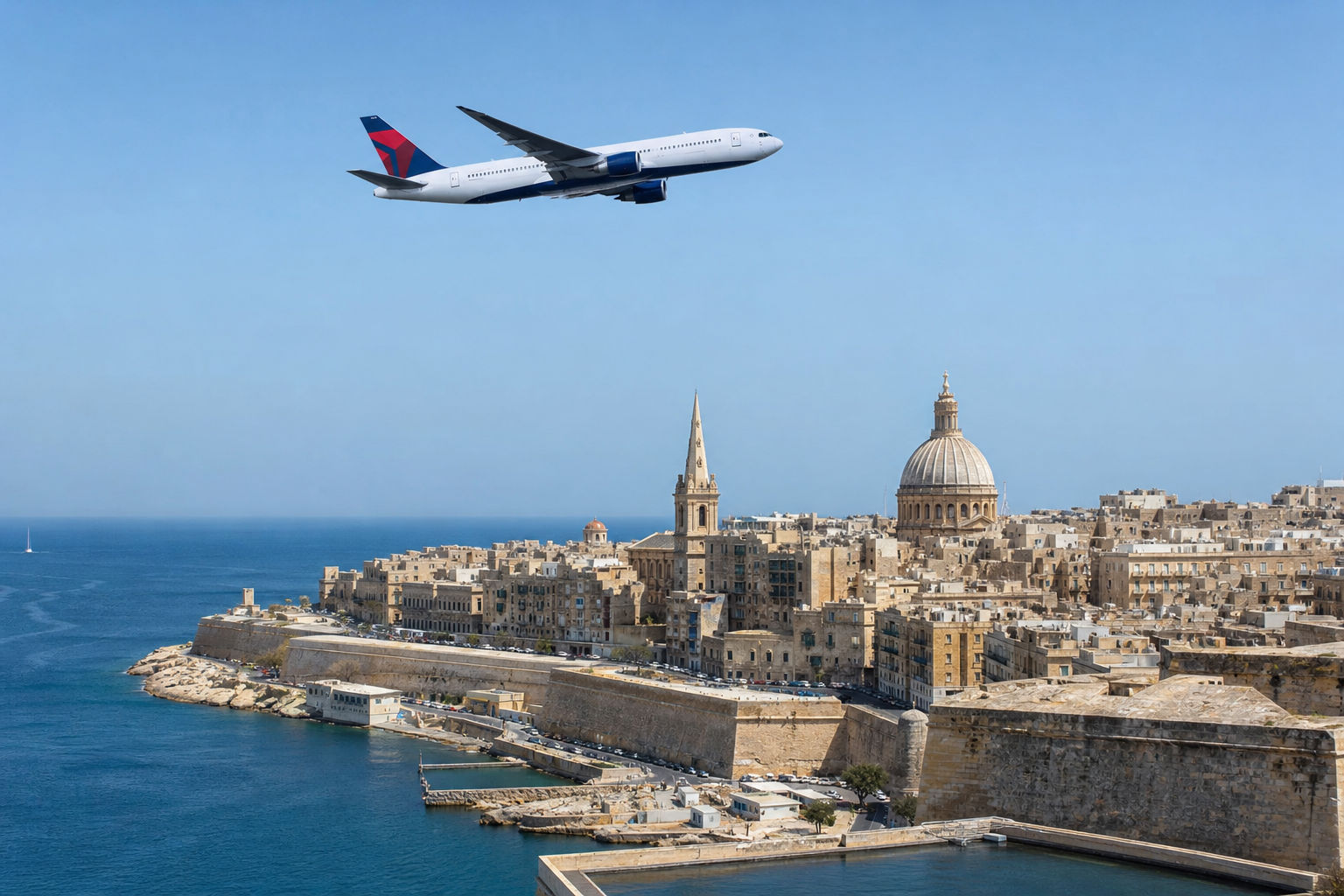
Something shifted in Malta's relationship with remote workers in 2026. Delta Air Lines just announced the first-ever direct flights between New York and Malta, launching three times a week from June through October. It's a historic first for the island and a signal that Malta is moving firmly onto the North American travel radar. Combined with an established Nomad Residence Permit, a 10% flat tax rate for permit holders, average internet speeds of 137 Mbps, and a Mediterranean quality of life at roughly 30% less than living in the US, the timing to consider Malta as a remote work base has never been better.
Here's everything you need to know to actually make it work.
Why Malta Makes Sense
Malta punches well above its weight for a country of just 500,000 people covering 316 square kilometres. It's an EU member state with English as an official language — the only one in the Mediterranean — which eliminates the language barrier that complicates daily life in Spain, Italy, or Portugal. The legal and banking systems are English-based. The healthcare system ranks among the top 10 in the EU. And the island sits at the crossroads of Europe, North Africa, and the Middle East, making it one of the most strategically connected small countries on earth.
"Malta punches well above its weight for a country of just 500,000 people."
For digital nomads specifically, the combination of reliable infrastructure, year-round Mediterranean climate (over 300 sunny days annually), a growing tech and fintech ecosystem, and an official government program designed explicitly for remote workers makes Malta one of the most compelling — and most underrated — nomad destinations in Europe.
Nomad Residence Permit
Malta's Nomad Residence Permit is the official legal pathway for non-EU remote workers who want to live and work from the island. Here's the full picture:
Who Is Eligible
- Must be 18 or older
- Must work remotely using telecommunications technology
- Must be employed by a company registered outside Malta, a director of a foreign company, or a freelancer/self-employed contractor serving clients outside Malta
- Must have a clean criminal record and no pending civil or criminal proceedings
- Must not have previously had a Schengen visa denied
The Income Requirement
This is where most guides get vague. The official income threshold is a minimum of €3,500 per month gross, or €42,000 annually. Only income from active professional work qualifies — dividends, investment returns, and passive income do not count toward the threshold. Bank statements from the previous three months demonstrating consistent earnings are the standard way to prove eligibility.
What the Permit Gives You
- Legal residency in Malta for up to one year, renewable for up to four years total
- Freedom to travel within the Schengen Area for up to 90 days in any 180-day period
- A flat 10% income tax rate on foreign-sourced income
- The right to bring immediate family members and dependants under the same permit
- You must spend a minimum of five months per year in Malta to maintain permit validity
Application Documents Required
- Completed application form
- Valid passport with at least six months remaining validity
- Proof of remote employment or freelance contracts
- Bank statements confirming minimum income threshold
- Criminal background check from your country of residence
- Recent passport photographs
Applications are submitted through the Residency Malta Agency (nomad.residencymalta.gov.mt).
Internet and WiFi: The Real Picture
Reliable, fast internet is non-negotiable for remote work, and Malta genuinely delivers. The island's average internet speed sits at 137.15 Mbps, and home fiber connections through providers like Melita reach speeds up to 2,500 Mbps — making it one of the best-connected small countries in Europe.
Key providers and what they offer:
- Melita — the island's leading fiber internet provider, offering plans from 100 Mbps to 2,500 Mbps; home packages start at around €30-40 per month for standard fiber
- GO Malta — the main competitor to Melita, with similarly fast fiber packages covering most of the island
- Mobile 4G/5G — both Melita and GO operate 4G coverage across the entire island with strong 5G rollout in urban areas; SIM cards are cheap and data is plentiful for €10-20 per month
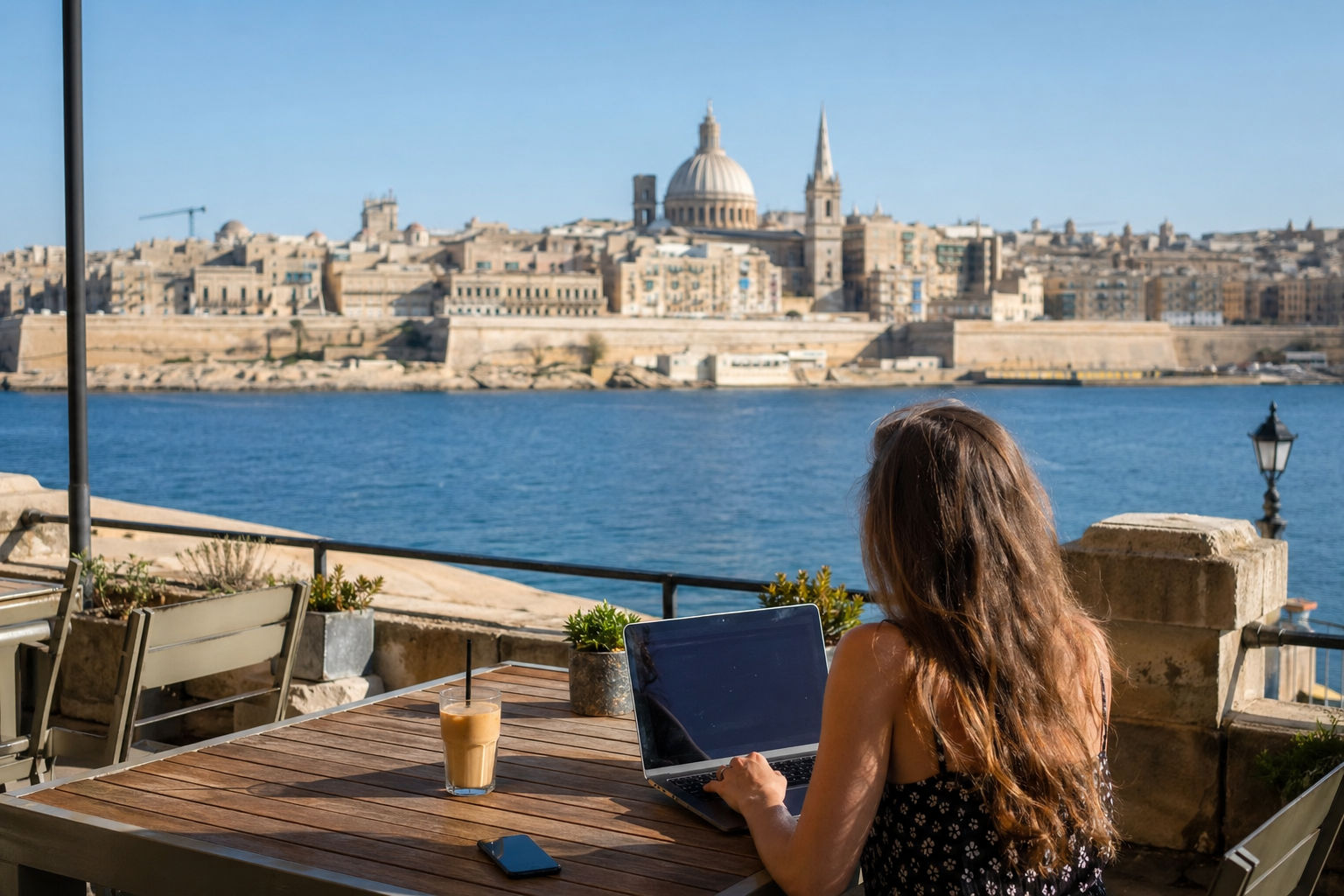
In practical terms: cafes in Valletta, Sliema, and St. Julian's reliably offer 50-100 Mbps WiFi. Coworking spaces typically provide dedicated gigabit connections. The main frustration for remote workers isn't speed — it's the occasional power outage during summer electrical storms, which happen a handful of times per year.
Where to Work
Valletta — Historic Atmosphere
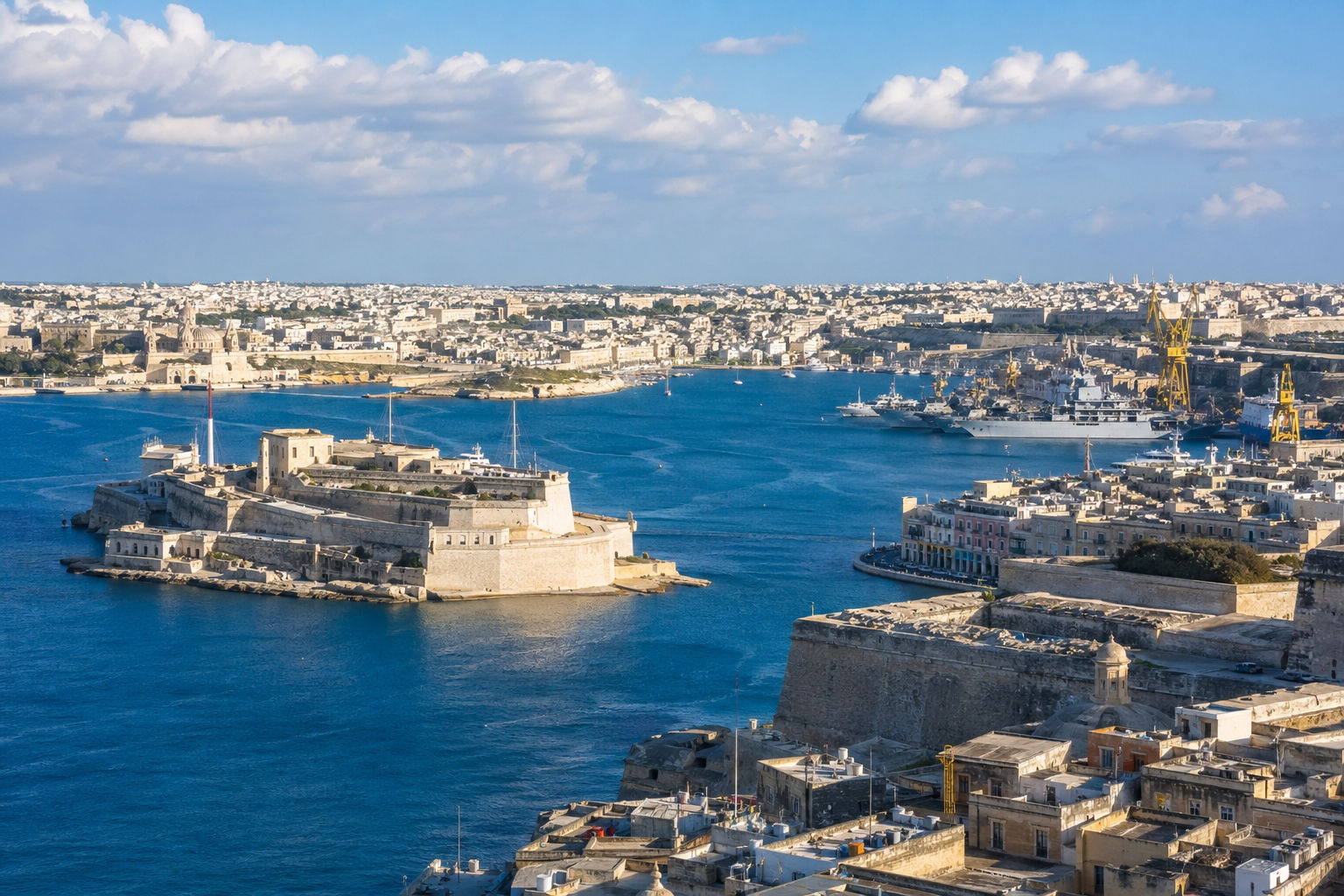
Malta's UNESCO-listed capital is home to the Valletta Design Cluster, a creative coworking hub built inside a restored historic building in the heart of the old city. It's particularly popular with designers, writers, and creative freelancers who want to work surrounded by 500 years of Baroque architecture. The neighbourhood has an excellent cafe scene along Republic Street and Merchants Street, with most cafes offering reliable WiFi.
Best for: creatives, cultural immersion, solo nomads
Sliema — The Most Practical Base
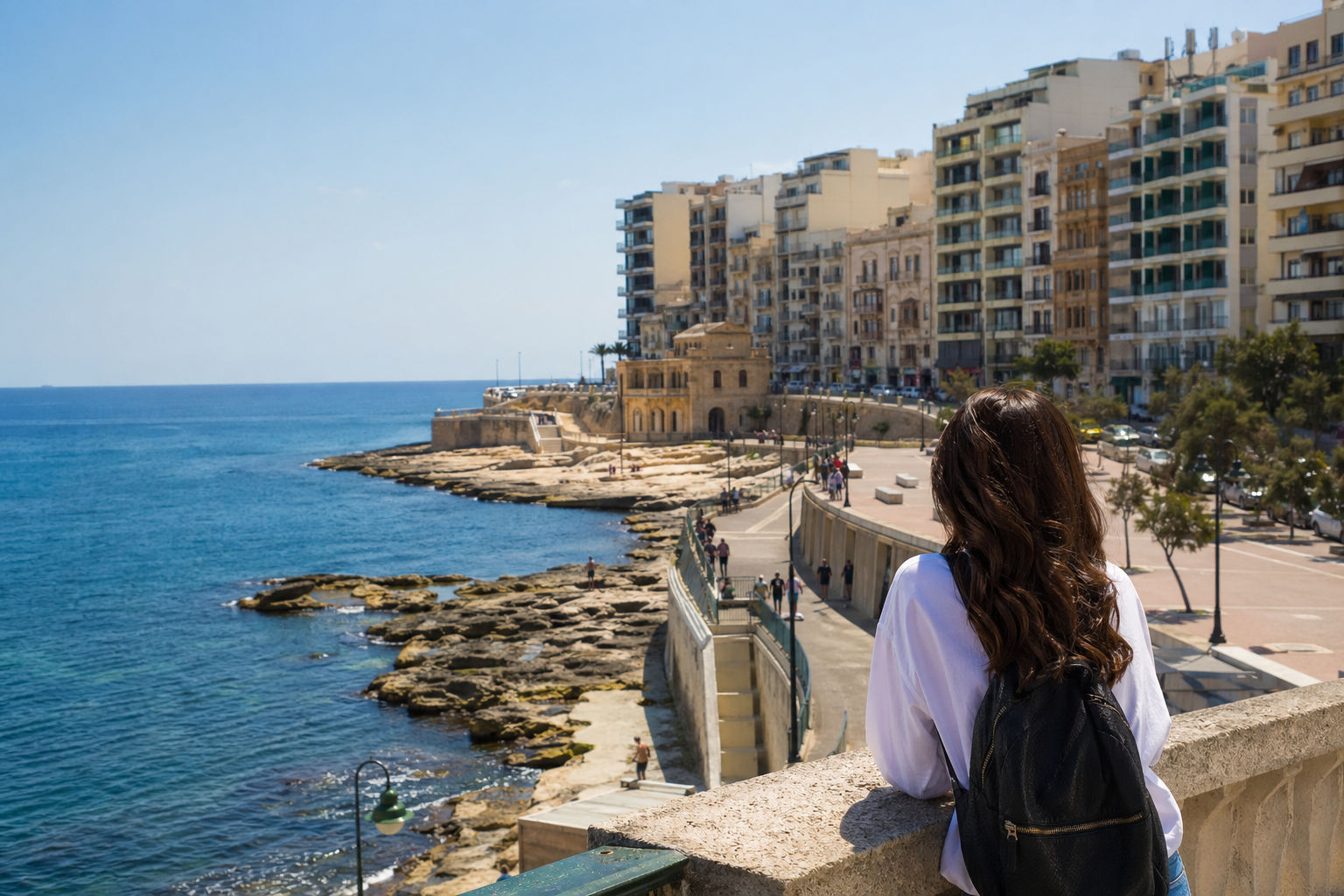
Sliema is widely considered the most practical neighbourhood for digital nomads relocating to Malta. It has the highest concentration of coworking spaces, the best range of apartments for medium to long-term rental, an established expat community, and the seafront Promenade for lunchtime walks. The area is efficiently connected to Valletta by ferry (6 minutes) and bus, and most of Malta's key amenities are within walking distance.
Best for: all nomad types, particularly those relocating for three months or more
St. Julian's — The Social Hub
St. Julian's is where Malta's tech, iGaming, and fintech industries concentrate, and the social infrastructure reflects that. Spinola Bay is one of the most photogenic spots on the island and surrounded by cafes and co-working options. Paceville (St. Julian's nightlife district) is nearby for evenings — it's walking distance from most work spaces rather than a taxi ride away.
Best for: tech workers, social nomads, anyone who wants the busiest after-work scene
Gzira — The Emerging Neighbourhood
Gzira sits between Sliema and Msida and has become increasingly popular with nomads looking for lower rents than Sliema with the same central location. The cafe scene is developing fast, coworking options are growing, and the Manoel Island area offers a quieter waterfront alternative to the Sliema promenade.
Best for: budget-conscious nomads, longer-stay remote workers
Best Coworking Spaces
- SOHO Office Space — the most established coworking brand on the island with three locations: The Strand (Gzira), Savoy Gardens, and St. Julian's; day passes from €30, monthly dedicated desk from €325, private office from €600
- Valletta Design Cluster — creative coworking in the heart of the capital; ideal for designers, artists, and freelancers; booking through the Cluster's official website
- Mindo Coworking (Qormi) — a premium space outside the main tourist areas, popular with local startups and tech workers who want a quieter working environment
- Evolve CoLiving (Sliema) — coliving with coworking built in, designed specifically for nomads who want a community from day one; monthly packages include accommodation and workspace combined
Cost of Living: Month by Month
Malta costs meaningfully less than most Western European nomad destinations. The average total monthly cost for a digital nomad in Malta runs approximately €1,918 compared to $2,754 in the US and €2,312 for Australia. A more detailed breakdown:
- 1-bedroom apartment in city centre: €700 to €1,234 per month
- 1-bedroom apartment outside city centre: €600 to €1,000 per month
- Coworking day pass: €25-35
- Monthly coworking membership: €250-450 depending on space and desk type
- Groceries for one person: €200-350 per month
- Eating out (local restaurant, mid-range): €12-20 per meal
- Mobile SIM with data: €10-20 per month
- Local transport (bus pass): around €26 per month for unlimited travel
- Total comfortable monthly budget (accommodation included): approximately €1,500 to €2,500 depending on lifestyle
Malta has no capital gains tax for nomad permit holders on foreign income, and the 10% flat tax rate on foreign-sourced income compares extremely favourably against tax obligations in the US, UK, Canada, or Australia.
The New York Direct Flight
The Delta Air Lines announcement is a genuine game-changer for American remote workers considering Malta. From June 2026, three weekly nonstop flights operate between JFK and Malta International Airport (MLA) — the first direct US-Malta connection in aviation history. The service runs June through October, matching exactly the window when most nomads want to be in the Mediterranean.
"The Delta Air Lines announcement is a genuine game-changer for American remote workers considering Malta."
Prior to this route, US travelers had to connect through London, Amsterdam, Paris, or Rome — adding 4-7 hours to the journey each way and significantly raising the logistical friction of a Malta stint. A direct JFK-MLA flight eliminates that entirely, making a 3-month Malta nomad season as logistically simple as flying to any European capital.
Malta vs. Other Destinations
Factor Malta Portugal Spain Georgia
- Language: English official Portuguese Spanish Georgian
- Income threshold: €3,500/mo €3,040/mo €2,646/mo $2,000/mo
- Tax rate (nomads): 10% flat 20% NHR 15-24% 1%
- Avg internet speed: 137 Mbps 184 Mbps 200+ Mbps 40 Mbps
- Monthly living cost: ~€1,900 ~€2,100 ~€2,200 ~€900
- Climate: 300+ sunny days 300+ sunny days 300+ sunny days Seasonal
- Direct US flights: From June 2026 Yes Yes No
Malta's English language advantage is unique in the Mediterranean and practically invaluable for daily life, banking, bureaucracy, and building a professional network on the island.
Practical Tips for Your First Month
- Get your Maltese SIM card at the airport — both Melita and GO have kiosks in arrivals; €20 gets you a SIM with a strong data package to cover your first weeks
- Open a local bank account early — this is required for the Nomad Residence Permit application and takes 1-2 weeks; BOV (Bank of Valletta) and HSBC Malta are the most accessible for expats
- Use the bus app — Malta's public bus network (Tallinja) covers the whole island and a monthly pass costs around €26; the app shows real-time arrivals and makes navigating the routes manageable
- Register with a GP within your first two weeks — Malta's public healthcare is EU-standard and free for residents with a valid permit; private GP visits cost €25-50 if you prefer faster access
- Join the Malta Digital Nomads Facebook group — the most active community for newly arrived remote workers on the island, excellent for accommodation leads, coworking recommendations, and social connections
- Bring a good power strip — Malta uses UK-style three-pin plugs; if you're arriving from the US, Europe, or Asia you'll want adapters immediately
FAQ
Who qualifies for the Malta Nomad Residence Permit?
Non-EU, non-EEA, and non-Swiss nationals who work remotely for a company or clients based outside Malta, earn at least €3,500 per month, and can demonstrate good conduct and no prior Schengen denials.
How much does it cost to live in Malta as a digital nomad?
A comfortable monthly budget runs approximately €1,500 to €2,500 including rent, coworking, food, transport, and entertainment. A 1-bedroom apartment in Sliema or St. Julian's runs €700 to €1,234 per month for city-centre locations.
Is Malta's internet fast enough for remote work?
Yes. Average internet speeds sit at 137 Mbps nationally, with coworking spaces and home fiber packages regularly delivering 500 Mbps to 1 Gbps. Malta has no meaningful internet reliability issues outside occasional summer storm outages.
When do the Delta direct flights from New York to Malta start?
Delta Air Lines launches three weekly nonstop flights between JFK and Malta International Airport starting June 2026, running through October. This is the first direct US-Malta air connection in history.
Can EU citizens apply for the Malta Nomad Residence Permit?
No. EU, EEA, and Swiss citizens already have the legal right to live and work in any EU member state including Malta and don't require a separate permit. The Nomad Residence Permit is specifically designed for everyone outside that group.
What is the tax rate for nomads on the Malta Nomad Residence Permit?
Foreign-sourced income earned while on the Malta Nomad Residence Permit is taxed at a flat rate of 10%. Only active professional income qualifies — dividends and passive investment income are treated separately.
The Mediterranean Office Is Open
Malta has spent years quietly building the infrastructure, legal framework, and connectivity that remote workers actually need. The Nomad Residence Permit has been running successfully since 2021, the coworking scene is mature, and the English-language environment removes the single biggest barrier that keeps nomads out of southern Europe. Now, with Delta's direct New York connection launching in June 2026, the island is about to become dramatically more accessible for North American remote workers who've been circling it on the map without committing.
"Malta isn't a compromise destination — it's one of the best-positioned nomad bases in Europe."
The combination of Mediterranean lifestyle, sub-€2,000 monthly costs, 10% flat tax, 137 Mbps internet, and a direct flight from JFK is genuinely hard to match anywhere in the EU right now. Malta isn't a compromise destination — it's one of the best-positioned nomad bases in Europe, and 2026 is the year it becomes easy to actually say yes to.
Explore more Malta travel guides on IsleRush, or read our summer events guide to plan your first season on the island.