The Dominican Alps: What to Do in Constanza and Jarabacoa
Most people picture the Dominican Republic as a flat horizon of palm trees, white sand, and turquoise water. That picture is accurate — but it's about 30% of the country. The other 70% is the part nobody talks about, and at the heart of it sits a mountain range that rises to 3,098 metres above sea level, covers the entire central spine of the island, and contains two of the most remarkable small towns in the Caribbean.
Constanza and Jarabacoa. The Dominican Alps. The destination that makes travellers who find it feel like they've discovered a secret the brochures forgot to mention.
Two Towns, One Mountain Range
The Cordillera Central — the Dominican Republic's central mountain range and the highest in the entire Caribbean — is the geographical backbone of Hispaniola. Within it, Jarabacoa sits at around 529 metres above sea level and is known as the City of Eternal Spring for its near-perfect year-round climate, never too hot and never too cold. Constanza sits higher still, at over 1,200 metres, making it the coldest city in the Dominican Republic and the entire Caribbean basin.
"Temperatures in Constanza drop as low as 5°C in winter — in the Caribbean. That alone should recalibrate everything you thought you knew about this country."
Together, the two towns are connected by one of the most spectacular mountain drives in the region, a winding road of dramatic elevation changes and pine-forested valleys that most tourists never see because they're parked at an all-inclusive in Punta Cana. That road, and the landscapes it moves through, is reason enough to come.
Jarabacoa: Ecotourism Capital
Jarabacoa is widely considered the ecotourism capital of the Dominican Republic, and the adventure activity scene here is genuinely world-class rather than tourist-trade quality. The Yaque del Norte River — the longest river in the entire Caribbean — runs through the valley, and the town is built on a combination of extreme sport adrenaline and deep natural calm that somehow works perfectly together.
White Water Rafting
Rafting the Yaque del Norte is the single most popular activity in Jarabacoa and one of the best adventure experiences in the whole country. The river offers a range of Class II to IV rapids depending on the section, and the full-day guided rafting trips take you through mountain gorges lined with pine forests and tropical vegetation — a combination that looks like it shouldn't exist this close to the equator but absolutely does. Most operators run daily departures and include all equipment; expect to pay around $40-70 USD per person depending on the tour length and operator.
Paragliding over the Valley
Jarabacoa's position at the edge of a broad mountain valley makes it one of the best paragliding locations in the Caribbean, and operators here run tandem flights for beginners and experienced pilots alike. The takeoff point is a hillside above the town, and the view as you launch — pine forests below, the Yaque del Norte valley stretching out, the peaks of the Cordillera Central in every direction — is the kind of thing that ends up as your phone wallpaper for the next two years. Flights typically run 10-20 minutes and cost around $60-80 USD per person.
Waterfall Wonders
Jarabacoa is home to two of the Dominican Republic's most beautiful waterfalls, both accessible on day trips from the town centre:
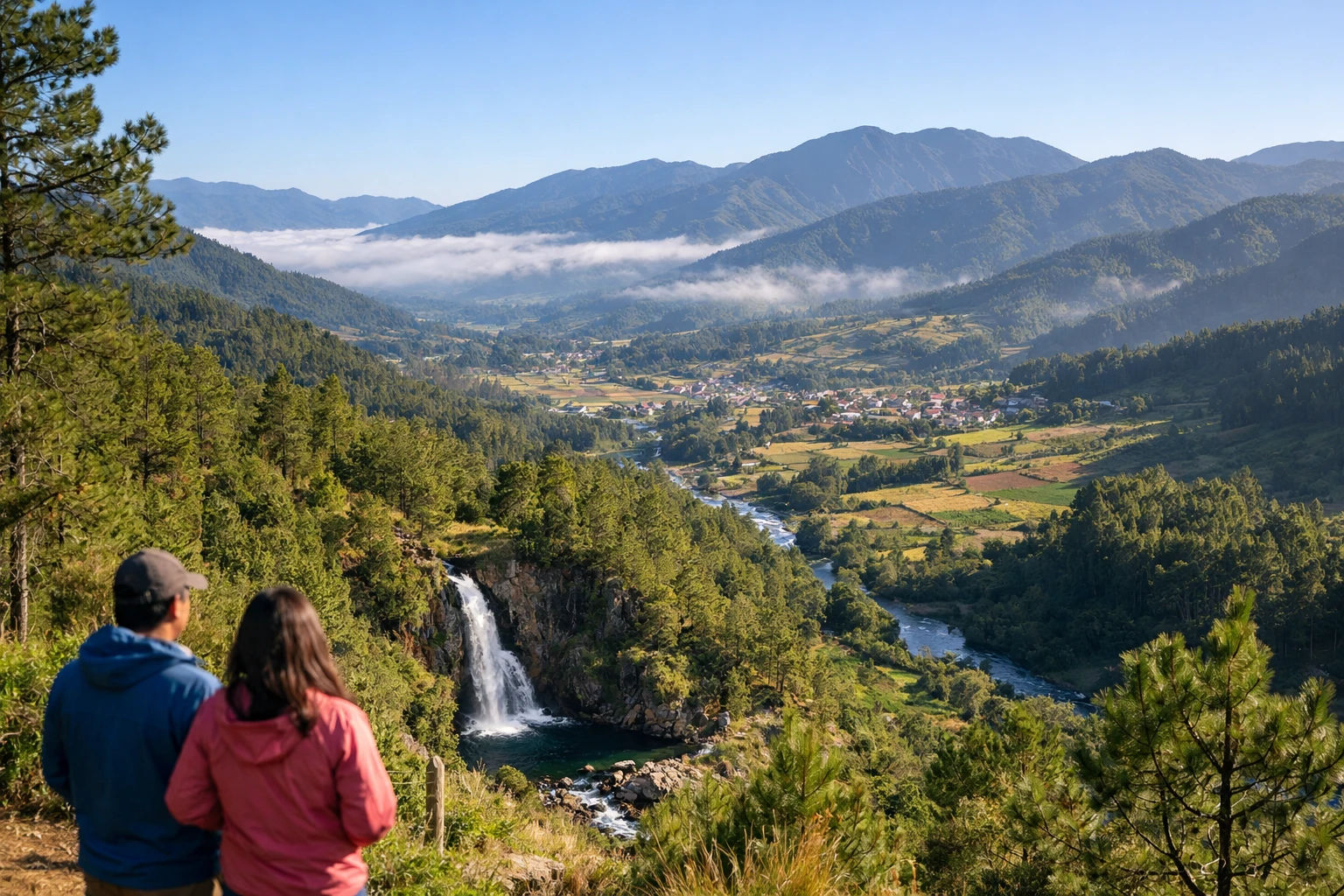
- Salto de Jimenoa — a 40-metre waterfall at the end of a scenic trail crossing suspension bridges over a deep river gorge; the path takes around 20-30 minutes and the payoff is extraordinary.
- Salto Baiguate — a wider, more accessible waterfall with a deep natural swimming pool at the base; easier to reach and excellent for families or anyone who wants to swim rather than just photograph.
Both can be combined in a single half-day, and local guides are available at both sites if you prefer not to self-navigate.
Coffee Farm Tours
This is a genuinely underrated experience that most visitors miss entirely. The mountains around Jarabacoa produce some of the finest coffee in the Dominican Republic, and several farms offer guided tours covering cultivation, harvesting, roasting, and cupping. It's the kind of slow, sensory experience that balances perfectly against a morning of white water rafting. Ask your accommodation host for the closest and most authentic farm option — the best ones aren't online-bookable.
Pico Duarte: Caribbean's Highest Peak
For serious hikers, Jarabacoa is the main gateway to Pico Duarte, at 3,098 metres the highest peak not just in the Dominican Republic but in the entire Caribbean. The full trek takes two to three days depending on which route you choose and requires a guide by law. The Manabao route from near Jarabacoa is the most popular and takes most hikers two days up and one day back. This is not a casual walk — it's a genuine mountain expedition through cloud forest and alpine scrubland, with temperatures dropping significantly at altitude overnight. The reward is an unobstructed sunrise view across the entire island that almost nobody you know has ever seen.
Constanza: Cool Granary of the Caribbean
Constanza is the Dominican Republic's most surprising destination. Sitting 1,200 metres above sea level in a broad mountain valley, it is the largest agricultural producer in the entire country. Strawberries, apples, potatoes, garlic, and ornamental flowers grow here in cool mountain air that makes the Cibao Valley feel like a different continent. Driving into Constanza for the first time — coming from the coastal heat through pine forests and then into a valley of strawberry fields and flower farms — is one of the most disorienting and delightful experiences the Dominican Republic has to offer.
"Driving into Constanza for the first time — coming from the coastal heat through pine forests and then into a valley of strawberry fields and flower farms — is one of the most disorienting and delightful experiences the Dominican Republic has to offer."
Parque Nacional Valle Nuevo
The single best reason to visit Constanza is Valle Nuevo, a national park sitting at over 2,200 metres above sea level and home to some of the most otherworldly landscapes in the entire Caribbean. The park is covered in cloud forest and páramo — the high-altitude grassland ecosystems more typically found in South America — and the light up here has a quality that feels genuinely different from anywhere lower on the island.
The famous Las Pirámides (The Pyramids) sit within or near the park — four concrete pyramid structures built in 1959 by the Trujillo dictatorship to mark the geographic centre of Hispaniola. They're a strange and compelling historical footnote in a landscape of extraordinary natural beauty.
Salto Aguas Blancas and the Mountain Cliff Pool
Constanza's signature natural experience is the Aguas Blancas waterfall, a spectacular drop of roughly 30 metres fed by mountain streams from the Cordillera Central. The hike to the falls passes through pine and oak forest, and just beyond the main waterfall is the mountain cliff natural pool — a cold, clear swimming hole cut into volcanic rock with views across the valley below. Visiting both together makes for one of the great half-day excursions in the Dominican Republic.
Paragliding and Zip-lining
Like Jarabacoa, Constanza offers paragliding with exceptional valley views — the town sits in a natural amphitheatre of mountains that creates reliable thermal conditions and spectacular sightlines all the way to Santiago and beyond on clear days. Zip-lining and mountain biking are also available through local adventure operators, and the flat valley floor makes road cycling surprisingly accessible compared to the mountain terrain above.
Constanza's Food Scene
One of the great pleasures of Constanza is eating food that was grown within sight of where you're sitting. The local markets and small restaurants serve strawberry juice, fresh apple pastries, roasted garlic dishes, and vegetable stews made with produce pulled from the valley farms that morning. This is as far from all-inclusive buffet food as it's possible to get in the Dominican Republic, and it costs almost nothing. A full meal at a local comedor in Constanza rarely runs more than $5-8 USD per person.
The Mountain Road Between Them
The drive connecting Jarabacoa to Constanza is an experience in its own right. The road climbs through pine forests, skirts the edge of deep river valleys, and crosses mountain passes that offer views across the entire Cordillera Central on clear days. A 4x4 vehicle is strongly recommended, particularly after rain when the steeper sections get slippery. The journey takes approximately 1.5 to 2 hours depending on road conditions and how many times you stop to photograph the view — which will be often.
"The journey takes approximately 1.5 to 2 hours depending on road conditions and how many times you stop to photograph the view — which will be often."
Many visitors base themselves in one town and day-trip to the other. Jarabacoa is the better base for adventure activities and has more accommodation variety. Constanza is better for those who want a quieter, cooler, more agricultural experience and fewer other tourists.
When to Visit
Both towns have different seasonal rhythms from the rest of the Dominican Republic:
- Constanza is best visited between November and April when the cool dry season makes for crisp, clear days and the agricultural valley is at peak productivity. This is also when strawberry season peaks, and the roadside stalls are loaded with fresh produce at absurdly low prices. Winter temperatures can drop to 5°C overnight, so bring a layer even if you're visiting from the beach.
- Jarabacoa is genuinely good year-round thanks to its mild eternal spring climate. River levels are highest after rainfall (May-November), making rafting more exciting but also more intense. The dry season (December-April) offers the most stable conditions for hiking and paragliding.
Getting There
Both towns sit in the Cordillera Central and require a car or private transfer to reach comfortably:
- From Santo Domingo to Jarabacoa: approximately 2 hours by car via the Duarte Highway, turning at La Vega.
- From Santo Domingo to Constanza: approximately 2.5 to 3 hours by car.
- From Santiago: approximately 1.5 hours to Jarabacoa; 2 to 2.5 hours to Constanza.
- From Punta Cana: approximately 3.5 to 4 hours; best combined with a 2-night stay rather than a day trip.
Public guaguas (minibuses) run from Santo Domingo and La Vega to Jarabacoa, making it accessible without a car. Constanza's higher elevation and more remote position makes private transport a much more practical choice.
Where to Stay
Accommodation in both towns is small-scale, locally owned, and genuinely good value:
- Jarabacoa has the best variety — boutique hotels, riverside cabins, adventure lodges, and a growing hostel scene catering to the outdoor traveller crowd. Expect to pay $40-100 USD per night for a comfortable hotel with meals nearby.
- Constanza has fewer options but includes several charming rural guesthouses and cabanas that put you right in the agricultural valley, surrounded by farms and forest. Budget $30-70 USD per night for a good guesthouse.
Several operators run all-in adventure packages covering accommodation, activities, meals, and transport from Santo Domingo or Santiago — worthwhile if you'd rather not self-organise.
FAQ
How far is Constanza from Jarabacoa?
The two towns are approximately 45 kilometres apart by road, but the mountain road makes it a 1.5 to 2-hour drive. A 4x4 is strongly recommended.
What is the weather like in Constanza and Jarabacoa?
Constanza sits at over 1,200 metres and has cool, dry conditions with temperatures dropping as low as 5°C in winter — the coldest city in the Caribbean. Jarabacoa sits lower at around 529 metres and enjoys a mild, near-perfect year-round climate between roughly 18-26°C.
Is Constanza and Jarabacoa safe for tourists?
Yes. Both towns are small, community-oriented, and largely free from the urban crime concerns that affect Santo Domingo. Basic common sense applies, but both are considered among the safer travel destinations in the country.
How many days do you need in the Dominican Alps?
Three to four days is ideal to experience both towns without rushing — a full day in Constanza for the national park and waterfall, two days in Jarabacoa for rafting, paragliding, and the falls. Add two extra days if you want to attempt Pico Duarte.
Can you visit Constanza and Jarabacoa from Punta Cana as a day trip?
It's possible but not ideal. From Punta Cana the drive is 3.5 to 4 hours each way, which leaves very little time for actual exploration. An overnight stay in Jarabacoa is a far better approach and turns it into one of the highlights of a Dominican Republic trip rather than a rushed transit.
The Dominican Republic You Never Expected
The beaches are real and they are beautiful. But the Dominican Republic is also a country of pine forests and strawberry farms, cold mountain mornings and thundering waterfalls, ancient volcanic peaks and river valleys that make you feel like you've been transported somewhere impossibly far from the Caribbean coast. Constanza and Jarabacoa are not a backup plan for when you're tired of the beach. They are a reason in themselves to visit this island — a reason that the vast majority of tourists who fly in and fly out will never discover. That's exactly what makes them worth the drive.
Explore more Dominican Republic travel guides, or read our island cultural experiences guide to plan your perfect itinerary.