Bahia de las Aguilas: How to Visit the DR's Most Remote Beach
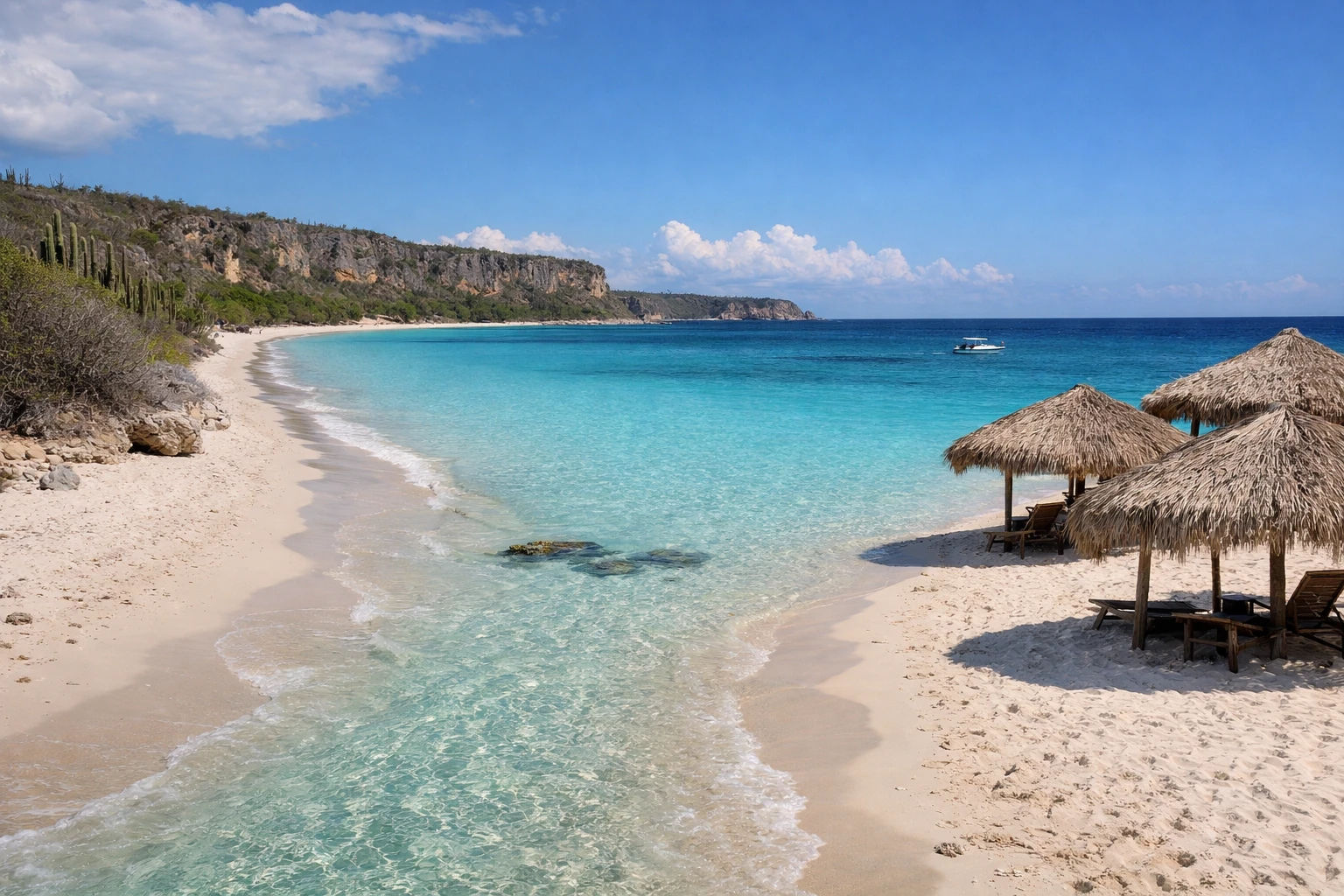
There are beautiful beaches in the Dominican Republic, and then there is Bahia de las Aguilas. Ranked the number one beach in the country by the Dominican Republic's official tourism board and voted the 34th best beach in the entire world in 2025, it is eight kilometres of diamond-white sand with no hotels, no restaurants, no shops, and no crowds — protected inside one of the largest national parks in the Caribbean and accessible only by boat or 4x4. Almost nobody outside the DR knows it exists. That is about to change for you.
Caribbean's Hidden Gem
The Caribbean is full of beautiful beaches. What separates Bahia de las Aguilas from the rest isn't just the quality of the sand or the clarity of the water — though both are extraordinary — it's the fact that the beach sits inside Jaragua National Park, the largest marine-terrestrial protected area in the Dominican Republic, which makes significant development legally impossible. The park covers over 1,600 square kilometres of coastal desert, dry tropical forest, and Caribbean coastline, and forms part of the Jaragua-Bahoruco-Enriquillo Biosphere Reserve, one of only 21 transboundary biosphere reserves in the world, jointly recognized by UNESCO across the Dominican and Haitian sides of the island.
"The result is a beach that looks exactly as it did before mass tourism discovered the rest of the Caribbean."
The water runs from pale turquoise over shallow sand bars to deep sapphire further out. The coastline is flanked by dramatic karst limestone cliffs and dry scrubland. The coral reefs just offshore are undisturbed and alive. And on most days, your only company is the frigatebirds circling overhead and whatever wildlife the park decides to deliver.
Remote and Pristine
Bahia de las Aguilas sits on the extreme southwestern tip of the Dominican Republic in Pedernales Province, roughly 325 kilometres from Santo Domingo and 15 kilometres from the Haitian border. The drive from the capital takes approximately 6.5 to 7 hours by car. From Punta Cana, add another hour and a half.
"That distance is the single biggest reason this beach remains as pristine as it does."
The Pedernales region sees almost none of the resort tourism that dominates the north and east coasts. There are no all-inclusive hotels in the area, no cruise ship terminals, no shuttle buses from airports. Getting here requires either a long drive and a boat ride, or a multi-day guided tour that brings you in overland. Most tourists simply don't bother — which is exactly why those who do make the effort find themselves on a beach that feels like a private discovery.
Getting There
By Boat from Cabo Rojo
The most popular and practical approach is to drive or transfer to Cabo Rojo, a small industrial port town just north of Pedernales, and take a short boat ride to the beach. The boat journey from Cabo Rojo takes approximately 20-25 minutes across the bay, passing over coral reefs and alongside the karst coastline before arriving at the beach's eastern end.
What to bring without fail: all food and water for the day, sun protection, a hat, snorkelling gear, and a dry bag. The beach has absolutely no facilities of any kind — no shade structures, no vendors, nothing. That is part of the point.
By 4x4 Overland
A less common but entirely possible approach for adventurous travelers is by 4x4 vehicle along the rough track that follows the park boundary to the beach's western access point. This route requires a high-clearance 4x4, is not navigable in a standard rental car, and should only be attempted with someone who knows the track. The overland approach adds a genuine adventure dimension to the trip and allows you to see the Jaragua National Park's interior wildlife and landscapes before reaching the beach itself.
Several guided tours combine the overland approach in one direction with the boat return, giving you the best of both access methods in a single visit.
Beach Activities
The honest answer is: as much or as little as you want. The beach is enormous — eight kilometres of sand with enough space that multiple groups can spread out without ever seeing each other. Here's how most visitors spend their time:
Swimming and Snorkelling
The water directly off the beach is remarkably clear, with visibility regularly reaching 10-15 metres over the shallow coral reef areas. Cushion sea stars, parrotfish, sergeant majors, and reef fish are common snorkelling sightings. Bring your own mask and fins — nothing is available for hire on the beach. The water is calm in most conditions, protected from the Atlantic swells by the headlands at either end of the bay.
Hiking the Viewpoint and La Cueva Routes
Two marked hiking routes run from the beach access points into the surrounding Jaragua National Park. The Viewpoint Route climbs to a cliff lookout above the eastern end of the bay, delivering the aerial perspective of the beach that makes every visitor immediately understand why it ranks where it does. The La Cueva Route follows the coastline westward through coastal dry forest to a series of natural caves that were historically used as shelter by local fishermen and earlier by the indigenous Taino people. Both routes are accessible without a guide and take 45 minutes to 1.5 hours respectively.
Wildlife Watching
Jaragua National Park is one of the most biodiverse protected areas in the Caribbean. The beach and surrounding area is home to:
- American crocodiles (in coastal lagoons nearby)
- West Indian manatees (occasionally sighted offshore)
- Rhinoceros iguanas — a species endemic to Hispaniola, frequently seen on the rocky headlands
- Over 130 bird species including frigatebirds, brown boobies, flamingos (in the nearby Laguna de Oviedo), and the Ridgway's hawk
- Hawksbill sea turtles, which nest on the beach between May and October
Simply Being There
This sounds reductive but it genuinely isn't. Bahia de las Aguilas is one of the few places left in the Caribbean where you can sit on a world-class beach and experience genuine, uninterrupted natural quiet. No jet skis. No beach vendors. No music from a swim-up bar. Just wind, waves, and an extraordinary stretch of coastline that the rest of the tourism industry hasn't found yet.
Where to Stay
Since overnight camping is prohibited inside the park, visitors base themselves in the Cabo Rojo area and make day trips to the beach. The accommodation options here are simple but have improved meaningfully in recent years:
- Eco del Mar — the highest-profile eco-lodge near the beach, offering glamping-style tents and cabanas with generators and solar power; the most comfortable option for visitors who want a structured experience and guided service
- Cueva de las Aguilas — another eco-accommodation option in the Las Cuevas village near the beach access, built around natural cave formations; basic but genuinely atmospheric
- Barahona as an alternative base — for visitors who prefer more conventional accommodation, the town of Barahona (roughly 80 kilometres north of Cabo Rojo) has several decent hotels and connects well to both Bahia de las Aguilas and the Bahoruco mountain region; many organized tours overnight in Barahona
Budget approximately $60-120 USD per night for eco-lodge accommodation near the beach, and $40-80 USD for guesthouses in Barahona.
Laguna de Oviedo Add-On
Thirty kilometres north of Cabo Rojo, the Laguna de Oviedo is the largest saltwater lagoon in the Dominican Republic and sits within the same biosphere reserve as Bahia de las Aguilas. It's home to one of the largest flamingo colonies in the Caribbean, along with rhinoceros iguanas, brown pelicans, and over 60 bird species. A guided boat tour of the lagoon costs around $10-15 USD per person and takes about 1.5 hours. Combined with a beach day, it makes for a genuinely exceptional natural history double bill and is one of the most underrated wildlife experiences in the entire country.
Logistics in Full
The distance from major tourist hubs to Bahia de las Aguilas:
- From Santo Domingo: approximately 325 km, 6.5 to 7 hours by car via Azua, Baní, and Barahona
- From Punta Cana: approximately 470 km, 8 to 9 hours by car
- From Santiago: approximately 370 km, 7 to 8 hours by car
- From Barahona town: approximately 80 km, 1.5 to 2 hours to Cabo Rojo
The road from Santo Domingo to Barahona is well-maintained highway. The section from Barahona to Cabo Rojo becomes progressively rougher and the final approach to the boat launch benefits from a 4x4. Standard rental cars can manage the Barahona to Pedernales highway but check your rental agreement for off-road restrictions.
When to Visit
The beach is open year-round and the climate in Pedernales Province is reliably dry — this is one of the driest corners of the entire island. A few seasonal considerations:
- November to April is the driest and most comfortable season with the calmest seas and best boat conditions; ideal for snorkelling
- May to October brings the sea turtle nesting season — an extraordinary natural event where hawksbill turtles come ashore at night — but also more variable sea conditions
- Avoid holiday weekends (especially Dominican public holidays in July and August) when the beach sees its highest domestic visitor numbers — still never crowded by international standards, but noticeably busier than usual
FAQ
Is Bahia de las Aguilas the best beach in the Dominican Republic?
It's consistently ranked the most beautiful beach in the country by Dominican tourism authorities and has been voted one of the top 40 beaches in the world. For raw, untouched natural beauty with no development, nothing in the DR compares.
How do you get to Bahia de las Aguilas?
The main route is by boat from Cabo Rojo, approximately 20-25 minutes across the bay at a cost of around $30-50 USD per boat round trip. Alternatively, overland by 4x4 via a rough track through Jaragua National Park. Most international visitors join a guided 2-day tour from Santo Domingo or Barahona.
Are there facilities at Bahia de las Aguilas?
None. No restaurants, no shade structures, no vendors, no toilets, and no fresh water. Bring everything you need for the day including all food, water, and sun protection.
Can you camp at Bahia de las Aguilas?
Camping is prohibited within the Jaragua National Park boundaries. Visitors stay in eco-lodges near Cabo Rojo or in hotels in Barahona and make day trips to the beach.
How far is Bahia de las Aguilas from Punta Cana?
Approximately 470 kilometres and 8 to 9 hours by road. It's not practical as a day trip from the resort areas in the east — plan at least one overnight stay in Barahona or Cabo Rojo to make the journey worthwhile.
What wildlife can you see at Bahia de las Aguilas?
Rhinoceros iguanas, frigatebirds, brown boobies, hawksbill sea turtles (nesting May to October), reef fish while snorkelling, and occasionally manatees offshore. The nearby Laguna de Oviedo adds flamingos and over 60 additional bird species to the day.
The Best Beach You've Never Heard Of
Most Caribbean beaches are beautiful until they aren't — until the jet skis arrive, the vendors set up, and the resort strip creeps in from the edges. Bahia de las Aguilas is different because a protected national park and 325 kilometres of deterrent highway have kept it exactly as it was found. Eight kilometres of white sand, coral reefs nobody has overexplored, wildlife that hasn't learned to fear people, and a silence that the rest of the Caribbean sold away decades ago. It takes commitment to get there. Every traveller who makes the effort says the same thing afterward: they'd do it twice as far for the same result.
Explore our full Dominican Republic travel guide or read about the other hidden corners of this extraordinary island.