La Aurora Cigar Factory Tour: The Dominican Republic's Best Cultural Experience You're Missing
Every traveler who visits the Dominican Republic knows the beaches. Most know the all-inclusive resorts. A small number discover the country's extraordinary colonial architecture, mountain landscapes, and vibrant food culture. But almost nobody outside of serious cigar enthusiasts knows about what TripAdvisor has officially rated the number one tourist experience in Santiago de los Caballeros — a free guided tour through the oldest and most celebrated cigar factory in the entire Caribbean.
If you're curious about culture, history, and craftsmanship, the La Aurora Cigar Factory tour belongs on your Dominican Republic itinerary whether you smoke or not.
Beyond Cigars
The Dominican Republic is now the largest exporter of premium handmade cigars in the world, having developed much of that industry in the decades following the Cuban Revolution when master Cuban tobacconists relocated and brought their knowledge with them. That history is woven into every layer of what you see on this tour. La Aurora wasn't just the first cigar factory in the Dominican Republic — it was the seed from which an entire national industry grew.
"La Aurora wasn't just the first cigar factory in the Dominican Republic — it was the seed from which an entire national industry grew."
Founded in 1903, La Aurora has been making premium handmade cigars for over 120 years and has kept its factory open to the public for 35 of those years. The factory sits inside a remarkable complex in Santiago that also houses the León Museum (the Dominican Republic's most important art museum), a replica of the original 1903 rolling factory, a bird sanctuary home to most of the country's indigenous bird species, and a large Presidente beer distribution center. You could easily spend half a day here without entering the factory itself.
The Tour Experience
The La Aurora Factory Tour is a 45-minute to one-hour guided walk through the complete cigar manufacturing process, from seed to final packaging. It's been designed to be engaging for first-timers and genuinely informative for aficionados, and it delivers on both.
The tour moves through five distinct stops:
- The Store — where you begin with a brief presentation and introductory video covering La Aurora's history and the Dominican tobacco industry
- The Tobacco Ranch Showroom — an interactive display covering seed cultivation, curing barns, and the early stages of tobacco production; you get to handle leaves and learn the differences between wrapper, binder, and filler tobaccos
- The Aging Rooms — rows of barrels where bundles of tobacco age for months or years before rolling; the smell in this room alone is worth the trip
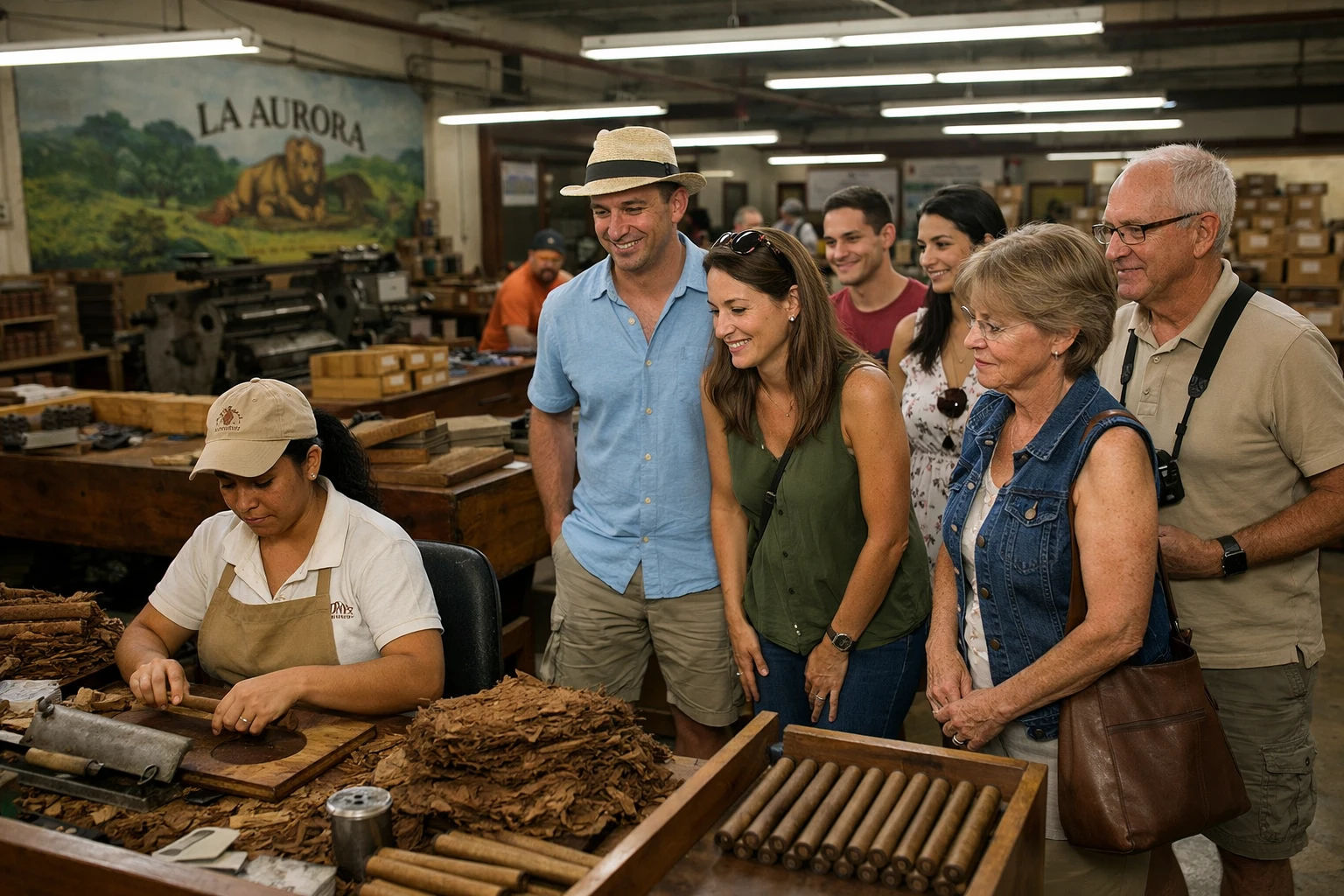
- The Premium Rolling Floor — the heart of the tour, where you watch master rollers work entirely by hand, shaping and binding cigars with a precision that takes years to develop; photography is permitted and the rollers are used to visitors
- The Cigar Lounge — the final stop, where you're invited upstairs to the La Aurora lounge, offered a complimentary cigar to try, and served traditional Dominican coffee
Guides like Eugenio and Miguel have become genuinely celebrated on review platforms for their knowledge, warmth, and storytelling ability. The kind of guide who makes you care about something you never expected to find interesting.
The Name's Legacy
La Aurora's story is one of the great entrepreneurial stories in Caribbean history. José Blanco founded the factory in Santiago de los Caballeros in 1903, making it not just the oldest cigar factory in the Dominican Republic but one of the oldest continuously operating premium cigar manufacturers anywhere in the world.
"The valley's microclimate — warm days, cool mountain nights, and rich volcanic soil — produces tobacco leaf with a complexity that rivals and in many cases surpasses Cuban leaf."
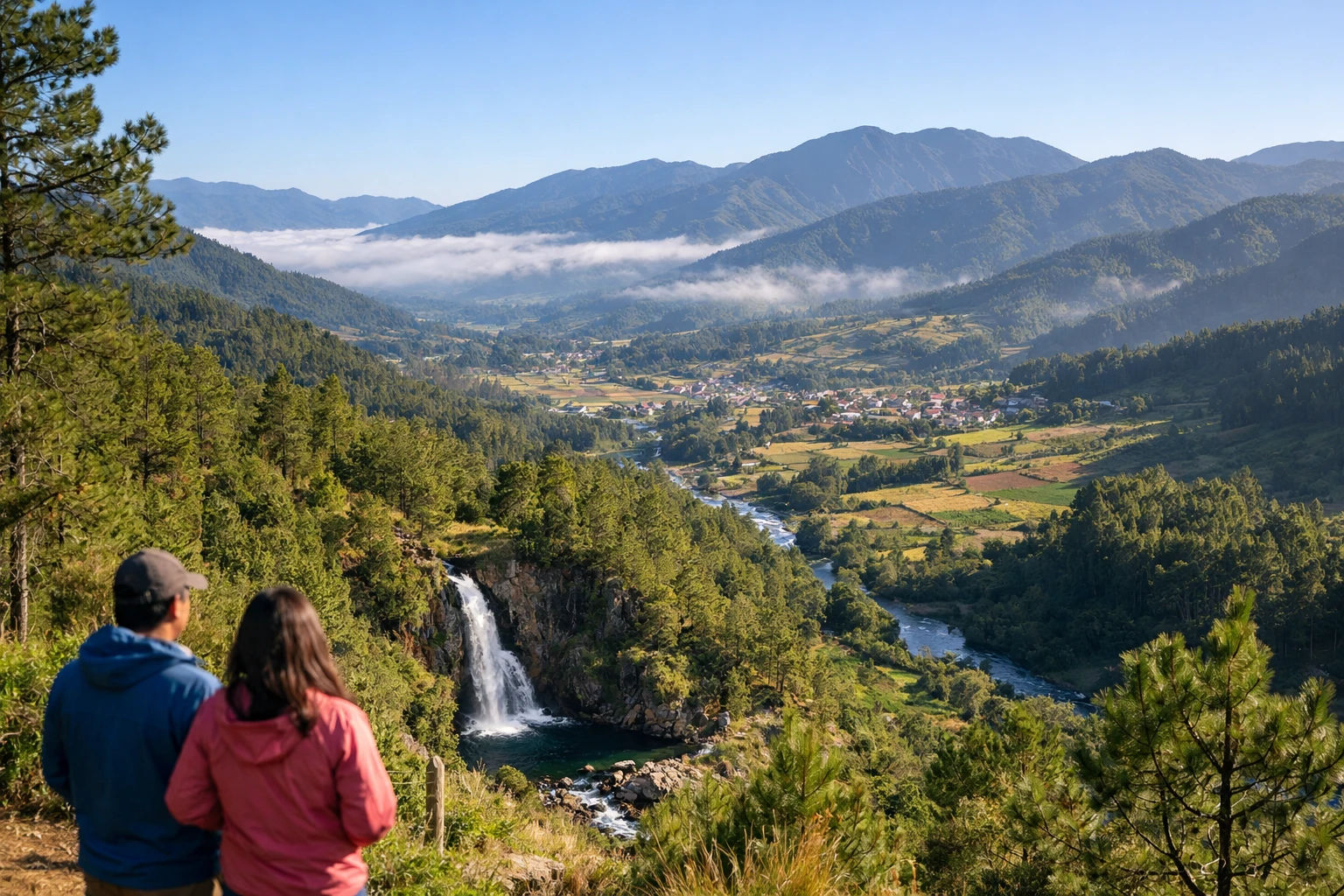
The timing was significant. Santiago sits in the Cibao Valley, the fertile agricultural heartland of the Dominican Republic, surrounded by the tobacco-growing regions that have supplied the factory for over a century. The valley's microclimate — warm days, cool mountain nights, and rich volcanic soil — produces tobacco leaf with a complexity that rivals and in many cases surpasses Cuban leaf.
By the mid-20th century, La Aurora was already exporting to Europe and North America. The Cuban Revolution of 1959 created a seismic shift in the global cigar industry, as Cuban master tobacconists fled the country and brought their skills to new homes across the Caribbean. The Dominican Republic absorbed many of them, and La Aurora was one of the primary beneficiaries. Today the brand's cigars are distributed across more than 80 countries and the factory employs several hundred skilled artisans, all working by hand.
Dominican Cigar Craft
Understanding what makes Dominican tobacco unique adds depth to the tour experience. The Cibao Valley produces several tobacco varieties, but it's particularly famous for its olor seed — a distinctively mild, creamy variety that forms the backbone of many of La Aurora's most celebrated blends.
Unlike mass-produced cigarettes, every La Aurora premium cigar is:
- Rolled entirely by hand by a trained artisan
- Made from aged tobacco that has rested in barrels for a minimum of several months and often much longer
- Wrapped in a single unbroken leaf of high-grade wrapper tobacco selected for consistency of color and texture
- Inspected by hand before packaging — quality control at La Aurora is famously rigorous
"Watching a master roller shape a cigar in under two minutes — with nothing but a chaveta blade, a wooden mold, and practiced hands — is one of those craft experiences that recalibrates how you think about what skilled work actually looks like."
The production floor you walk through on the tour employs rollers who have worked at the factory for 10, 20, sometimes 30 years. Watching a master roller shape a cigar in under two minutes — with nothing but a chaveta blade, a wooden mold, and practiced hands — is one of those craft experiences that recalibrates how you think about what skilled work actually looks like.
The Cigar Institute
For visitors who want more than a tour, La Aurora runs a dedicated Cigar Institute with short courses covering tobacco cultivation, sensory training, pairing, and rolling technique. This is genuinely useful for anyone considering entering the tobacco trade, but also appeals to enthusiasts who want a more hands-on, immersive experience than the standard tour provides.
Courses range from introductory sessions a few hours long to multi-day programs. Availability varies by season — contact the factory directly to confirm what's running during your visit.
Santiago: A Hidden Gem
Most Dominican Republic tourists never make it to Santiago. That's a significant miss. The country's second-largest city and the cultural capital of the Cibao region, Santiago sits about 155 kilometers northwest of Santo Domingo and roughly 50 kilometers southeast of Puerto Plata.
Beyond the La Aurora complex, the city offers:
- El Monumento a los Héroes de la Restauración — the massive neo-classical monument at the center of the city, with panoramic views across the Cibao Valley from its observation deck
- Centro León — the country's most important museum of Dominican art and culture, actually located inside the same complex as La Aurora and widely considered one of the finest cultural institutions in the entire Caribbean
- Calle del Sol — the main commercial street of the old city, lined with colonial architecture, street food, and local businesses that give you an honest picture of Dominican daily life
- La Sirena and Mercado Modelo — the city's main markets, where fresh produce, local crafts, and the energy of a real Dominican city are all on full display
Santiago is also the undisputed capital of Dominican food culture — merengue, sancocho stew, mangu (mashed plantains), and chicharrón of pork are all eaten seriously here in a way that resort restaurants simply can't replicate.
Plan Your Visit
Everything you need to plan the tour:
- Location: La Aurora Cigar Factory, Tamboril, Santiago de los Caballeros, Dominican Republic (inside the same complex as Centro León museum)
- Tour cost: Free of charge
- Tour duration: 45 minutes to 1 hour
- Minimum age: 18 years
- Languages: Tours available in English and Spanish
- Photography: Permitted throughout the tour
- Best time to visit: Tours run daily; mornings are generally quieter and the rolling floor is most active before midday
- What to bring: Nothing specific required; the lounge and store are air-conditioned so light layers help if you're sensitive to temperature changes
- Getting there from Santo Domingo: About 2.5 to 3 hours by car or shuttle; Santiago also has an international airport (IATA: STI) with flights from New York, Miami, and other major US cities
- Getting there from Puerto Plata: Approximately 50 kilometers and around 1 hour by road; easily combined as a day trip from the north coast
- Getting there from Punta Cana: Around 3.5 hours by road; best combined with a planned overnight in Santiago rather than rushed as a same-day excursion
Other Tours to Explore
La Aurora is the standout experience, but the Dominican Republic has a rich cigar tourism scene that rewards exploration:
- Tabacalera de García, La Romana — one of the largest handmade cigar factories in the world, producing Romeo y Julieta, Montecristo, and H. Upmann among others; a more industrial-scale tour but equally fascinating in scope
- Vivonté Cigar Factory, various locations — a smaller operation offering tours that include lunch, coffee, a cigar, and a shot of traditional mamajuana; particularly good for visitors who want a more personal, less corporate experience
- Cremo Cigars, Puerto Plata — a boutique factory with Cuban master rollers, offering a sensory-focused experience including touch, smell, and a live rolling demonstration; ideal for Puerto Plata-based travelers
FAQ
Is the La Aurora Cigar Factory tour suitable for non-smokers?
Absolutely. The majority of the tour takes place in production and aging areas rather than a smoking environment, and the cultural, historical, and craft elements appeal strongly to visitors with no interest in smoking. Multiple TripAdvisor reviewers specifically note enjoying the tour as non-smokers.
Is the La Aurora tour actually free?
Yes — the factory tour is completely free of charge and has been for over 35 years. There is no admission fee. The only costs are whatever you choose to purchase from the store afterward.
How do I get to La Aurora from Punta Cana or the resort areas?
From Punta Cana, La Aurora is approximately 3.5 hours by road. Many private tour operators offer full-day excursions that include transport and the tour. From Puerto Plata, it's around 1 hour and easily done as a half-day trip.
Can I buy cigars directly from the factory?
Yes. The La Aurora store at the end of the tour stocks dozens of varieties including exclusive lines and specialty items not available in retail shops elsewhere. Prices are competitive and the selection is the most comprehensive you'll find in one place.
What is Centro León and is it worth visiting alongside the factory tour?
Centro León is the Dominican Republic's most important museum of art and culture, located inside the same complex as La Aurora and widely considered one of the finest cultural institutions in the Caribbean. Plan at least an additional hour for it. Combined with the factory tour, the La Aurora complex makes for one of the richest cultural half-days in the entire country.
Do I need to book in advance?
Tours run daily without pre-booking for general visitors, but group bookings and Cigar Institute courses benefit from advance scheduling. Contacting the factory directly before your visit is recommended if you're traveling with a group larger than six people.
Discover Santiago's Best
The Dominican Republic's beaches are beautiful and its resorts are well-run — but the country has a cultural depth that most holiday packages never surface. La Aurora is the entry point to a story that runs 120 years deep, through the hands of hundreds of master artisans, across one of the most important agricultural traditions in the Caribbean. It's free, it takes less than an hour, and it will fundamentally change how you think about the country you're visiting. Book a day trip from wherever you're staying, walk through the rolling floors, sit in the lounge, and taste what genuine Dominican craftsmanship actually feels like. Santiago is waiting for you.
Explore more Dominican Republic travel guides and island cultural experiences on IsleRush.