North Cyprus Travel Guide: Is It Worth Visiting in 2026?
North Cyprus is one of the most genuinely misunderstood travel destinations in the entire Mediterranean. It boasts Crusader castles perched on 700-metre mountain ridges, Roman ruins on the scale of Pompeii, a deserted ghost city frozen in time since 1974, some of the emptiest and most beautiful beaches in the whole region, and a historic harbour town that draws comparisons to the best of the Greek islands — all at a fraction of what you'd pay in neighbouring Greece, southern Cyprus, or Turkey. The reason most tourists don't know about it is simple: most content about North Cyprus is either outdated, written for property buyers, or buried under decades of political complexity that puts people off before they book. This guide cuts through all of that and gives you the practical, honest picture of what visiting North Cyprus in 2026 actually looks like.
What North Cyprus Actually Is
Cyprus is the third-largest island in the Mediterranean and has been divided since 1974, when a Turkish military intervention followed a Greek Cypriot coup that sought union with Greece. The northern third of the island — occupying roughly 37% of Cyprus's total land mass — has operated since then as the Turkish Republic of Northern Cyprus (TRNC), recognised as an independent state only by Turkey. The rest of the world considers it occupied territory under international law, but this legal complexity has no practical impact on your ability to visit as a tourist.
"The two sides of Cyprus are divided by the UN-monitored Green Line, which runs through the capital Nicosia — the last divided capital city in the world."
Since 2003, crossing points have been open and movement between north and south is generally straightforward for tourists holding an EU passport, a British passport, or a passport from any country that doesn't have a diplomatic dispute with Turkey.
In practical terms: you fly into Ercan Airport (via a Turkish hub, usually Istanbul or Ankara), or you fly into Larnaca Airport in the south and cross the Green Line by car or on foot — something thousands of visitors do every day.
Is North Cyprus Worth Visiting?
Yes — genuinely, emphatically yes. Here is why the question even arises and why it shouldn't deter you:
The political situation is stable and has been for decades. The infrastructure is improving steadily, with new hotel developments now opening in Kyrenia and the Famagusta coast. The historical sites are world-class and barely crowded compared to equivalent sites in Greece or Turkey. The food is excellent. The beaches are often better and always less crowded than the equivalent in southern Cyprus. And costs run meaningfully lower across the board — accommodation, dining, transport, and entry fees all reflect a destination that hasn't yet been priced at peak Mediterranean rates.
"North Cyprus is open, accessible, welcoming, and genuinely remarkable."
The main legitimate considerations are:
- Entry from some countries — travelers with stamps from Armenia or with certain citizenship complications may face scrutiny at Turkish Cypriot entry points; most Western, European, and North American visitors have zero issues
- No direct flights from most Western countries — you connect via Istanbul, Ankara, or cross from southern Cyprus; this adds modest travel complexity
- Political sensitivities — a small number of travelers choose not to visit on ethical grounds related to the 1974 situation; this is a personal decision and beyond the scope of a travel guide
Kyrenia: The Most Beautiful Town
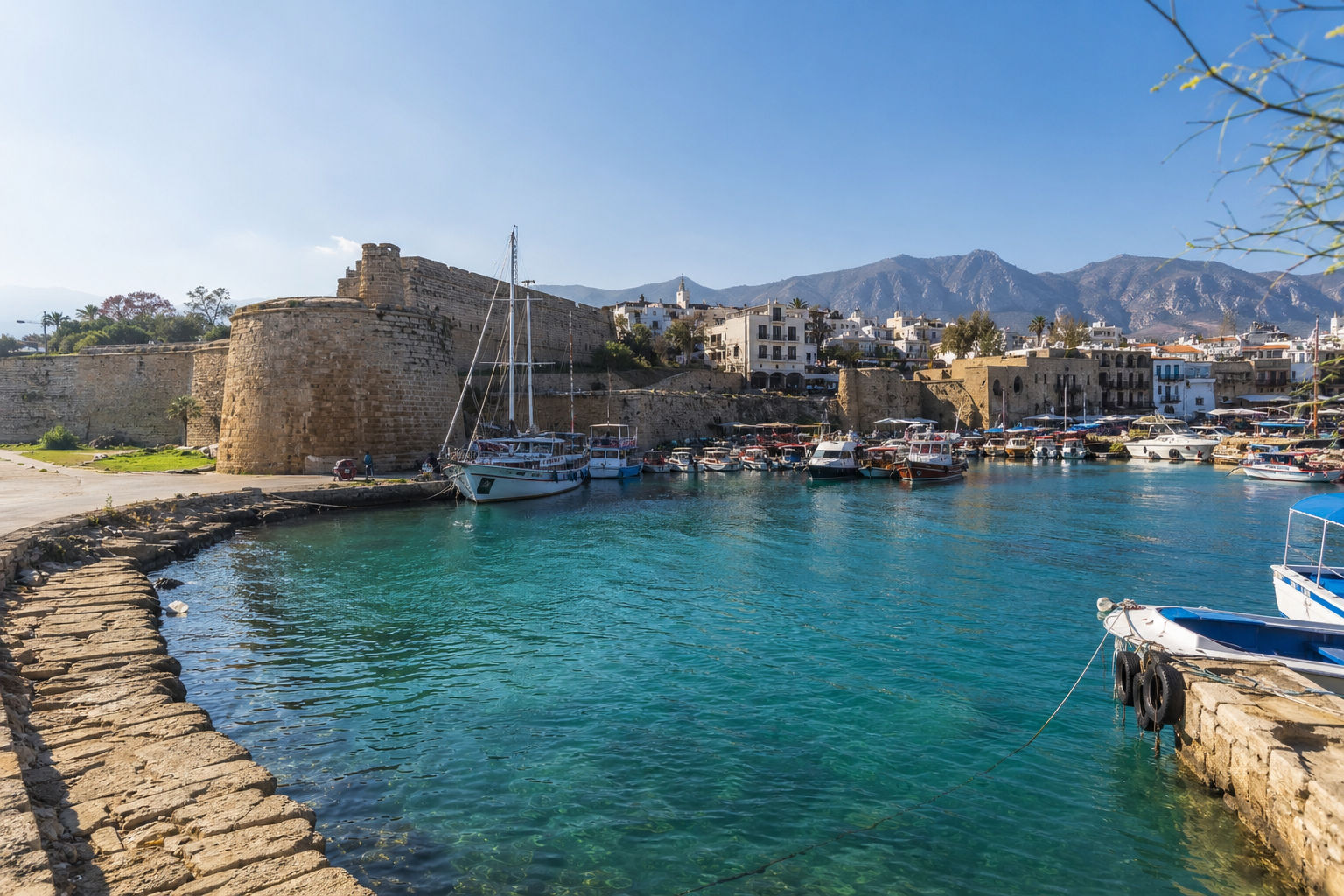
Kyrenia is the undisputed tourism capital of North Cyprus, and it deserves every bit of that status. The town is built around one of the finest natural harbours in the entire Mediterranean — a horseshoe-shaped port ringed with stone buildings and overlooked by a Venetian castle that rises dramatically from the harbour's eastern end. The harbour restaurants serve fresh fish and cold Efes beer at sunset prices that would make you cry if you'd just come from Santorini.
What to do in Kyrenia:
- Kyrenia Castle and Shipwreck Museum — the castle has four corner towers to climb, an exhibition hall, Byzantine chapel, underground cistern, and dungeons; inside it houses the world's oldest recovered shipwreck (a merchant vessel from around 300 BC with its cargo of almonds, wine amphorae, and pottery still intact)
- Harbour evening walk — one of the Mediterranean's great free experiences; the old harbour at golden hour with the castle reflected in the water is the image that brings people back to Kyrenia every year
- Old Kyrenia town — the narrow alleys behind the harbour contain boutique shops, art galleries, traditional coffee houses, and Armenian and Turkish Cypriot restaurants in a labyrinth of golden limestone architecture
- Bellapais Abbey — 5 kilometres east of Kyrenia, a 13th-century Augustinian Gothic abbey in a state of magnificent partial ruin at 220 metres above sea level on the Kyrenia mountain slope. The view from the abbey grounds — over terracotta village rooftops, across olive groves, and out to the Mediterranean — is one of the finest in the whole of Cyprus. The village of Bellapais below is equally lovely, with a handful of excellent restaurants and the kind of quiet authenticity that's increasingly rare in the Mediterranean.
St. Hilarion Castle: The Fairy Tale Fortress
St. Hilarion Castle sits at 732 metres on a dramatic ridge of the Kyrenia Mountains, 11 kilometres west of Kyrenia, and it is one of the most extraordinary castle ruins in the entire Mediterranean. Built by the Byzantines, expanded by the Crusaders, and later used as a royal residence by the Lusignan dynasty, it's a three-tiered fortress spread across a mountain peak so steep that parts of it are genuinely vertiginous to climb.
"Walt Disney reportedly used St. Hilarion as the visual inspiration for the castle in Snow White, a story locals enjoy telling regardless of whether it's true."
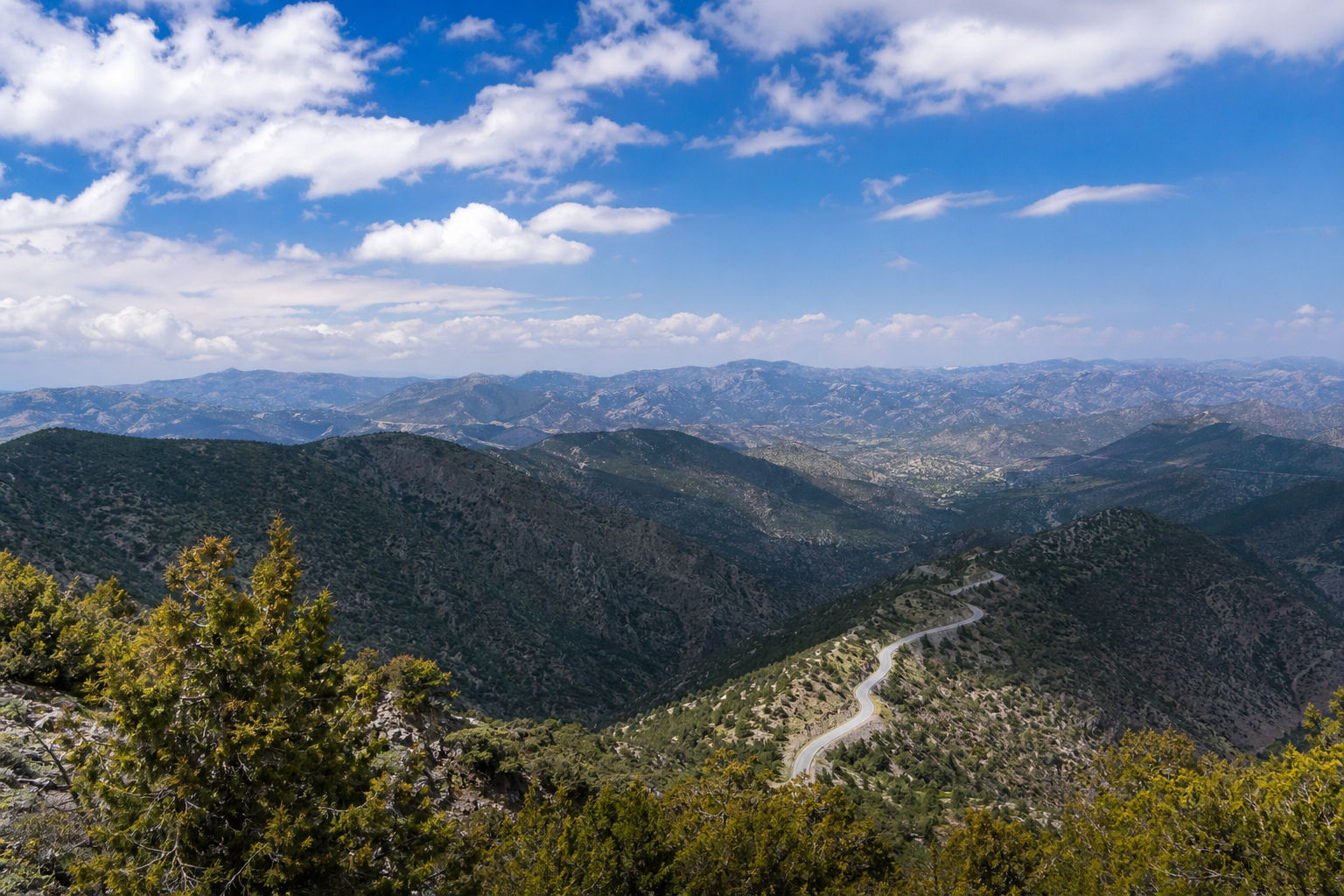
The views from the upper ward stretch from the Turkish mainland to the north (on clear days) to the Troodos Mountains in southern Cyprus to the south — an almost impossibly wide panorama that puts the entire island in a single sightline. Access requires a short but steep climb from the lower car park. Allow 2-3 hours to explore properly. Bring water — there's no refreshment available inside.
Famagusta: Walled City and Ghost Town
Famagusta is North Cyprus's most historically layered destination and one of the most visually striking places on the whole island. The 16th-century Venetian walls that encircle the old city are among the best-preserved in the entire Mediterranean world — up to 15 metres high and wide enough to drive a car along the top. Inside, the city contains one of Cyprus's most important historical monuments: the Lala Mustafa Pasha Mosque, originally the Cathedral of Saint Nicholas built in 1298 in Gothic French style, converted to a mosque after the Ottoman conquest of 1571. The building is architecturally extraordinary — a cathedral facade of pure French Gothic with minarets added alongside it.
"The adjacent ghost city of Varosha is one of the most haunting and genuinely significant travel experiences anywhere in the Mediterranean."
Once a thriving resort area used by Elizabeth Taylor, Richard Burton, and Brigitte Bardot in the 1960s, Varosha was evacuated in 1974 and remained sealed for 46 years before partial reopening began in 2020. Walking along the beachfront promenade today, you can look into the formerly sealed zone and see the decay and vegetation reclaiming what was once a bustling resort strip. It's a sobering, quietly powerful experience that makes the island's divided history tangible in a way no history book achieves.
Ancient Salamis: The Roman Ruins
Salamis is one of the most significant ancient archaeological sites in the eastern Mediterranean and one of the most undervisited. Founded around 1100 BC, it was for centuries one of the most important trading cities in the Mediterranean before its eventual destruction by Arab raids in the 7th century AD. The ruins spread over a vast coastal site and include:
- A Roman gymnasium with a large colonnaded courtyard and restored marble statues
- A theatre seating 15,000 people with parts of the stage and orchestra floor intact
- Ancient baths (thermae) with hypocaust flooring
- The foundations of a vast Roman forum
- Extensive early Christian basilicas and mosaic floors
The site is only partially excavated and sees a fraction of the visitors that Pompeii or Ephesus attract for comparable quality ruins. On a weekday morning you can have sections entirely to yourself. Entry costs around €7 and the site requires a minimum of two hours to cover properly.
The Karpaz Peninsula: The Wild East
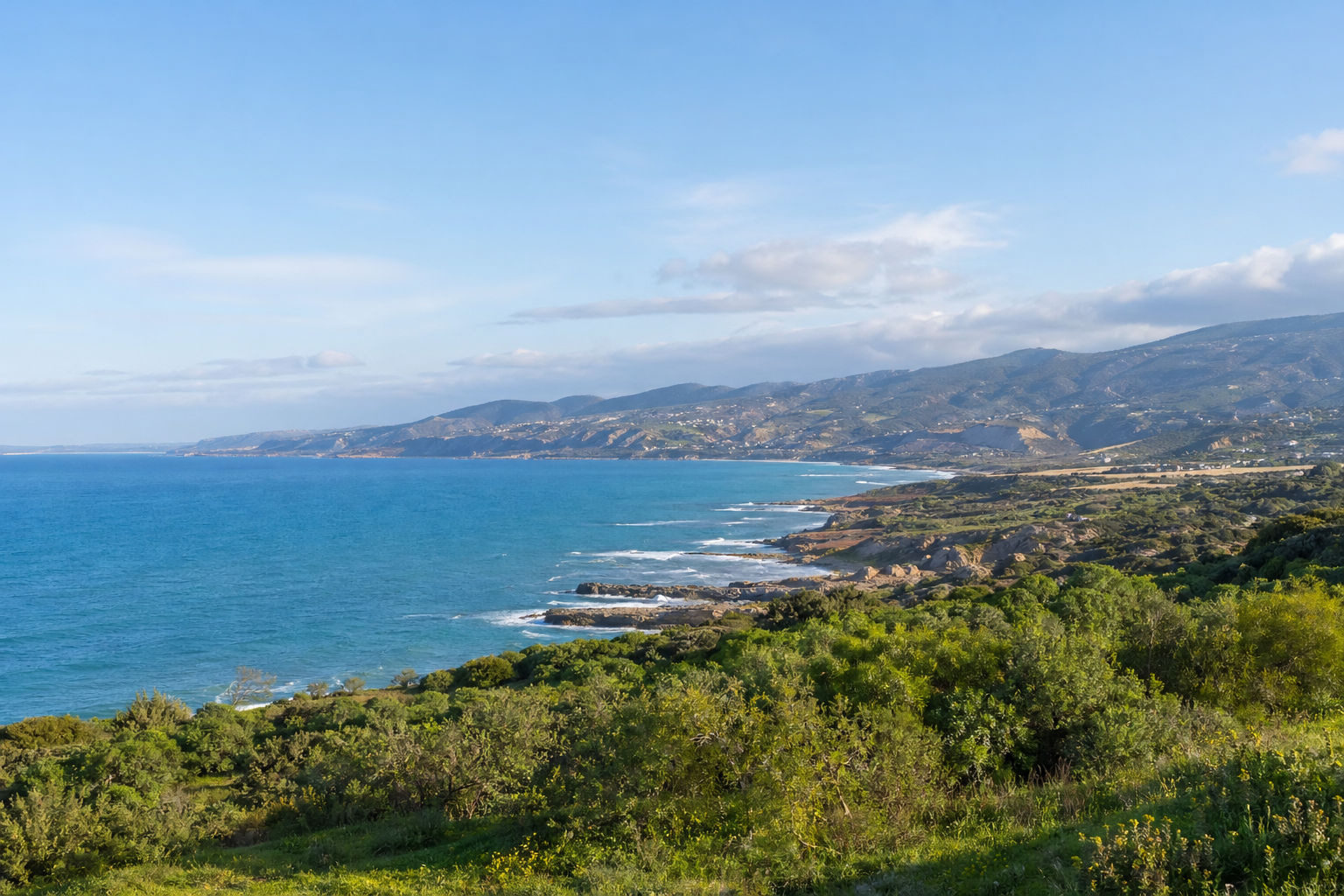
The Karpaz (or Karpas) Peninsula is the long finger of land that stretches northeast from the main island mass and points toward the Syrian coast, and it is one of the last genuinely undeveloped coastal areas in the entire Mediterranean. The peninsula is a national park, development is restricted, and the landscape — pine forests, wildflower meadows, olive groves, and long, empty sand beaches — has the quality of somewhere that tourism hasn't yet discovered.
Dipkarpaz village at the tip of the peninsula still has a small community of Greek Cypriots who stayed through the 1974 division and never left, making it the only mixed-heritage village in North Cyprus. The monastery of Apostolos Andreas at the very tip of the peninsula is one of the island's most sacred pilgrimage sites, recently restored after decades of neglect.
Nangomi (Golden Beach) at the northeastern tip is consistently listed among the best undeveloped beaches in the Mediterranean — a three-kilometre crescent of golden sand with zero infrastructure, no sunbeds, and no vendors. It's a sea turtle nesting beach (loggerhead and green turtles nest here in summer) and is accessible only by car along the peninsula road, which keeps it genuinely empty.
Nicosia: The Last Divided Capital
The UN Buffer Zone runs through the heart of Nicosia, making it one of the most politically and visually interesting capitals in the world to walk through. The north side of Nicosia is a living Ottoman-era city with a distinctive character quite different from the European-facing south. Key experiences:
- Büyük Han (Great Inn) — the finest surviving Ottoman caravanserai in Cyprus, a beautiful two-story courtyard building now housing artisan workshops, galleries, and a cafe in every archway
- Büyük Hamam (Great Bath) — a former Gothic church converted to a hammam by the Ottomans in the 16th century; still operating as a traditional Turkish bath
- Arasta Street and Bandabuliya Bazaar — the most authentic market street in North Cyprus for handmade goods, spices, ceramics, and local crafts
- Crossing the Green Line — whether on foot through the Ledra Street crossing or by car through Metehan, crossing between north and south Nicosia is a genuinely thought-provoking experience; you can have lunch in the north and coffee in the south in the same afternoon
Food in North Cyprus: What to Order
Northern Cypriot cuisine is a hybrid of Turkish, Greek Cypriot, and Levantine traditions and is excellent across all three:
- Meze — the definitive North Cyprus dining experience; 15-25 small dishes brought continuously to the table covering dips, salads, grilled halloumi, stuffed vine leaves, fried calamari, lamb köfte, grilled fish, and more; budget €12-18 per person and 2-3 hours
- Halloumi — the squeaky grilled cheese that Cyprus gave the world; in North Cyprus it's fresher, saltier, and less uniformly manufactured than the export version you know from home
- Kleftiko — slow-baked lamb sealed in pastry or clay with garlic and herbs until falling off the bone; the Cypriot version is deeply flavoured and worth ordering wherever it appears on a menu
- Hellim pide — a Turkish flatbread stuffed with fresh halloumi and baked; sold from bakeries and pide restaurants for €3-5 and one of the great affordable meals in North Cyprus
- Carob products — Cyprus was historically the world's largest carob producer and North Cyprus still uses carob molasses (keçiboynuzu pekmezi) in salad dressings, desserts, and drinks; an unusual and genuinely delicious local flavour
- Efes beer and local wine — Turkish Efes lager is the default cold drink; North Cyprus also produces its own wines in the Kyrenia Mountains region that are rarely seen outside the island
Practical Information: Plan Your Trip
Getting There:
- Via Turkey: Fly to Istanbul (IST) or Ankara (ESB) and connect to Ercan Airport (ECN) in North Cyprus — the only international airport; Turkish Airlines, Pegasus, and AnadoluJet all operate these routes
- Via Southern Cyprus: Fly into Larnaca (LCA) or Paphos (PFO) airports in the Republic of Cyprus and cross the Green Line by car or on foot; the main crossing points are Metehan (by car) and Ledra Street on foot in Nicosia
- Direct UK and European routes: Several UK charter operators fly into Ercan from London, Manchester, and Birmingham seasonally
Currency:
The Turkish New Lira (TRY) is the official currency of North Cyprus, not the Euro. This is the single biggest reason the destination is cheaper than southern Cyprus or Greece — the lira's exchange rate against the euro, pound, and US dollar makes everyday spending remarkably affordable. Euros are widely accepted in tourist areas but you'll get better value using lira.
Language:
Turkish is the official language; English is widely spoken in tourist areas, hotels, restaurants, and by most younger North Cypriots.
Driving:
Cars drive on the left (as in the UK and Republic of Cyprus) — a legacy of British colonial rule. Roads are generally good in and around Kyrenia and Famagusta; the Karpaz Peninsula roads deteriorate toward the tip. A standard rental car handles 95% of the island; a 4x4 is only needed for very specific off-road tracks.
Approximate costs in 2026:
- Budget guesthouse: €25-45 per night
- Mid-range hotel: €50-90 per night
- Full meze dinner: €12-18 per person
- Street food / pide: €3-6
- Entry to major sites (St. Hilarion, Salamis, Famagusta walls): €5-10 each
- Beer at a harbour restaurant: €2-4
- Daily car hire: €20-35
When to Visit
- April to June — the best overall time; wildflowers on the Karpaz Peninsula are at peak in April, temperatures are warm but not oppressive (20-28°C), and crowds are thin
- September and October — excellent shoulder season; sea temperature still warm from summer (25-26°C), lower humidity, and tourist infrastructure still fully operational
- July and August — peak season with higher domestic Turkish and British tourist numbers, particularly in Kyrenia; temperatures hit 33-37°C and accommodation prices peak
- November to March — the quiet season; mild (14-18°C), very few tourists, everything is open but often quiet; good for hiking, history, and budget travel
FAQ
Is it safe to visit North Cyprus in 2026?
Yes. North Cyprus is one of the safest destinations in the Mediterranean. Crime rates are very low, the population is genuinely welcoming to tourists, and the political division is entirely stable and has been for decades.
Do I need a visa to visit North Cyprus?
Citizens of EU countries, the UK, USA, Canada, Australia, and most Western countries do not require a visa and receive a stamp-on-arrival for stays up to 90 days. Note: entry is via Turkish Cypriot border control, not the Republic of Cyprus. If you have concerns about specific entry requirements based on your nationality, check with the North Cyprus tourism authority directly.
Can I cross between North and South Cyprus?
Yes. Since 2003, multiple Green Line crossing points have been open to both tourists and residents. The most practical are Metehan (car crossing between Nicosia's suburbs) and Ledra Street (pedestrian crossing through central Nicosia). Crossings are generally quick and straightforward with an EU, UK, or US passport.
Is North Cyprus cheaper than southern Cyprus or Greece?
Significantly so. The use of Turkish lira rather than the Euro means everyday costs run meaningfully lower than in the Republic of Cyprus, Greece, or Turkey's western tourist coast. A meal that costs €25 in Paphos or Rhodes often costs €12-15 in Kyrenia.
What is the best base for exploring North Cyprus?
Kyrenia is the best overall base — central to St. Hilarion, Bellapais Abbey, and Nicosia, with the best range of accommodation, restaurants, and harbour atmosphere. For Famagusta and Salamis, staying one or two nights in Famagusta itself is worth doing.
Is a car necessary in North Cyprus?
For anything beyond Kyrenia town and the immediate harbour area, yes. A rental car is essential for St. Hilarion, Bellapais, Salamis, the Karpaz Peninsula, and most beach access. Roads are straightforward, driving is on the left, and car hire starts at €20-35 per day.
The Mediterranean's Undiscovered Corner
North Cyprus is sitting at a fascinating inflection point in 2026. Tourism is growing, new hotels are opening, and the combination of world-class history, empty beaches, and Mediterranean food and hospitality at far below Greek island prices is starting to reach a wider audience. The travelers who get there now — before the crowds catch up with the quality — will find a destination that delivers the kind of Mediterranean experience that most of the coastline sold away to mass tourism years ago. Crusader castles nobody is queuing for. Roman ruins with nobody blocking the shot. A harbour dinner at golden hour that costs half of Santorini. All on an island that has kept more of its authentic character than almost anywhere else in the region.
Explore more Mediterranean island travel guides on IsleRush.