Is Cyprus Safe for Solo Travelers? An Honest 2026 Guide
Cyprus is one of the safest countries in the Mediterranean and a welcoming haven for solo travelers in Europe. With a crime severity rating of 0.5 out of 10, it's among the lowest in the EU. Both the US and UK advisory boards rate it as an extremely safe destination. Violent crime against tourists is rare. Cypriot culture, steeped in filoxenia—genuine, practiced hospitality—ensures solo travelers feel welcomed rather than targeted. However, 2026 introduces a specific regional context worth understanding before you book. This guide offers a complete, honest picture.
Official Advisories in 2026
The Republic of Cyprus (the south) holds a Level 1: Exercise Normal Precautions rating from the US State Department, placing it among the safest destinations like Iceland, Japan, and Switzerland.
"Cyprus's tourist infrastructure is fully operational, beaches are open, hotels are running at capacity, and no physical damage has occurred in any tourist area."
However, in early 2026, the US upgraded its advisory to Level 2 (Exercise Increased Caution) due to wider regional instability, specifically referencing airspace disruptions and heightened military activity in the eastern Mediterranean related to the Iran conflict. This requires proportionality: Cyprus remains hundreds of kilometers from the nearest conflict zone, and the deputy tourism minister emphasizes that the map creates a misleading proximity impression.
Crime in Cyprus: The Numbers
Cyprus boasts one of the lowest crime rates in the European Union. For tourists, this means:
- Violent crime against tourists is uncommon and genuinely rare.
- Petty theft and pickpocketing occur, mainly in tourist-heavy areas like Paphos harbour, Nicosia's Ledra Street, and Ayia Napa beach bars.
- Scams targeting tourists are limited, mostly involving overpriced taxi rides and street touts near popular attractions.
- Road traffic accidents are the most statistically significant risk to tourists, with 240 tourist injuries from road incidents recorded in 2022.
"The consistent pattern from solo traveler accounts is the same: Cyprus feels calm, locals are genuinely helpful, and the kind of low-level threat awareness you maintain in Barcelona, Rome, or Athens is more than sufficient here."
Solo Female Travel: The Real Picture
Cyprus ranks among the highest-rated destinations in the Mediterranean for solo female travel. The culture of filoxenia—hospitality as a genuine value—creates an environment where solo women are more likely to be offered help and conversation than to feel vulnerable.
What solo female travelers consistently report:
- Walking alone during the day in all main towns and resort areas feels entirely comfortable.
- Occasional glances from older Cypriot men are curiosity rather than intimidation, typically converting to smiles with eye contact.
- Resort towns like Paphos, Limassol, and Larnaca have active, well-lit public spaces that provide natural safety in numbers.
- Asking locals for help or directions is reliably positive—Cypriots take their reputation for hospitality seriously.
Area by Area: Safety Overview
Paphos
The safest and most relaxed of Cyprus's major tourist towns, Paphos is widely regarded as the best base for solo travelers. With a compact, walkable tourist strip along the harbor and archaeological sites within walking distance, it offers a community feel that makes solo evenings comfortable. Violent crime is extremely low, and the expat community provides a social infrastructure that makes meeting people easy.
Limassol
As the island's cosmopolitan second city and business hub, Limassol offers a well-policed old town area around the medieval castle and a beachfront marina strip active into the evening. Its large international community and mixed nightlife make it one of the most comfortable cities for independent evening exploration.
Larnaca
Larnaca, a working port city, has a well-established tourist quarter around Finikoudes Beach promenade and the Church of Saint Lazarus. Generally safe and comfortable for solo travelers during the day and early evening, it requires the usual urban awareness after dark in areas away from the main promenade.
Ayia Napa
Cyprus's party capital requires the most active safety awareness, particularly for solo travelers on their first night. While not dangerous in absolute terms, the combination of nightlife, alcohol, and tourist crowds increases the likelihood of bag theft, drink spiking, and street harassment. Travel in groups, use official taxis or free resort shuttles after midnight, and keep valuables secured.
Nicosia
The capital offers a culturally authentic urban experience. The old town around Ledra Street and Laïki Yitonia is safe and well-visited during the day. Standard urban caution applies after dark in areas away from the tourist center. The Green Line crossing to North Cyprus is a uniquely interesting half-day experience, straightforward and safe for almost all Western passport holders.
North Cyprus
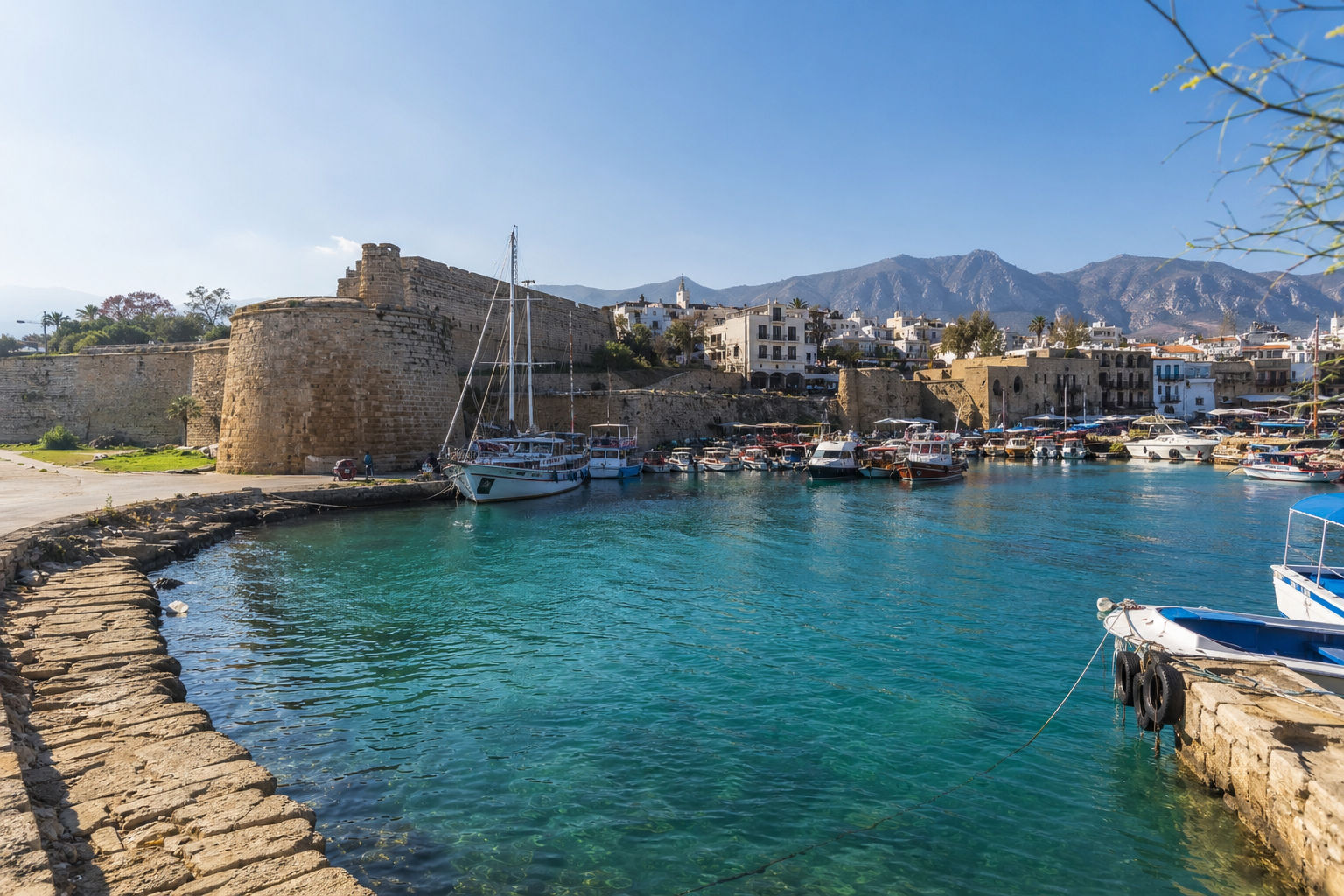
North Cyprus (the TRNC) maintains its own safety profile, covered in detail in our dedicated North Cyprus travel guide. Crime rates are very low, and Kyrenia and Famagusta are safe and welcoming. The main consideration is confirming entry requirements based on your nationality. Some solo female travel guides advise against North Cyprus on political grounds, but this reflects personal preference rather than meaningful safety concerns.
Transport Safety: Stress-Free Travel
- Taxis—licensed taxis are regulated and safe; use the official Cyprus Taxi app or book through your hotel for metered or pre-agreed fares; decline unmarked taxi offers near tourist attractions.
- Ridesharing—Uber operates in Cyprus and is the most convenient option for solo travelers; Bolt is also active and typically slightly cheaper.
- Public buses—OSYPA intercity and local urban buses are safe, clean, and efficient, with frequent routes between Larnaca, Paphos, Limassol, and Nicosia.
- Driving—Cyprus drives on the left; roads are generally good but require adjustment if you're not used to left-hand driving. Road traffic is the single biggest statistical risk for tourists; rental cars are well-priced at €20-40 per day.
- Night transport—use Uber or official taxis after midnight rather than walking unfamiliar routes; this is standard Mediterranean practice.
Health and Practical Safety Points
- Healthcare—Cyprus has EU-standard public hospitals in major cities; private hospitals are excellent and English-speaking. EHIC/GHIC cards are valid for UK and EU citizens in the Republic of Cyprus.
- Emergency number—112 is the standard EU emergency number, covering police, fire, and ambulance across Cyprus.
- Water—tap water is safe in urban areas, though many prefer bottled water due to hardness and chlorination in some areas.
- Sun and heat—heat exhaustion is common in summer; temperatures reach 37-40°C in July and August. Carry water, wear a hat, and plan outdoor activities for the morning.
- Mosquitoes—present from May through October; bring repellent for evenings near water or in rural areas.
- Travel insurance—important in 2026 due to regional airspace disruptions; ensure your policy covers flight cancellation and medical emergencies.
The Cultural Context: Genuine Safety
Cyprus's safety statistics reflect a culture built around tight-knit families and communities where mutual responsibility and hospitality are genuine values, not tourist marketing. This means:
- Locals often offer help to solo travelers without being asked.
- Restaurant owners, hotel staff, and shopkeepers treat solo travelers warmly, often recommending places or warning against bad options.
- The island's small size means communities are interconnected, reducing the anonymity that enables opportunistic crime in larger cities.
"Solo travelers consistently describe Cyprus as a destination where you feel welcomed into the island's life rather than tolerated as a revenue source."
Tips for Solo Travelers in 2026
- Book your first night's accommodation before landing—Larnaca Airport is the main arrival point, and having a confirmed destination removes first-arrival pressure.
- Use Uber from the airport—it's cheaper and more transparent than taxi ranks; the app works from the moment you land.
- Join the Cyprus Solo Travelers Facebook group—an active community sharing accommodation leads, meetup plans, and current safety information.
- Share your daily itinerary with someone at home via WhatsApp for peace of mind.
- Download offline maps before leaving WiFi—rural areas around the Troodos Mountains and Akamas Peninsula have patchy signals.
- Dress appropriately at religious sites—cover shoulders and knees when entering Orthodox churches and monasteries; most sites provide wraps, but having your own is considerate.
- Carry cash—while cards are accepted in tourist areas, smaller cafes and shops are often cash-only; stock up before heading to rural areas.
- Monitor regional news in 2026—set a news alert for Cyprus airspace and check your government's advisory page before departure.
FAQ
Is Cyprus safe for solo travelers in 2026?
Yes. Cyprus has one of the lowest crime rates in the EU, a crime severity rating of 0.5 out of 10, and a culture built on filoxenia—genuine hospitality. The US State Department baseline rating is Level 1 (Exercise Normal Precautions), though a 2026 advisory upgrade to Level 2 reflects regional tensions rather than on-the-ground danger.
Is Cyprus safe for solo female travelers?
Yes. Solo female travelers consistently rate Cyprus as one of the safest and most welcoming Mediterranean destinations. Violent crime against women tourists is rare, locals are genuinely helpful, and the main precautions are standard Mediterranean common sense.
What is the most dangerous area in Cyprus for tourists?
Ayia Napa's nightlife district after midnight requires the most active awareness due to elevated risks of bag theft, drink spiking, and harassment. All other major tourist areas are comfortable and safe.
Is North Cyprus safe for solo travelers?
Yes—North Cyprus has very low crime rates, and Kyrenia and Famagusta are safe and welcoming cities. Confirm entry requirements for your nationality, as entry is through Turkish Cypriot border control.
Should I be worried about the 2026 regional situation affecting Cyprus?
The practical impact for tourists is primarily potential flight disruptions from regional airspace restrictions, not safety threats within Cyprus. All tourist areas are operational, and the island is physically untouched. Book with a credit card that offers cancellation protection, purchase comprehensive travel insurance, and monitor advisories.
What is the emergency number in Cyprus?
112 is the standard EU emergency number, covering police, fire, and ambulance across the Republic of Cyprus.
Safe, Welcoming, and Genuinely Worth It
Cyprus doesn't need a safety caveat-heavy introduction. It's a low-crime EU member state with 4.53 million visitors in 2025, EU-standard healthcare, reliable infrastructure, and a culture that has been genuinely hospitable for thousands of years. The 2026 regional context adds a layer worth being informed about—specifically airspace disruption risk—but the island itself remains exactly what it has always been: one of the most comfortable solo travel destinations in the Mediterranean, with warmth baked into the culture at a level that makes traveling alone feel less like solitude and more like a standing invitation to be welcomed in.
Read our full Cyprus travel guide and our dedicated North Cyprus travel guide on IsleRush.