Traditional Villages in the Canary Islands Worth Leaving the Resort For
Most people picture the Canary Islands as sun-loungers, all-inclusive buffets, and beachside cocktails. And yes, that version of the islands exists, and it's lovely. But there's a whole other Canary Islands hiding just a short drive from those resorts — one made of cobblestone lanes, 600-year-old churches, volcanic rock houses, and villages where time genuinely feels like it slowed down and never quite caught back up.
These traditional villages don't just offer a change of scenery. They offer the actual history, culture, and soul of an archipelago that most tourists never see. Here's where to go and why it's worth every minute of the drive.
Why These Villages Get Overlooked
Resort culture in the Canaries is built around convenience, and that's not a criticism — it's just how the tourism model works. Playa del Inglés, Costa Adeje, Puerto del Carmen: these places are polished, accessible, and deliver exactly what they promise.
The villages are different. They're inland, perched on cliffs, or tucked into valleys. They don't have shuttle buses or Instagram billboards pointing you toward them. That's precisely what makes them worth going to.
"These traditional villages don't just offer a change of scenery. They offer the actual history, culture, and soul of an archipelago that most tourists never see."
Teguise, Lanzarote — The Island's Forgotten Capital
If there's one village that deserves to be on every Lanzarote itinerary, it's Teguise. Founded in 1402 and named after a Guanche princess, it served as Lanzarote's capital for roughly 450 years before Arrecife took over in 1852. Today, it's one of the oldest Spanish settlements in the entire Canary Islands, and it's been officially declared a village of historic and artistic heritage by the Spanish government.
Walking through the old town, you'll find:
Palacio de Marques — the oldest building on the island, dating to 1455, which took 32 years to construct.
Castillo de Santa Bárbara — a fortress sitting above the village with sweeping views across Lanzarote's lunar landscape.
Iglesia de Nuestra Señora de Guadalupe — a beautiful whitewashed church in the village center.
Calle del Sangre (Street of Blood) — named after pirate raids that repeatedly attacked the village in the 16th and 17th centuries.
Practical tips: The famous Teguise Sunday market fills the village with locals and travelers every week and is considered the best market on the island. Get there before 11am to avoid the coach tour crowds. The village itself is free to explore — budget around €5-8 entry for the castle. It's about a 20-minute drive from most north Lanzarote resorts.
Betancuria, Fuerteventura — The Oldest Town in the Canaries
Betancuria holds a title that most visitors to Fuerteventura have no idea about: it's the oldest European town in the entire Canary Islands. Founded in 1404 by French conqueror Jean de Bethencourt, it was deliberately built inland to protect early settlers from pirate raids on the coastline.
What makes it special today is how little it has changed. The town hosts:
Archaeological and Ethnographic Museum of Fuerteventura — showcasing the culture of the original Maho people with artefacts from across the island.
Ruins of the Convent of Saint Bonaventure — the first convent ever founded in the Canary Islands.
Working artisan workshops where master potters, weavers, and stonecutters still practice and teach traditional crafts.
Church of Santa María — originally built in the 15th century and later rebuilt after pirate attacks in 1593.
Practical tips: Betancuria is roughly 30 km from the main resort area of Caleta de Fuste. The mountain road there is part of the experience — slow and winding but stunning. Set aside a half-day. There are a handful of good traditional Canarian restaurants in the village, perfect for mojo sauce and papas arrugadas.
Agulo, La Gomera — The Jewel Nobody Talks About
La Gomera as a whole is criminally undervalued, and Agulo is its crown jewel. Known locally as "La Bonita," it sits tucked between dramatic cliffs and lush banana terraces in the north of the island, with cobbled streets, whitewashed houses, and one of the best views in the entire archipelago — on a clear day, you can see Mount Teide on Tenerife rising from the ocean across the water.
Agulo offers a rare combination:
Mirador de Abrante — a glass-floored viewpoint suspended over the village, with Mount Teide directly in your eyeline.
Silbo Gomero — the island's ancient whistled language, recognized by UNESCO as an Intangible Cultural Heritage, still used by locals in La Gomera's villages.
Casa de la Miel de Palma — a small producer where you can try the island's famous palm honey, one of La Gomera's most distinct local products.
Garajonay National Park — a UNESCO World Heritage Site of ancient laurel forest, accessible from the village, covering over 3,900 hectares.
Practical tips: La Gomera is reached by ferry from Los Cristianos in Tenerife (about 50 minutes). The ferry costs around €30-40 return. Agulo is 30 minutes by bus from San Sebastián, the main town — and that bus ride for €2.60 is one of the most scenic journeys in the islands. Stay overnight if you can; La Gomera feels completely different once the day-trippers leave.
Garachico, Tenerife — The Town That Rose from the Lava
Garachico's story is one of the most compelling in all of the Canaries. Once Tenerife's most important port town, it was almost completely destroyed in 1706 when the Trevejo volcano erupted and buried it under lava. What emerged afterward is now voted one of "Los Pueblos Más Bonitos de España" — the prettiest villages in Spain.
Things you genuinely can't experience anywhere else in the islands:
Piscinas Naturales El Caletón — natural swimming pools carved into the solidified lava by the sea, completely free to use.
Castillo de San Miguel — a 15th-century coastal fortress that survived the eruption.
The old town's cobbled streets — declared a "Bien de Interés Cultural" for their historical and architectural value.
Plaza de la Libertad and Church of Santa Ana — the emotional heart of the village and a perfect example of traditional Canarian architecture.
Practical tips: Garachico is on Tenerife's north coast, about 1 hour from the southern resorts. It pairs perfectly with a stop at the nearby village of Icod de los Vinos, home to the world's oldest living dragon tree. Visit on a weekday to avoid weekend crowds, and arrive before 10am to get the natural pools before they fill up.
Best Time to Visit These Villages
Teguise, Lanzarote — Year-round; Sundays for the market. Avoid: Peak summer midday heat.
Betancuria, Fuerteventura — October to April. Avoid: July/August (extreme heat inland).
Agulo, La Gomera — March to May, September to November. Avoid: No strong season to avoid.
Garachico, Tenerife — October to April. Avoid: Weekend summer crowds.
How Many Days Do You Need?
You don't need to rearrange your whole holiday for these. Each village works as a half-day or full-day side trip from the main resort areas:
Teguise — 3-4 hours, easy half-day.
Betancuria — 4-5 hours including the scenic drive.
Agulo/La Gomera — full day minimum; overnight strongly recommended.
Garachico — 3-4 hours; pair with Icod de los Vinos for a full day.
FAQ
Are these villages worth visiting even on a short holiday?
Yes. Even a single village visit fundamentally changes how you experience the Canaries. Teguise and Garachico in particular are accessible enough that they work as a half-day side trip with no stress.
Do I need a rental car to visit?
For Betancuria and Teguise, a rental car helps a lot. Garachico is reachable by public bus from Tenerife's north. La Gomera requires a ferry, but public transport works fine once on the island.
Are these villages expensive?
Most are essentially free to explore. Expect to pay €5-10 for museums or viewpoints, and €15-25 per person for a traditional lunch. La Gomera's ferry is the biggest cost at around €30-40 return.
Is La Gomera hard to get to?
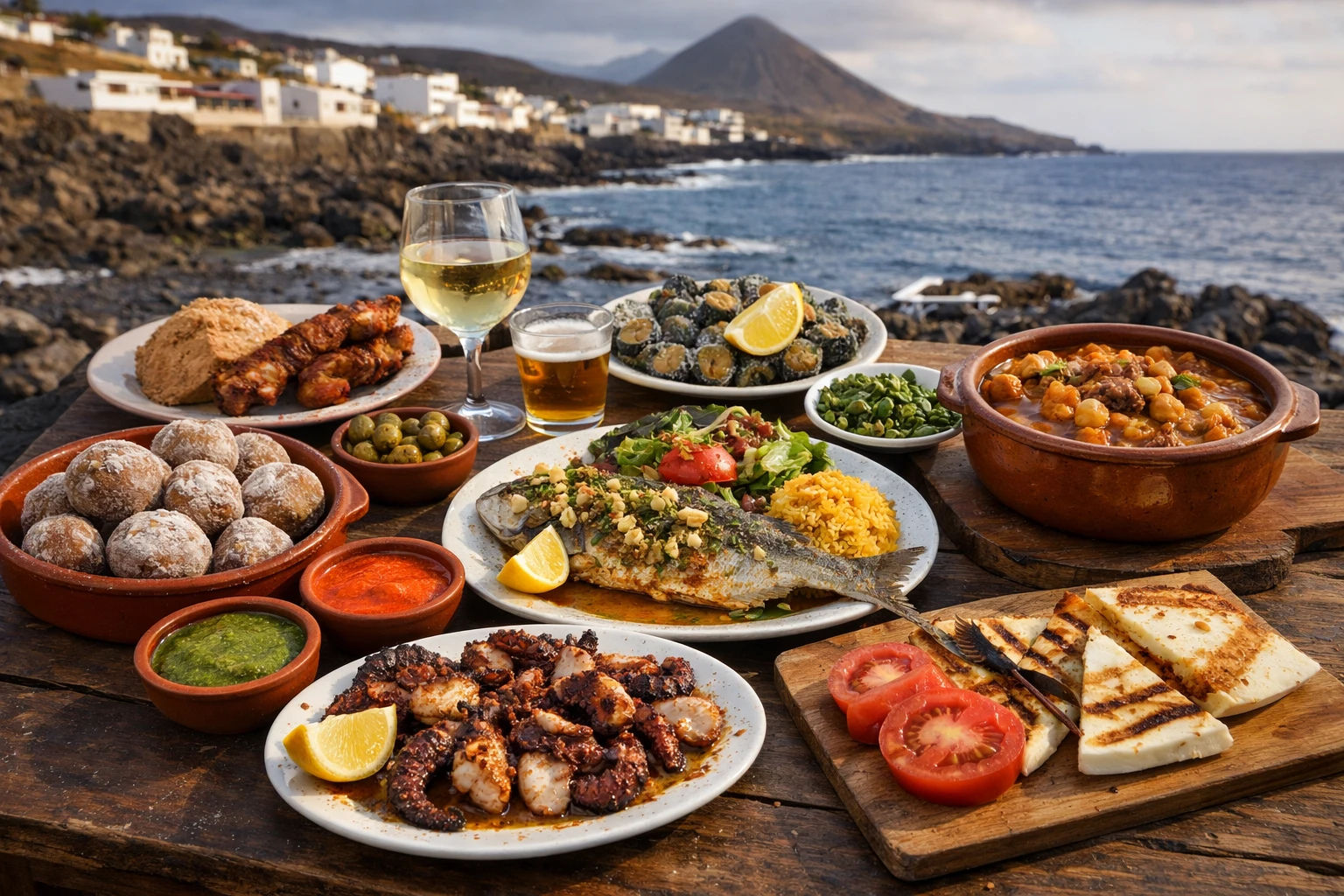
It's genuinely easy — a regular ferry from Los Cristianos in Tenerife takes about 50 minutes. The bigger barrier is mental: most resort-based tourists just never think to look beyond the island they landed on.
What makes Canarian village architecture distinctive?
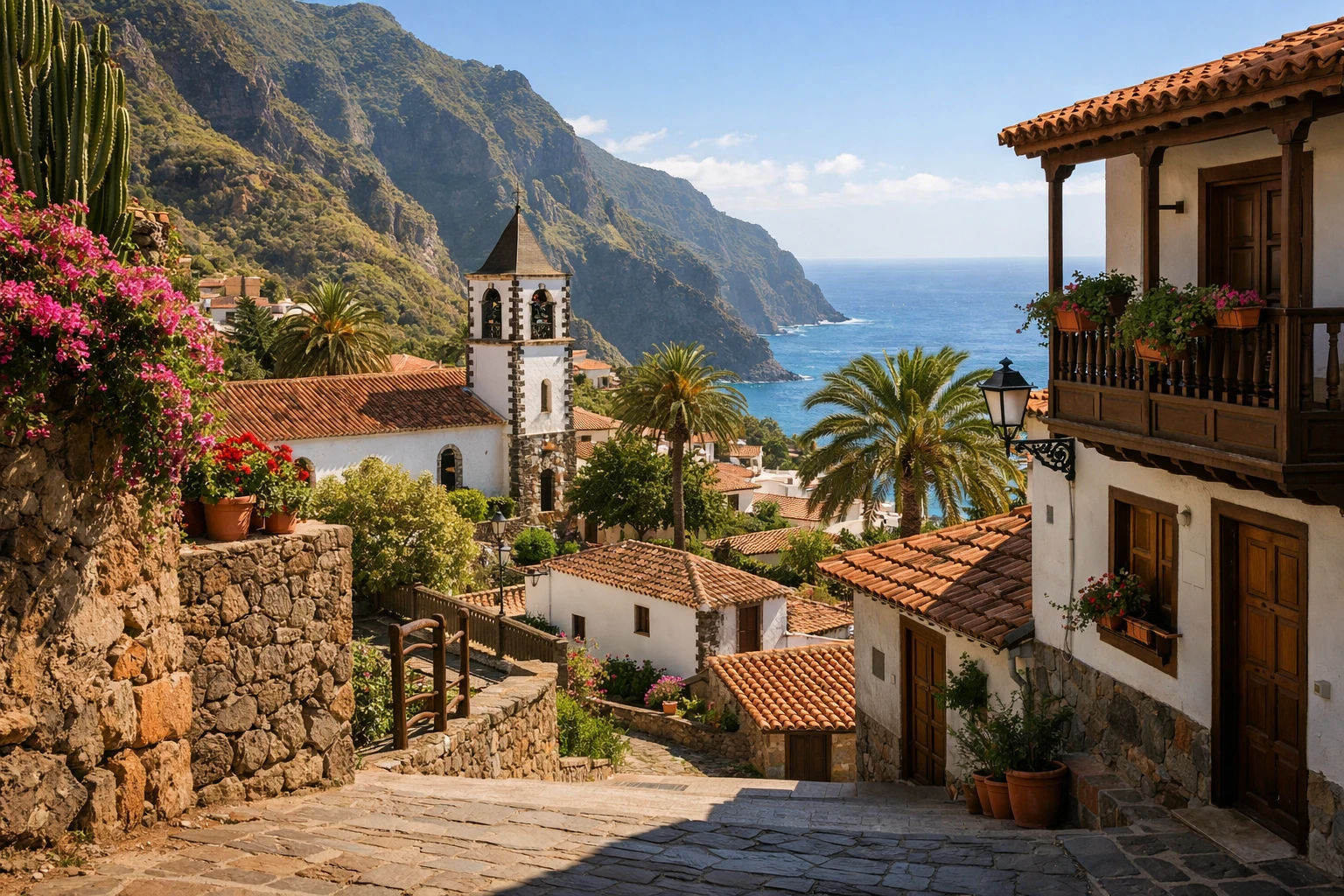
The hallmark is whitewashed walls, dark volcanic stone accents, and ornately carved wooden balconies — a style developed during Spanish colonial expansion and shaped by the unique volcanic geology of each island.
Plan the Trip That Actually Stays With You
Beach days have their place, and there's nothing wrong with a poolside afternoon. But the Canary Islands have been drawing visitors for centuries because of something far older than any resort — villages built by conquerors, princesses, and fishermen who shaped these islands from the ground up. Teguise, Betancuria, Agulo, Garachico: each one is a half-day drive from where you're already staying, and each one offers a version of the Canaries that most tourists fly home without ever seeing.
Explore more island travel guides, or start planning your full Canary Islands itinerary.