Canary Islands Food Guide 2026: What to Actually Eat Beyond Resort Menus
If your Canary Islands meals have mostly been hotel buffet pasta and poolside burgers, you're missing the point entirely. Canarian cuisine is one of the most distinct regional food cultures in Spain — shaped by Guanche indigenous traditions, African influences, and centuries of Atlantic trade — and almost none of it shows up on resort menus. Here's what to actually order, where to find it, and why it's worth seeking out.
Why Resort Food Gets It Wrong
Most all-inclusive and hotel menus in the Canaries default to pan-European food because it's safe and scalable. Traditional Canarian cooking is neither — it's specific, ingredient-driven, and deeply tied to the land and sea of each individual island. The good news is that a proper local meal is rarely more expensive than a resort meal, and you don't have to go far to find it. A local restaurant, a market bodega, or a small family-run taberna is usually within a 15-minute drive of most resort areas.
"Traditional Canarian cooking is specific, ingredient-driven, and deeply tied to the land and sea of each individual island."
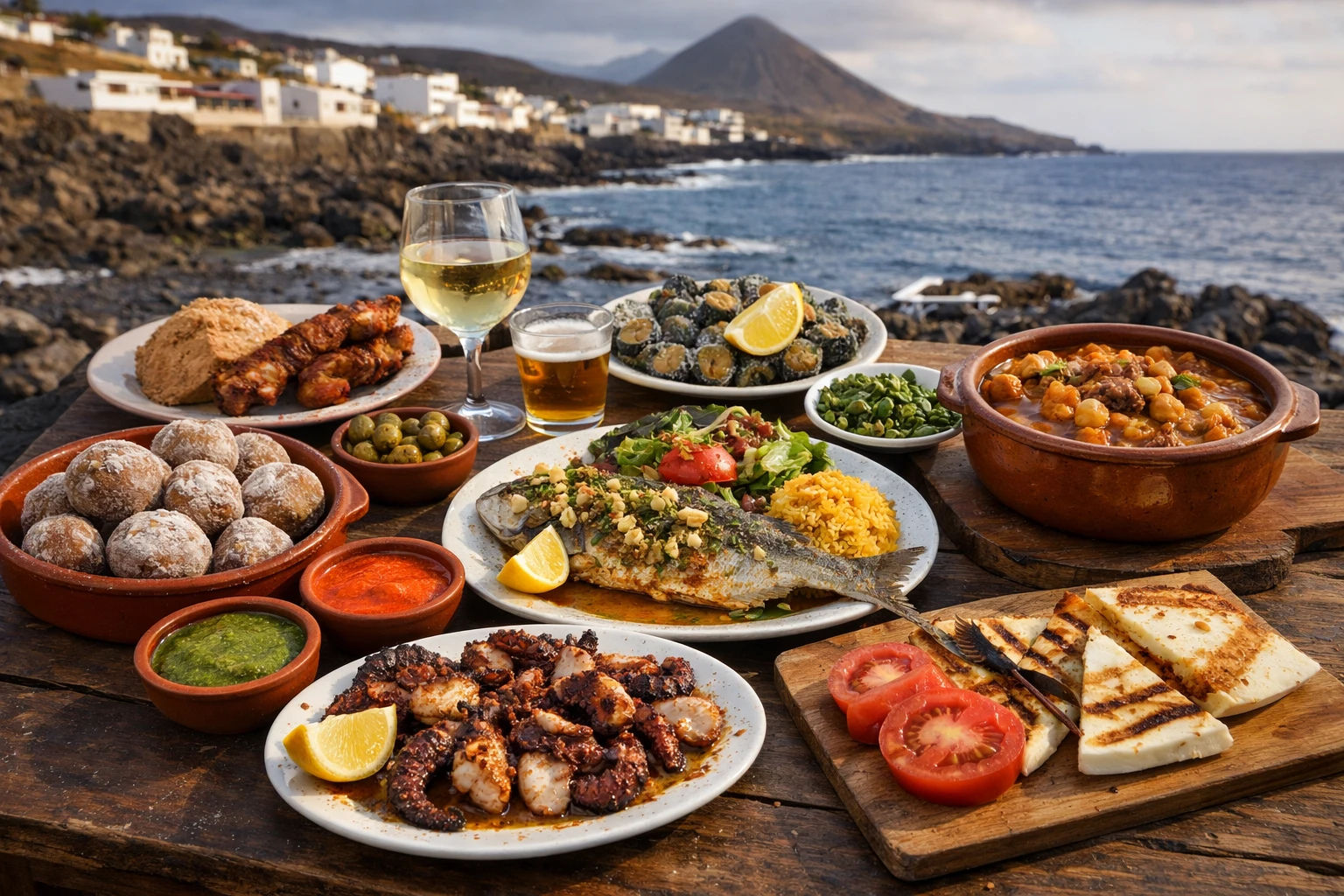
The Non-Negotiables: Dishes You Must Try
Papas Arrugadas con Mojo
This is the dish the Canaries are most known for, and it genuinely lives up to the reputation. Small potatoes — ideally the local variety called "papa bonita" — are boiled in heavily salted water (roughly 20% salt by weight) until the skin wrinkles and a white salt crust forms on the outside. They're served with two sauces:
- Mojo rojo — made with garlic, red chillies, smoked paprika, cumin, red wine vinegar, and olive oil.
- Mojo verde — made with garlic, green chillies, parsley or coriander, cumin, and olive oil.
Order both. The red mojo hits with heat and smoke, while the green mojo is fresher and herbal. This dish appears as a starter on virtually every local menu across all seven islands and costs around €4-7.
Gofio — The Ancient Superfood
Gofio powder
Gofio is arguably the most culturally important food in the Canaries, and most tourists never touch it. It's a finely milled flour made from roasted cereals — usually corn or wheat — and it dates back to the Guanche people, the indigenous inhabitants of the islands, who relied on it as their primary food source for centuries before Spanish colonization.
Today Canarians use gofio in multiple ways:
- Gofio escaldado — stirred into hot fish broth with onions to create a thick, savory porridge-like dish.
- Pella de gofio — a dense dough-like ball served alongside stews and fish dishes.
- Breakfast gofio — mixed into warm milk, similar to a morning porridge.
- Sprinkled over soups — used as a thickener and flavor boost the way others use croutons.
The flavor is nutty, toasty, and earthy — nothing like plain flour. Most Canarians genuinely eat this daily, not as a heritage novelty.
Sancocho Canario
Sancocho is the Canary Islands' most traditional stew, and it's traditionally eaten on Good Friday across the archipelago — though you'll find it year-round in local restaurants. It's built from:
- Salted and desalted grouper (cherne) or sea bass.
- Potatoes and sweet potatoes boiled together.
- A side of pella de gofio.
- Mojo rojo drizzled over the top.
The fish gets salted for preservation (a tradition born from the islands' fishing heritage), then soaked in cold water for up to 24 hours before cooking. The result is deeply savory and satisfying in a way no resort fish dish gets close to.
Almogrote
Almogrote is La Gomera's gift to the food world — and almost nobody outside the islands knows it exists. It's a thick, spreadable cheese paste made from cured goat's cheese, garlic, red pepper, vinegar, and olive oil, born from Berber culinary influence. Think of it as the Canarian answer to a spicy cheese dip — you spread it on bread or potatoes, and it punches with salt, garlic, and mild heat. Look for artisan versions from Masapé in Vallehermoso, made to a traditional family recipe for over 30 years.
Conejo al Salmorejo
This is rabbit marinated in garlic, local white wine, cumin, paprika, oregano, and thyme, then slow-cooked until tender. It's one of the most distinctly Canarian main courses you'll find — lighter than it sounds, with the wine cutting through the richness of the meat. Chicken versions (pollo al salmorejo) are also common and equally good for anyone hesitant about rabbit.
Ropa Vieja and Rancho Canario
Two hearty mains worth knowing:
- Ropa vieja — slow-cooked beef or chicken shredded and combined with chickpeas and potatoes; the name means "old clothes."
- Rancho canario — a thick, rustic soup built from meat, chickpeas, noodles, and potatoes.
Both are staples in local restaurants, especially inland and during cooler months from October through March.
The Cheeses: Go Beyond the Bread Basket
Canarian cheese culture is seriously underrated. Key varieties to try:
- Majorero — Fuerteventura; protected designation of origin; nutty, slightly salty goat's milk cheese; eaten fresh, semi-cured, or cured.
- Flor de Guía — Gran Canaria; soft, semi-cured wheel using thistle flower as a coagulant.
- Queso Ahumado — La Palma; smoked goat's cheese with a distinctive dark rind.
- Almogrote spread — La Gomera; cured cheese blended into a spicy pâte.
Majorero from Fuerteventura is the most celebrated — it's won international awards and has a protected PDO status, meaning the name can only be used for cheese made on the island under specific conditions.
The Desserts Worth Saving Room For
- Bienmesabe — a thick almond cream made from ground almonds, eggs, lemon, and sugar; the name literally means "it tastes good to me." Born in Gran Canaria where almond trees are abundant, it's served as a dessert sauce or eaten with ice cream.
- Quesillo — the Canarian version of flan, made with condensed milk and caramelized sugar. Creamier and richer than Spanish flan, and found on nearly every local restaurant menu.
- Baifo — technically a savory festive dish of marinated young goat, heavily seasoned with bay leaf, garlic, and thyme. If you visit between November and January, this is what locals are eating at family gatherings.
Where to Actually Find This Food
Skip the tourist strip. Here's where to look:
- Local mercados (markets) — every island has at least one covered food market where you can graze on cheese, bread, mojo, and fresh produce. Las Palmas de Gran Canaria's Mercado del Puerto is one of the best.
- Guachinches — informal, unlicensed restaurants in Tenerife that open seasonally when local farmers have enough wine and food to share. No menus, no reservations, just home cooking.
- Bodegas — small wine bars that serve food alongside local wines; the best way to try tapas-style Canarian eating.
- Inland villages — as covered in our traditional Canary Islands village guide, inland spots like Betancuria and Teguise have small family restaurants that serve authentic local cooking at €10-15 per main.
How Much Should a Local Meal Cost?
Meal Type Average Cost Per Person
- Papas arrugadas starter — €4-7
- Main course at local restaurant — €10-18
- Full 3-course local menu del día — €10-15 (lunch)
- Cheese tasting board — €8-14
- Dessert — €4-6
The "menu del día" is one of the best value meals in Spain, and it applies in the Canaries too — many local restaurants offer a set 3-course lunch including wine for around €12-15.
FAQ
Is Canarian food spicy?
Mildly, in places. Mojo rojo has heat but it's not aggressive. Most Canarian dishes are more savory and aromatic than spicy, built on garlic, cumin, and paprika rather than chili heat.
Can vegetarians eat well in the Canary Islands beyond resort food?
Yes, better than expected. Papas arrugadas, gofio dishes, almogrote, bienmesabe, and most cheeses are vegetarian. Rancho canario and ropa vieja contain meat, but local restaurants are generally willing to adapt.
Where is the best island for food in the Canary Islands?
Tenerife has the most developed food scene, including two new Michelin-starred restaurants in 2026 — Haydée by Víctor Suárez and El Taller de Seve Díaz, both focused on recovering traditional Canarian ingredients and techniques. Gran Canaria is a close second for sheer variety.
Is gofio worth trying if you're not adventurous with food?
Absolutely. Despite its ancient origins, gofio tastes approachable — think toasted, nutty, and slightly sweet. Try it in a breakfast context mixed into warm milk for the easiest introduction.
Can I bring Canarian food home?
Yes. Vacuum-packed mojo sauces, almogrote, gofio flour, and cured Majorero cheese all travel well. Most airport shops in Las Palmas and Tenerife stock quality versions, though artisan market products are better.
Stop Eating at the Resort
The Canary Islands have one of the most genuinely distinctive regional food cultures in all of Spain, rooted in indigenous tradition, African influence, and centuries of Atlantic seafaring. Papas arrugadas and mojo are the well-known entry point, but gofio, sancocho, almogrote, and the island's extraordinary cheeses are what Canarians actually eat. You're already there — the food is cheap, it's extraordinary, and a local restaurant is never more than a short drive away.
Explore our Canary Islands travel guides, or read about the best traditional villages to visit beyond the resort.