Canary Islands in Spring vs. Winter: When Should You Actually Go?
The Canary Islands sit just 100 kilometres off the coast of West Africa, which means they don't really do "bad weather" — but they do have genuinely different personalities depending on when you show up. Whether spring or winter is right for you depends entirely on what kind of trip you're after. Here's the honest breakdown.
Why This Question Actually Matters
Most seasonal travel guides say something like "it's great year-round!" and leave it at that. That's technically true but completely useless for planning. Spring and winter are the two most popular times to visit the Canaries; they attract very different types of travelers and deliver noticeably different experiences in terms of price, crowds, weather, and atmosphere. Knowing the difference saves you money and sets the right expectations before you land.
"Knowing the difference saves you money and sets the right expectations before you land."
The Climate Basics
The Canary Islands see over 300 days of sunshine per year across the archipelago. Here's how temperatures and rainfall break down month by month:
Month Avg Temp Avg Rainfall
December 19°C (66°F) 31mm
January 18°C (64°F) 29mm
February 18°C (64°F) 24mm
March 19°C (66°F) 16mm
April 20°C (68°F) 6mm
May 21°C (70°F) 2mm
The takeaway: winter is mild and mostly dry, spring is warmer and gets drier by the week, and by May, rainfall is essentially zero.
Winter in the Canary Islands
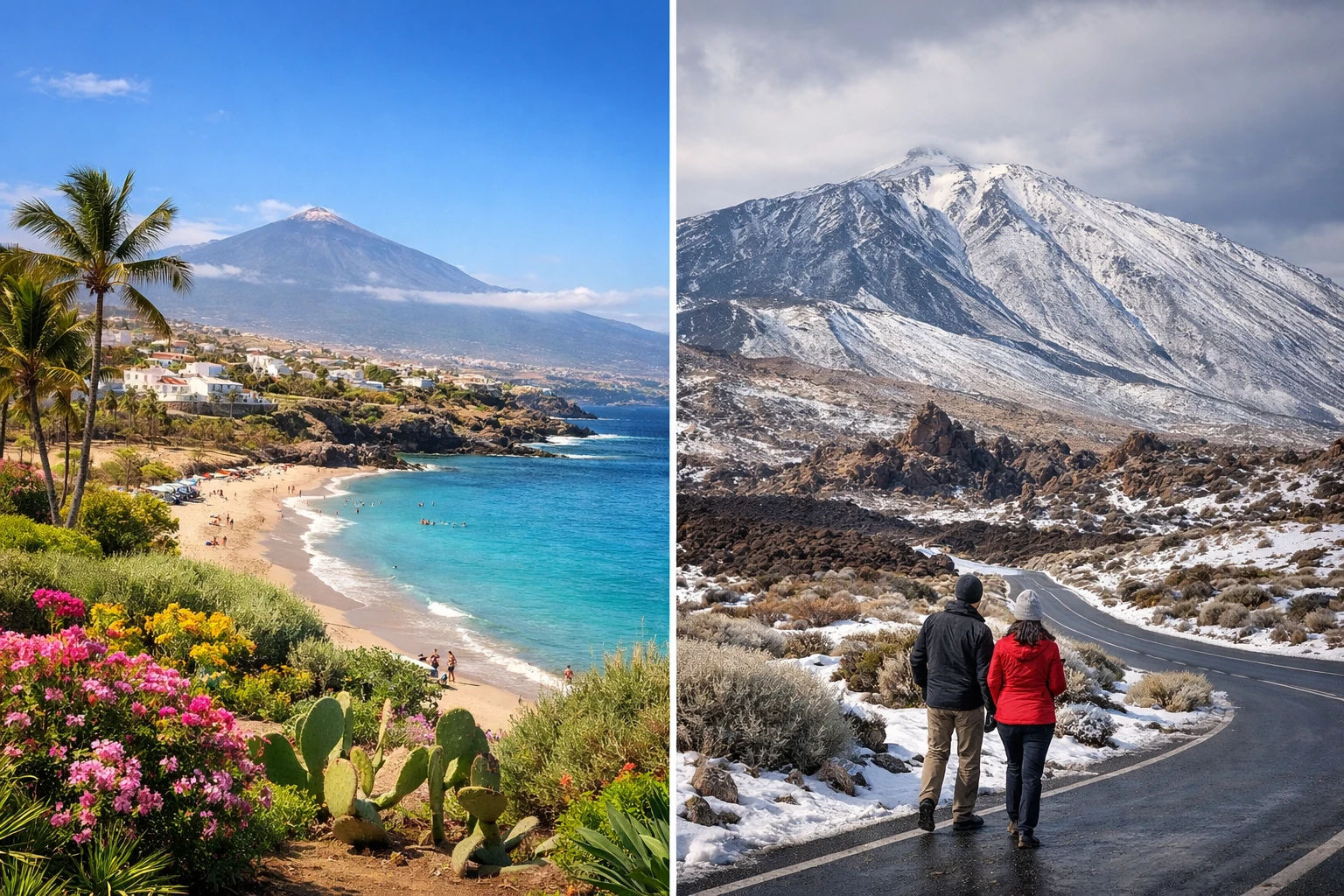
Winter is the Canary Islands' true high season, and the reason is simple — Northern Europeans flee the cold and land here in enormous numbers. Temperatures on the coast hover around 18-20°C (64-68°F), which feels warm compared to anywhere in Northern Europe or Canada at the same time of year.
Who winter is perfect for:
Travelers escaping genuine cold who just want reliable sunshine and warmth.
Couples and retirees looking for a relaxed, slower-paced escape.
Anyone who wants to experience the legendary Carnaval de Santa Cruz de Tenerife, which runs in February and is one of the biggest street carnivals in the world after Rio.
Beach lovers who don't need scorching heat — just consistent sun.
What you'll deal with in winter:
This is peak season, so hotels, flights, and restaurants cost significantly more.
Popular resort areas like Playa del Inglés and Costa Adeje are at their most crowded.
Sea temperatures sit around 19-20°C — swimmable, but not warm.
Inland and in the western islands (La Gomera, La Palma), you'll get more cloud and occasional rain.
Winter highlight you shouldn't miss: Almond blossom season kicks off in Gran Canaria and Tenerife from mid-January onward, turning the mountain valleys pale pink and white — one of the most quietly beautiful natural events in the islands.
Spring in the Canary Islands
Spring is increasingly recognized as the sweet spot for the Canary Islands — fewer crowds, lower prices, better hiking conditions, and weather that improves week by week. March still carries a little leftover winter rain (especially in the west), but by April the skies are clear and by May the archipelago is fully settled into warm, brilliant sunshine.
Who spring is perfect for:
Hikers and outdoor enthusiasts — spring wildflowers across Garajonay, Teide National Park, and Gran Canaria's interior make trails genuinely spectacular.
Budget travelers — flights and accommodation drop noticeably after the winter high season.
Families outside of Easter Week (Semana Santa), when the islands quieten down significantly.
Digital nomads and longer-stay travelers who want warm weather without peak-season chaos.
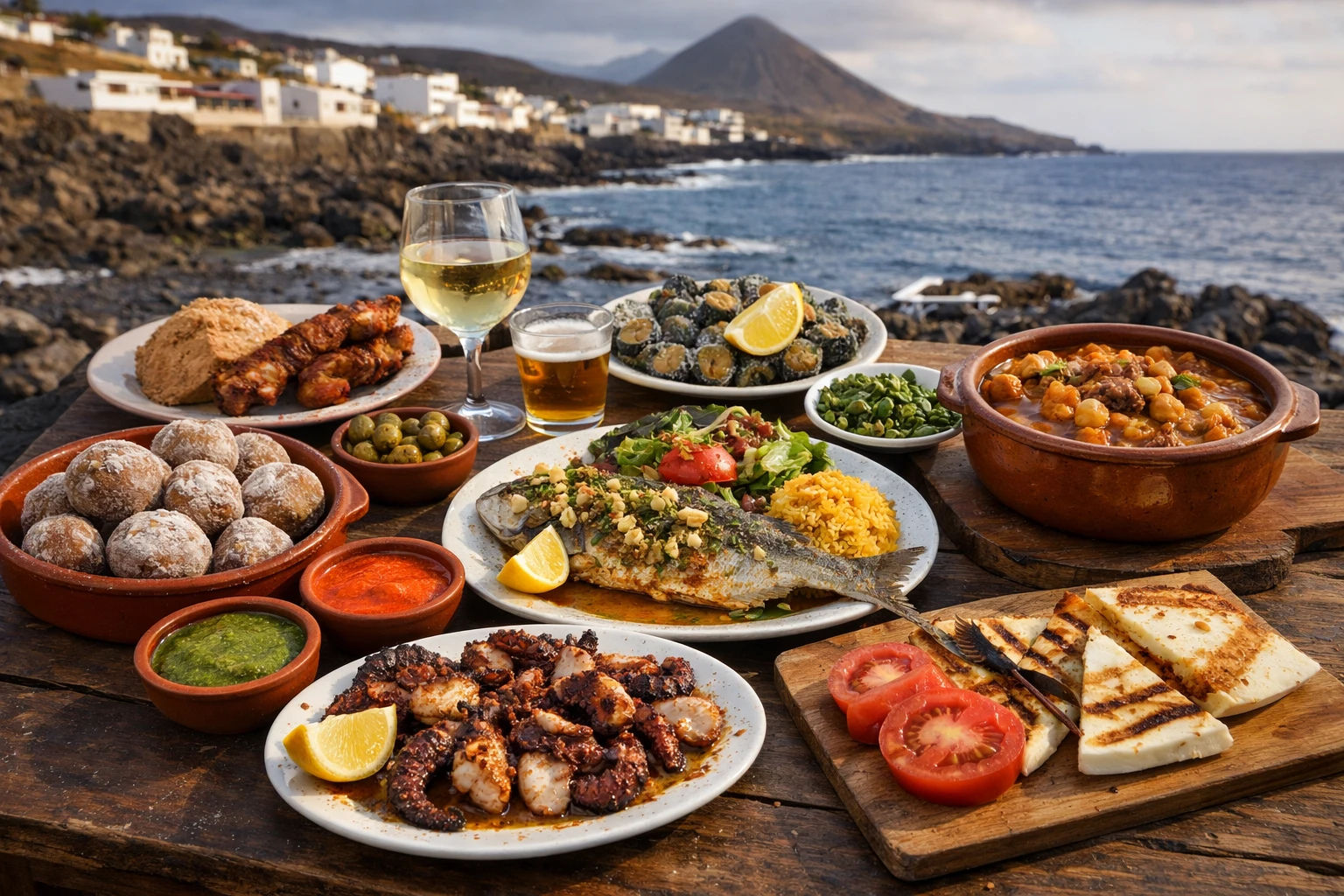
Food and culture seekers — local festivals, village markets, and outdoor events pick up across the islands through April and May.
What you'll deal with in spring:
March can still bring rain, particularly in the northern and western islands.
Easter Week (Semana Santa) brings a sharp but short crowd surge — book accommodation early if your dates land here.
Sea temperatures are cooler than summer, sitting around 18-20°C in March and rising to around 21°C by May.
Spring highlight you shouldn't miss: May and early June are widely considered the single best time to visit the Canaries by travel experts — warm, sunny, essentially no rain, and not yet crowded with summer holidaymakers.
Head-to-Head: Spring vs. Winter
Factor
Winter (Dec–Feb) Spring (Mar–May)
Temperature
18-20°C 19-24°C
Rainfall
Light but present Minimal to zero by May
Crowds
High season, very busy Quieter (except Easter)
Prices
Peak season rates 20-30% cheaper
Sea temperature
19-20°C 19-21°C
Best for
Sun seekers, retirees, Carnaval Hikers, budget travelers, couples
Worst for
Budget travelers, crowd-haters Swimming (early March is cool)
Events
Carnaval (Feb), almond blossom Spring festivals, Semana Santa
Does It Matter Which Island You Choose?
Yes — and this is where most seasonal guides fall short. The Canaries aren't uniform:
Lanzarote and Fuerteventura are the driest islands year-round — these are the best bets if you want guaranteed sunshine in winter.
Gran Canaria and Tenerife offer the most variety in both seasons — beaches, mountains, villages, and nightlife all in one place.
La Gomera, La Palma, and El Hierro are significantly wetter and greener, especially in winter — beautiful for walking and nature, less reliable for pure sun-chasing.
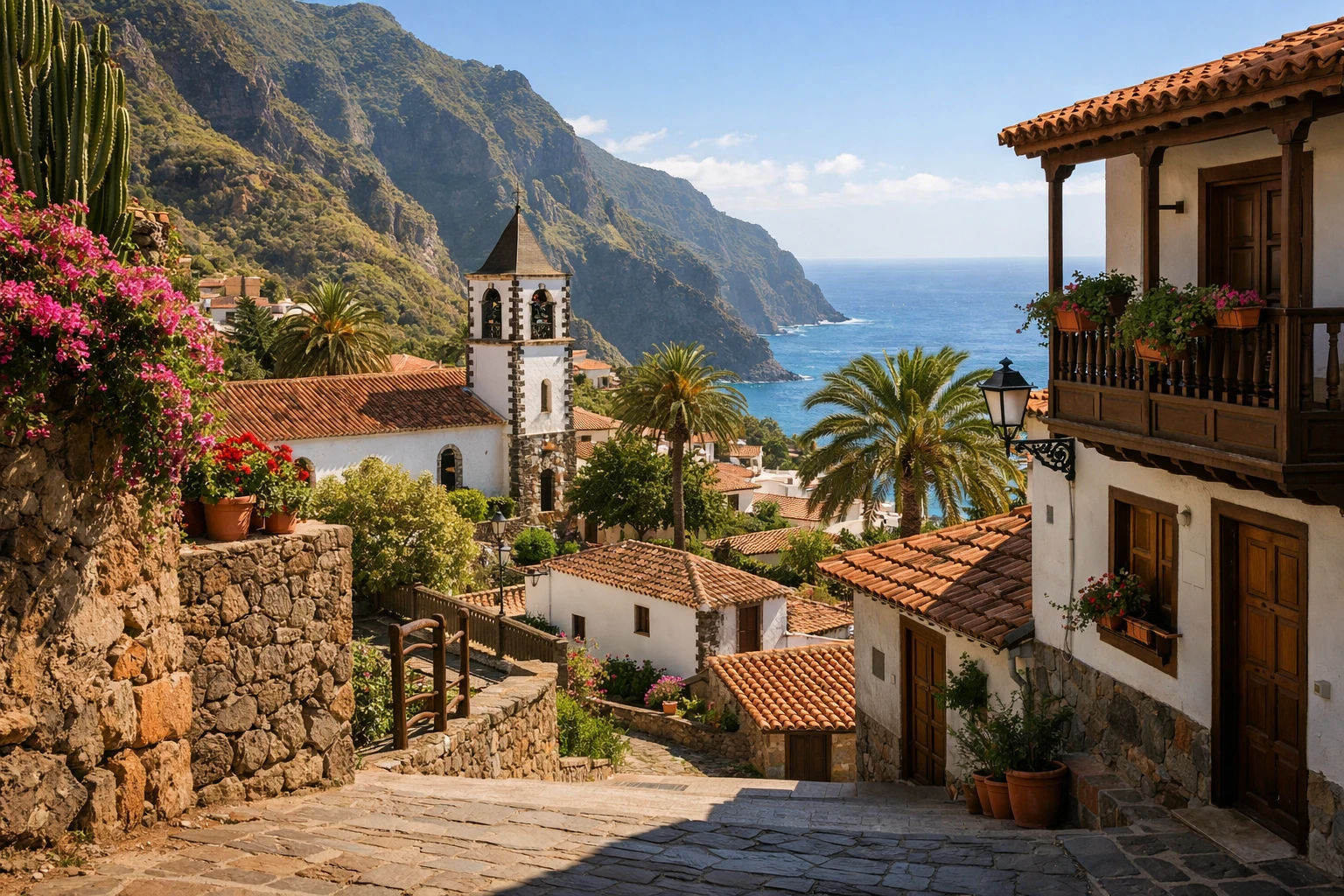
For a dedicated beach holiday in winter, go east (Lanzarote, Fuerteventura). For hiking, culture, and village exploration in spring, any island works — but Tenerife, Gran Canaria, and La Gomera are exceptional.
The Honest Verdict
Go in winter if: you're fleeing cold weather and want reliable mild sunshine, you're planning around Carnaval, or you don't mind paying more for the convenience of peak-season infrastructure and crowds.
Go in spring if: you want the same great weather with fewer people, lower prices, and genuinely better conditions for exploring the islands beyond the resort — hiking, village visits, food culture, and outdoor activities all peak in April and May.
The islands are genuinely good year-round, but spring edges out winter for independent travelers, first-timers who want to see the real Canaries, and anyone who finds packed resort strips more exhausting than relaxing.
FAQ
Is the Canary Islands warm enough to swim in winter?
Yes, just about. Sea temperatures sit around 19-20°C in winter — fine for a dip and comfortable for many Europeans, though not warm by Caribbean standards. Wetsuits aren't needed for casual swimming.
Which is cheaper — spring or winter in the Canary Islands?
Spring is noticeably cheaper. Winter is peak season due to Northern European demand, so flights and hotels carry a significant premium. Spring (especially April and early May outside Easter) offers the best value of any season.
When is the best time to visit for hiking?
March through May is ideal for hiking — wildflowers are in bloom, temperatures are cool enough for long treks, and trails in Garajonay, Teide, and the Caldera de Taburiente are at their most scenic.
What's the weather like in the Canary Islands in February?
February is still winter high season — mild at around 18°C on the coast, mostly sunny with occasional light rain. It's also Carnaval month, which brings massive crowds to Tenerife but an electrifying atmosphere if that's your thing.
Are the Canary Islands good for a summer trip?
Summer (July-August) is hot, busy, and expensive — similar downsides to winter but with more heat and less of the cultural calendar. Spring and autumn genuinely outperform summer for most travel styles.
Plan the Right Trip
The Canary Islands reward travelers who show up at the right time for the right reasons. Winter gives you a reliable European winter escape with real warmth and the energy of Carnaval season. Spring gives you wildflowers, quiet beaches, better prices, and perfect hiking weather — arguably the best all-round version of the islands if you want more than just a sun lounger. Either way, the islands deliver. The question is just which version of them you want.
Explore our full Canary Islands travel guides, or read about the best traditional villages, local food, and hidden gems beyond the resort zone.