The Canary Islands Nobody Talks About: Your El Hierro Itinerary
Most people who visit the Canary Islands go to Tenerife, Gran Canaria, or Lanzarote. A smaller number make it to La Gomera or La Palma. Almost nobody goes to El Hierro — and that is exactly why you should. The smallest and most westerly island in the archipelago is also its most extraordinary: a UNESCO Biosphere Reserve, Europe's first fully sustainable island, and one of the most pristine natural environments you'll find anywhere in the Atlantic. No mega-resorts. No strip clubs. No tourist conveyor belt. Just volcanic landscapes, ancient forests, crystal-clear natural pools, and an island that has deliberately chosen a different path.
El Hierro's Unique Appeal
El Hierro's sustainability story starts in 1997, when the island launched one of the world's first comprehensive sustainability plans — before the term even entered mainstream tourism vocabulary. By 2006, the island had already met 82% of its policy objectives. Since 2015, the Gorona del Viento wind and hydroelectric power plant has reduced the island's greenhouse gas emissions by 40,000 tonnes, saving the equivalent of 40,000 barrels of oil per year. The long-term goal is to become the first island on the planet to run entirely on renewable energy.
"Tourism here is intentionally slow, intentionally small-scale, and intentionally wild."
That commitment shapes everything about the visitor experience. The island's government actively manages visitor numbers to prevent the kind of overtourism that has damaged Tenerife and Gran Canaria's most iconic spots. You feel that the moment you land. The roads are quiet. The villages are unhurried. The landscapes are uninterrupted.
El Hierro has a population of just 11,000 people and covers 268 square kilometres — compact enough to explore thoroughly in four to five days without ever feeling rushed.
Travel Logistics
El Hierro is the most remote island in the Canary Islands, which is both the reason it's so untouched and the one genuine logistical challenge for visitors.
By air: The island has its own airport (El Hierro Airport / VDE) with daily flights from Tenerife Norte (Gran Canaria and Madrid also have connections). Binter Canarias operates the most frequent routes, with flights from Tenerife taking around 40 minutes. Return flights typically cost €60-120 depending on how far in advance you book.
By ferry: Fred Olsen operates a weekly ferry service from Los Cristianos in Tenerife to the island's port at La Estaca, taking approximately 2.5 to 3 hours depending on conditions.
Getting around the island: A hire car is essentially essential. El Hierro has no meaningful public transport network and the best experiences are spread across the island. Roads are well-maintained but often winding and steep — allow more driving time than the distances suggest.
4-Day El Hierro Itinerary
Day 1: Valverde and the North
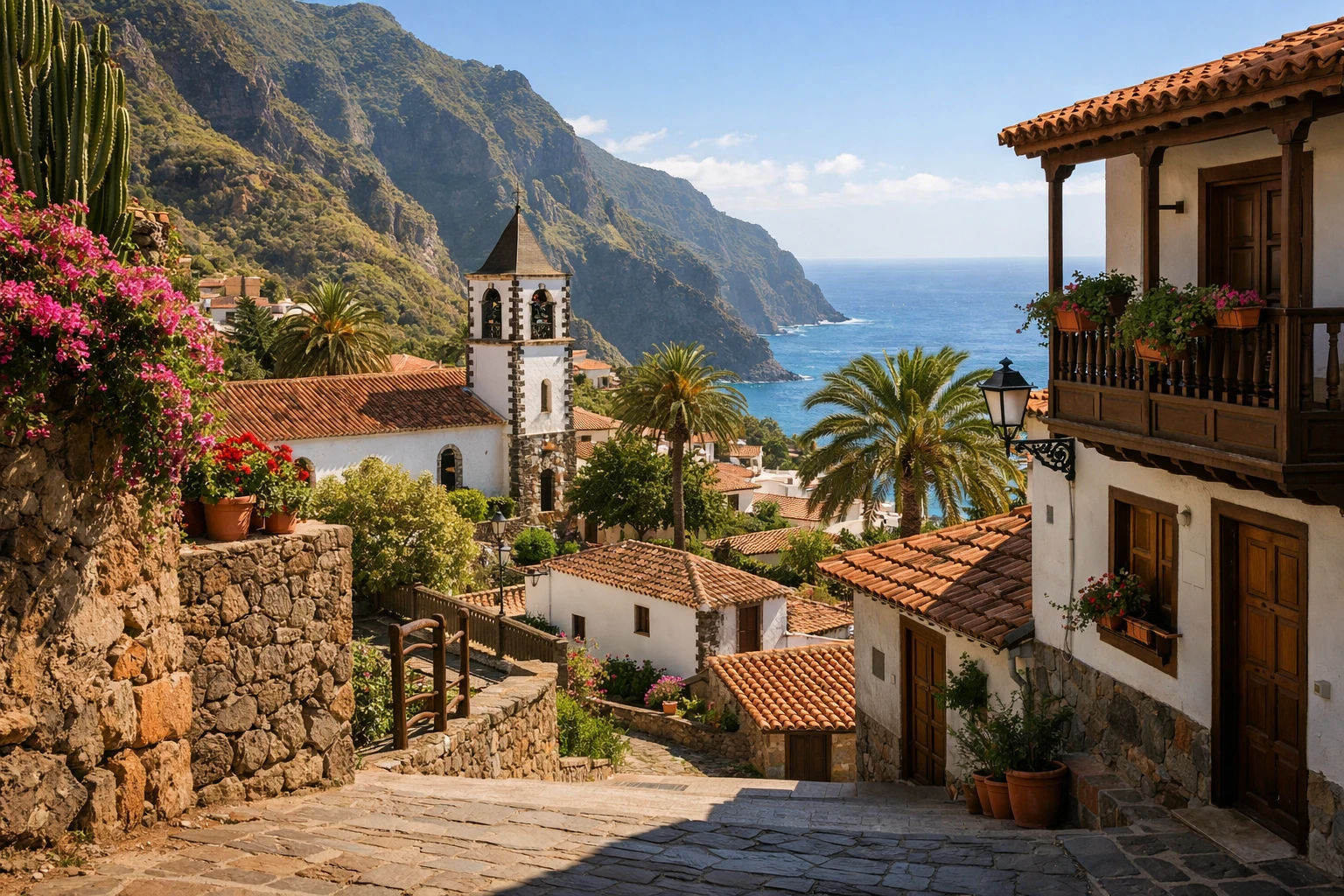
Start in Valverde, the island's small capital and the only inland capital in the Canary Islands. It's a quiet, unhurried little town of white houses and narrow streets, good for picking up supplies, getting your bearings, and eating at one of the local bars serving proper Canarian food.
From Valverde, head north to:
Pozo de las Calcosas — a tiny fishing hamlet carved into volcanic rock on the north coast, considered one of the most photogenic spots in El Hierro, with small traditional fishing huts built directly into the cliff face and a natural swimming pool at sea level.

Charco Manso — a stone arch framing a natural volcanic pool on the far northern coast; approach at low tide for the safest and most rewarding visit.
Árbol Garoé — the sacred Garoé tree, revered by the island's indigenous Bimbache people for its remarkable ability to harvest water from the clouds and mist, essentially acting as the island's water source before Spanish colonisation.
End the day back in Valverde with a traditional dinner. Bimbachinche is the local concept for an informal gathering at a rural bar or family home where food, local wine, and conversation happen together. Ask your accommodation host where locals actually eat.
Day 2: El Golfo Valley and the West Coast
El Golfo is the broad, lush valley carved into the northwest of the island by an ancient collapsed volcanic crater — one of the most dramatic landscapes in the entire Canary Islands. The valley floor is green and agricultural, surrounded by steep walls of volcanic rock that drop to the sea. This is where most of El Hierro's wine comes from, and the vineyards here produce a small but genuinely excellent harvest each year.

Spend Day 2 here:
La Frontera — the main village in the El Golfo valley, with a beautiful old church perched on a volcanic rock outcrop overlooking the valley floor.
Charco Azul — one of the island's most beautiful natural pools, formed in volcanic rock on the north edge of El Golfo, with clear blue water and a natural stone platform for diving and swimming.
Mirador de Jinama — a glass-floored viewpoint at the top of the Camino Jinama trail, one of the island's most dramatic lookouts, perched at the edge of a cliff with 885 metres of vertical descent to the valley below. Visit at sunset and you'll understand why this island is special.
El Sabinar — the iconic grove of wind-twisted sabina juniper trees on the western plateau, sculpted into extraordinary shapes by centuries of Atlantic trade winds. There's nowhere else in the Canary Islands that looks remotely like this.
Day 3: The South — Diving, Red Sand, and the End of the World
Day 3 takes you south and west, into the most dramatic and remote corners of the island.
La Restinga — the southernmost village in El Hierro and one of the top diving destinations in the entire Canary Islands. The marine reserve here has been protected for decades and the underwater visibility regularly reaches 30-40 metres. Even snorkelling close to the shore reveals lava formations, sea turtles, and extraordinary clarity.
Playa del Verodal — El Hierro's most striking beach, with deep red volcanic sand set against dark lava cliffs and a wild Atlantic coastline. It's not safe for swimming due to strong currents, but as a place to sit, walk, and absorb the raw beauty of this island, it's extraordinary.
Faro de Orchilla — the lighthouse at the southwestern tip of the island, historically known as the Meridian of Orchilla and once marked on maps as the western edge of the known world, the 0-degree meridian before Greenwich took that title in 1884. Standing at the lighthouse, looking west across open ocean with nothing between you and the Caribbean, is a genuinely affecting experience.
Arco de la Tosca — the longest volcanic stone arch on the island, located on the west coast near Arenas Blancas beach (El Hierro's only white sand beach, and not safe for swimming), best visited in the late afternoon as the sun drops behind the Atlantic.

Day 4: Forests, Viewpoints, and the Mirador de la Peña
Save the best viewpoints for your final full day.
Sendero La Llania — a forest trail through one of El Hierro's most atmospheric laurel forests, with moss-covered, twisted ancient trees that feel genuinely otherworldly, and a viewpoint overlooking the island's entire western coast.
Pino Piloto — a hollow centuries-old pine tree that survived a fire accident to keep growing, its enormous burned-out interior still standing as a reminder of how resilient this island's nature is. It's a 3 km round trip walk to reach it, worth every step.
Mirador de la Peña — widely considered the finest viewpoint in El Hierro, designed by beloved local artist César Manrique (who also shaped much of Lanzarote's aesthetic) and perched above El Golfo valley with 270-degree views across the valley, the coastline, and the Atlantic beyond. The restaurant here serves traditional Canarian food with that view as your backdrop — book a table for lunch before you leave.
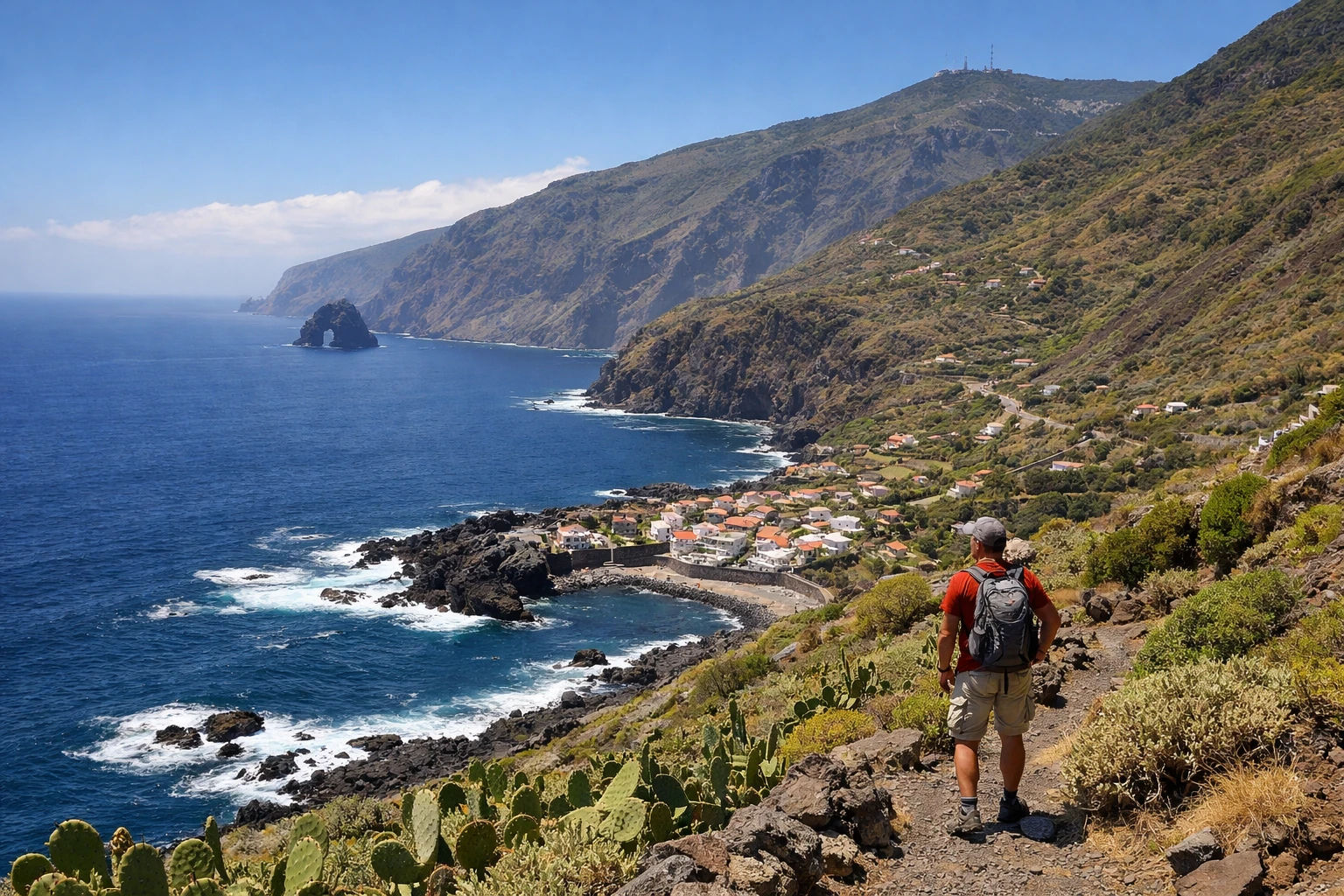
Mirador de las Playas — a second spectacular lookout on the eastern coast, overlooking Las Playas Bay and the Roque de Bonanza, a 200-metre natural volcanic stone arch rising from the sea.
Where to Stay
Accommodation on El Hierro is intentionally limited and mostly small-scale — which suits the island perfectly. Options include:
Parador de El Hierro — the island's most luxurious option, a government-run parador on the southern coast at Las Playas Bay, set directly beneath dramatic cliffs and with a heated saltwater pool; rates typically €100-160 per night.
Rural houses and casas rurales — self-catering rural houses scattered across the island are the most popular and authentic accommodation type; expect to pay €60-100 per night for a well-equipped property.
Small guesthouses in Valverde and La Frontera — budget-friendly options for solo travellers and backpackers, typically €40-70 per night.
Book well ahead in spring and summer — the limited room stock fills up faster than most visitors expect for such a little-known island.
Island Cuisine
El Hierro's food culture is as individual as the island itself:
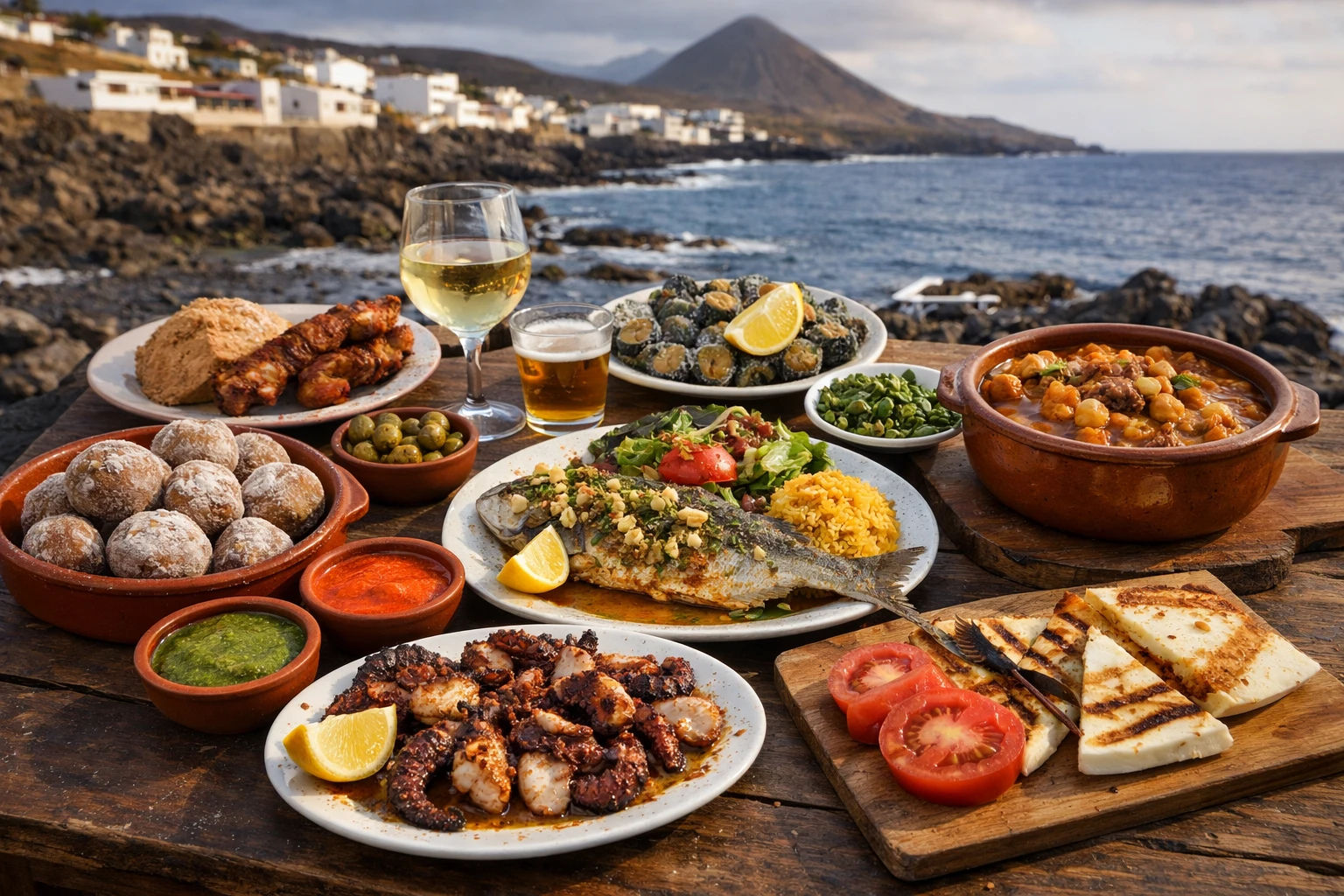
Queso de El Hierro — the island's semi-cured goat's cheese, smoky and nutty, often served with local honey from the island's endemic Hierro black bee.
Potaje herreño — a hearty chickpea and vegetable stew that is the island's signature comfort dish.
Local wines — El Golfo valley produces small-batch white and red wines under the El Hierro DO denomination; dry whites made from Verijadiego grapes are particularly good.
Bimbachinche evenings — the island's informal social tradition of gathering at small rural bars for food, local wine, and conversation; ask locals where these happen during your stay.
FAQ
How many days do you need to see El Hierro properly?
Four to five days is ideal. The island is small enough to cover thoroughly in that time without rushing, and slow enough that you'll want to linger rather than rush.
Is El Hierro suitable for families?
Yes, particularly for families who enjoy nature, hiking, and swimming. The natural pools at Charco Azul, Tamaduste, and Charco de los Sargos are safe and beautiful for children. The island has virtually no nightlife or beach club scene.
When is the best time to visit El Hierro?
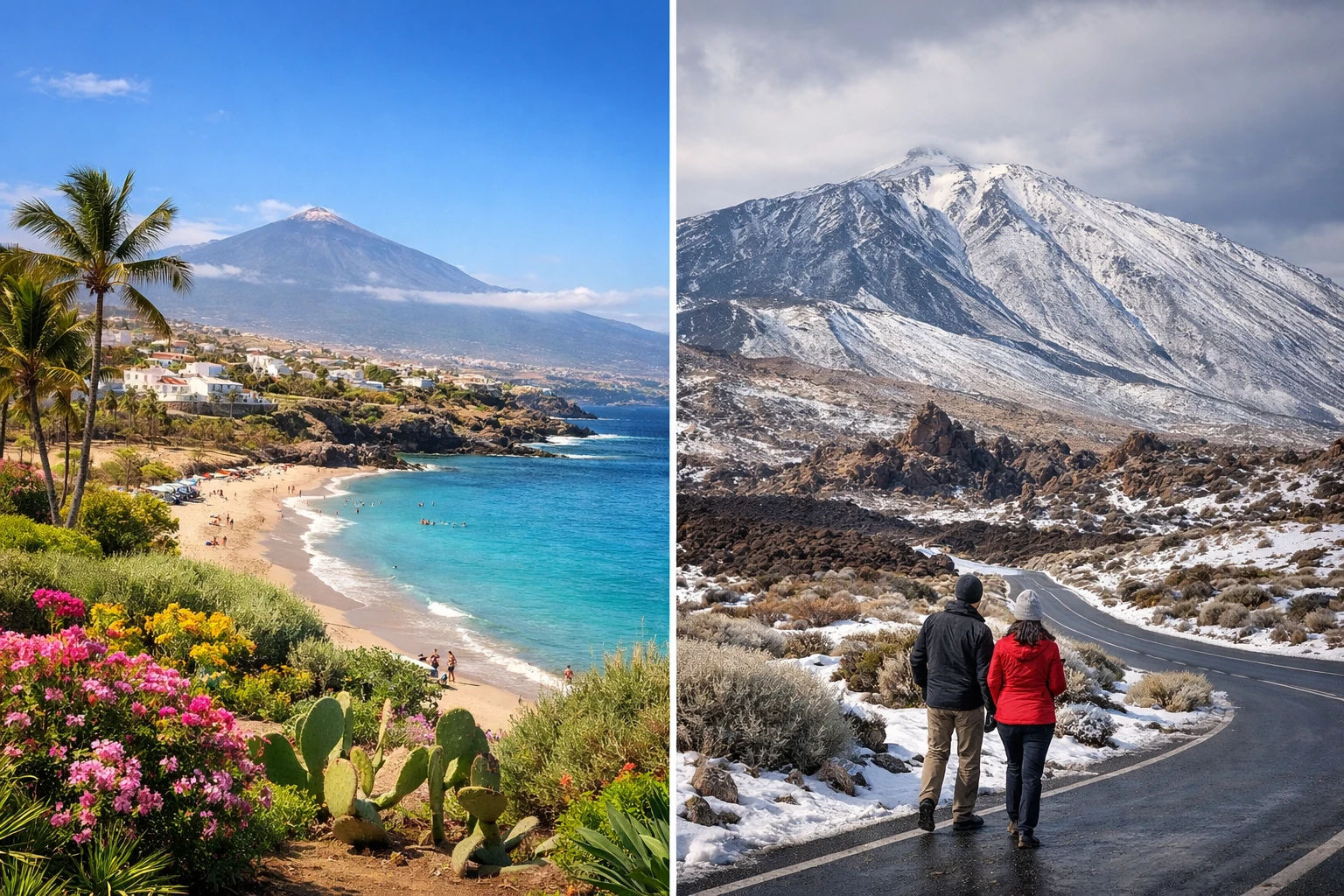
Spring (March to May) and autumn (September to November) offer the best hiking conditions and most comfortable temperatures. The island is genuinely good year-round, but summer can be warm inland and winter brings more cloud to the higher elevations.
Is El Hierro worth visiting for non-hikers?
Absolutely. Diving at La Restinga, natural pool swimming, scenic drives, food culture, and the extraordinary landscape are all accessible without serious hiking. The viewpoints alone — Mirador de la Peña, Mirador de Jinama, Mirador de las Playas — are worth the trip on their own terms.
How does El Hierro compare to La Gomera for a quiet Canary Island experience?
Both are excellent choices for travellers escaping the resort islands. El Hierro is quieter, more remote, and more sustainably developed. La Gomera is slightly easier to reach (a 50-minute ferry from Tenerife) and has a slightly more developed tourism infrastructure. El Hierro rewards the extra effort with a more genuinely wild and untouched experience.
The Island That Chose a Different Future
El Hierro made a decision decades ago that most island destinations haven't been willing to make: it chose its landscape and its community over unchecked tourism growth. The result is an island that feels like the Canary Islands did before the resorts arrived. Ancient forests, volcanic coastlines, natural pools, sustainable farms, and a population that greets visitors warmly precisely because they haven't been overwhelmed by them.
"If you're ready to trade the poolside bar for something that actually stays with you, El Hierro is waiting — and it's been waiting patiently for travellers who are finally ready to find it."
Explore more Canary Islands travel guides, or read our seasonal guide to plan the perfect island itinerary.