
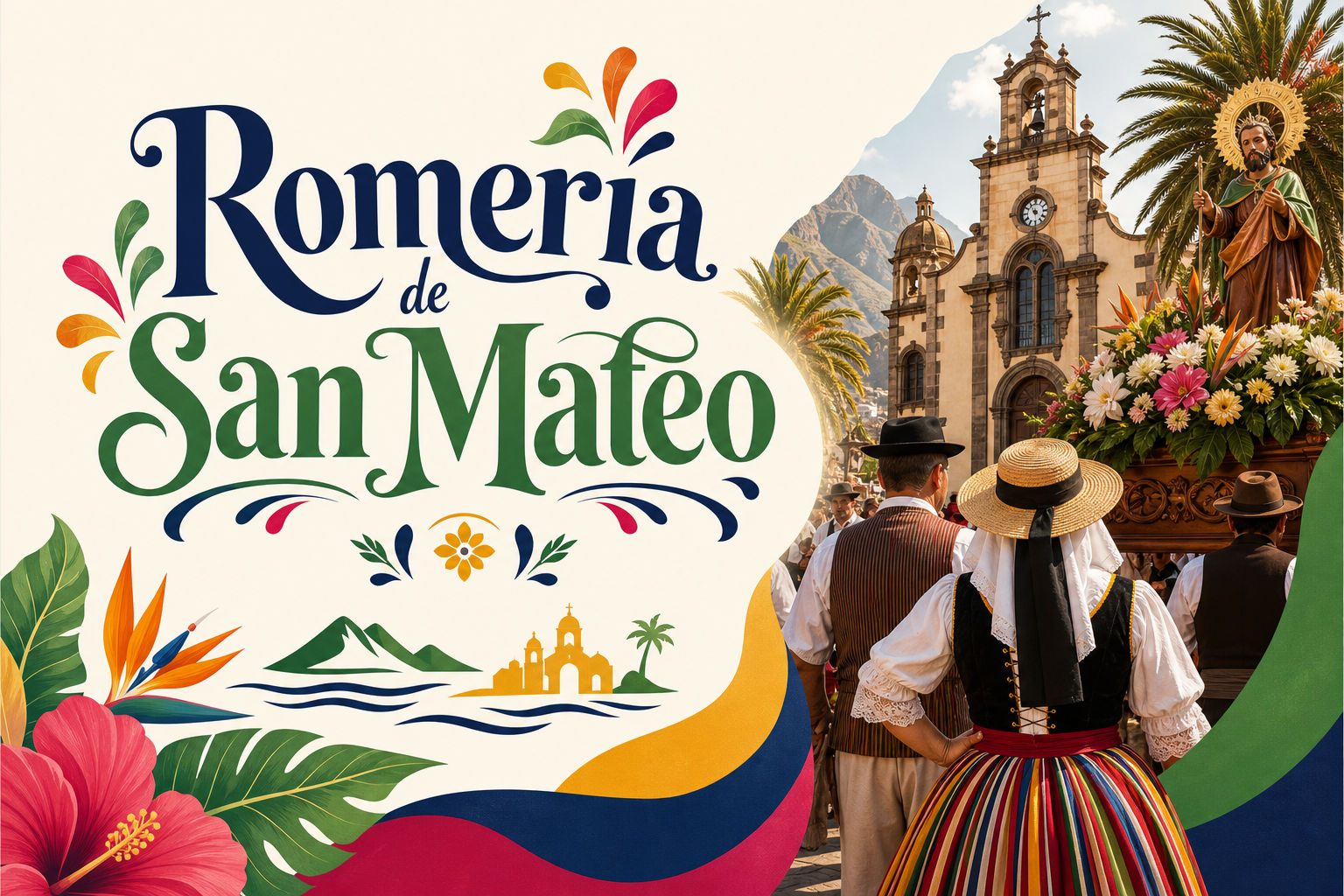
Romería de San Mateo 2026 Canary Islands: The Essential Guide to the Agricultural Heartland’s Grandest Autumn Procession
The arrival of autumn in the Canary Islands brings a transformation to the higher elevations of Gran Canaria. While the coastal tourist hubs remain warm and sun-drenched, the mid-altitude mountains experience cooler temperatures, crisp mountain air, and a sense of bounty from the summer harvest. In the heart of this fertile region lies Vega de San Mateo, a town celebrated for its rich agricultural heritage, artisanal dairy products, and strong preservation of island customs. The highlight of the town's calendar is the Fiestas de San Mateo, peaking with the spectacular Romería de San Mateo 2026 Canary Islands. Taking place on September 19, 2026, this traditional pilgrimage-offering is followed by the official religious feast day of the town's patron saint, Saint Matthew the Apostle, on September 21, 2026.
For travelers, cultural enthusiasts, and event seekers visiting the Canary Islands in late summer or early autumn, this celebration is a unique experience. Unlike typical commercial festivals, this Romería is a deeply felt expression of rural identity, bringing together communities from across Gran Canaria to showcase their traditional dress, folk music, local foods, and livestock. From the smell of freshly cut agricultural produce to the rhythmic sounds of the timple stringed instrument, the Romería of San Mateo offers an authentic window into the soul of the Canarian countryside.
"The Romería of San Mateo offers an authentic window into the soul of the Canarian countryside."
From Tinamar to Vega
To understand the pride that local residents take in this festival, one must look back at the history of the municipality. Long before the Spanish conquest in the late fifteenth century, the area was populated by the indigenous inhabitants of Gran Canaria, who called the fertile region Tinamar. The land was highly valued for its natural springs, rich soil, and favorable microclimate, which allowed for successful farming and livestock herding.
Following the conquest, the region was integrated into a larger agricultural district known simply as La Vega. This district was eventually divided into Vega de Abajo, which is modern-day Santa Brígida, and Vega de Arriba, which became Vega de San Mateo. The separation was driven by the growth of the local population and the difficulty of traveling down the mountains to attend religious services.
The construction of the first small chapel dedicated to Saint Matthew Apóstol, documented in 1652, was a major milestone for the community, establishing Vega de Arriba as an independent parish and administrative center. In the nineteenth century, the current Iglesia de San Mateo Apóstol was constructed in the heart of the town. Featuring a beautiful neoclassical design with mudéjar architectural influences, the church stands as the central landmark of the historic quarter and the focal point of the annual September celebrations.
The Romería-Ofrenda
The centerpiece of the municipal celebrations is the Romería-Ofrenda, scheduled for September 19, 2026. This event is a colorful showcase of the island's folklore, agricultural heritage, and community spirit.
The procession begins in the afternoon, with thousands of participants, known as romeros, gathering in the historic streets. Participants are dressed in traditional Canarian attire, known as trajes de mago. These outfits feature colorful striped skirts, white shirts, woolen vests, and traditional hats, with styles varying depending on the municipality or neighborhood of origin.
"These carts, pulled by pairs of oxen, are piled high with offerings of fresh produce harvested from the surrounding valleys."
Dozens of traditional wooden carts, decorated by local barrios and families, make their way through the streets. These carts, pulled by pairs of oxen, are piled high with offerings of fresh produce harvested from the surrounding valleys. You will see crates of local potatoes, pumpkins, corn, artisanal breads, flowers, and cheeses.
The procession is accompanied by a continuous soundtrack of traditional music. Local folk groups, or parrandas, play stringed instruments such as the timple, guitar, and bandurria. The crowd dances and sings traditional Canary Island songs, including isas, folías, and malagueñas. Upon reaching the plaza in front of the Iglesia de San Mateo Apóstol, the carts present their offerings to the statue of the saint, which is placed at the entrance of the church. In a beautiful show of solidarity, all the fresh food and produce is collected and immediately donated to local charities and social centers across the island.
The day of the Romería is also famous for other traditional events. A local livestock fair, or feria de ganado, showcases the finest breeds of goats, sheep, and cattle from the mid-altitude farms. Later in the afternoon, traditional horse races, known as carreras de caballos, take place on designated streets, drawing large, cheering crowds.
Exploring the Heartland
Attending the Fiestas de San Mateo provides the perfect opportunity to sample the famous gastronomy of the region, which reflects the town's history as an agricultural hub.
Vega de San Mateo is celebrated across the Canary Islands for its artisanal cheeses. The municipality is a key stop on Gran Canaria's cheese routes, famous for its fresh and semi-cured cheeses made from goat, sheep, and cow milk. These cheeses are highly prized for their rich, complex flavors, which result from the high-altitude pastures where the livestock graze.
"The best place to experience these local flavors is the Mercado Agrícola y Artesanal de Vega de San Mateo."
Another local specialty is bienmesabe, a sweet paste made from ground almonds, honey, egg yolks, and lemon zest, which is traditionally served with ice cream or pastries. The region is also known for producing high-quality mountain honey, country wines, and Pan de Huevo, a traditional sweet egg bread.
The best place to experience these local flavors is the Mercado Agrícola y Artesanal de Vega de San Mateo, one of the largest and most popular weekend markets in Gran Canaria. Located in the center of the town, the market is open from Friday to Sunday. During the festival weekend in September, the market becomes particularly lively, filled with stalls selling fresh produce, cheeses, local wines, pastries, and traditional crafts, offering visitors a sensory tour of the island's agricultural wealth.
Practical Visitor & Travel Guide
To ensure a smooth, safe, and enjoyable trip to the Romería de San Mateo on September 19, 2026, visitors should keep a few practical recommendations in mind.
First, plan your transportation in advance. Because the historic town center is closed to private vehicles during the Romería, parking is extremely limited. Local police close access roads early in the afternoon to accommodate the procession of carts.
The recommended transport option is to use the intercity green buses operated by Global. Line 303 runs directly from the Estación de San Telmo in the capital city of Las Palmas de Gran Canaria to San Mateo, while Line 302 and other regional routes connect the town with neighboring municipalities like Santa Brígida, Teror, and Tejeda. During the festival, Global operates special high-frequency services to handle the influx of visitors.
Second, prepare for the mountain weather. Vega de San Mateo is located at an altitude of over 800 meters above sea level. While the coastal areas of Gran Canaria remain warm in September, the temperatures in the mountains drop significantly after sunset. The area is also subject to mist and cloud cover. Visitors should pack a warm jacket, sweater, or windbreaker to stay comfortable during the evening festivities.
Finally, secure your accommodations early. While many visitors attend the Romería as a day trip, staying overnight in a local rural hotel, guesthouse, or villa allows you to experience the peaceful beauty of the mountain landscape. Booking your lodging by early spring is highly recommended to secure the best rates and locations.
The Heart of the Mountains Awaits
The Romería de San Mateo is a celebration of the community, history, and natural beauty of Gran Canaria's highlands. The sound of stringed instruments, the colorful traditional costumes, the rich flavors of local cheeses, and the shared joy of the crowd create an atmosphere of warmth and happiness. Participating in this historic event offers an unforgettable connection to the rural heritage of the Canary Islands. As September 19, 2026 approaches, the town of Vega de San Mateo prepares to welcome old friends and new travelers to share in a tradition that has defined this mountain sanctuary for generations. Plan your journey, pack a warm jacket, and prepare to immerse yourself in the rich harvest celebration of the Atlantic.
Verified Information at a Glance
Event Category: Cultural, Religious, and Agricultural Pilgrimage Festival
Romería-Ofrenda Date: September 19, 2026 (Saturday afternoon)
Patron Saint Feast Date (Día de San Mateo): September 21, 2026 (Monday)
Main Venue: Casco Histórico (Historic Center) and Plaza de la Iglesia de San Mateo Apóstol, Vega de San Mateo (Gran Canaria, Canary Islands)
Admission Cost: 100% Free (Public street festival open to all visitors)
Key Landmarks: Iglesia de San Mateo Apóstol, Mercado Agrícola y Artesanal, and the historic quarter of San Mateo
Local Culinary Specialties: Artisanal goat and sheep cheeses, Bienmesabe sweet almond paste, Pan de Huevo egg bread, and local mountain wines
Public Transport Routes: Global Bus Lines 301, 302, and 303 from Las Palmas de Gran Canaria and Santa Brígida
Frequently Asked Questions
History of the Romería
The Romería honors Saint Matthew the Apostle, the patron saint of Vega de San Mateo. The devotion began in 1652, when the first chapel dedicated to the saint was constructed in the area, then known as Vega de Arriba. The Romería has evolved into a celebration of the town's agricultural identity, where communities bring harvest offerings to the saint at the gates of the church.
Romería 2026 Dates
The main Romería-Ofrenda procession takes place on September 19, 2026, which is a Saturday. The official religious holiday in honor of the patron saint, the Día de San Mateo, is celebrated on September 21, 2026.
Location of Vega de San Mateo
Vega de San Mateo is a historic municipality situated in the mountainous interior highlands of Gran Canaria, one of the main islands of the Canary Islands archipelago in Spain. The town is located at an altitude of over 800 meters above sea level, offering a cooler climate and fertile agricultural soils.
Travel to Vega de San Mateo
Due to extensive road closures and lack of parking in the town center on September 19, 2026, driving a private car is highly discouraged. The best way to reach the town is by taking the green Global buses. Line 303 runs direct, high-frequency services from the San Telmo bus terminal in Las Palmas de Gran Canaria.
What to Wear
If you are participating in the official procession, it is customary to wear traditional Canarian dress (traje de mago). For general spectators, comfortable walking shoes are essential. Because of the town's high altitude, temperatures drop significantly in the evening, so it is highly recommended to bring a warm jacket or sweater to stay comfortable after sunset.