
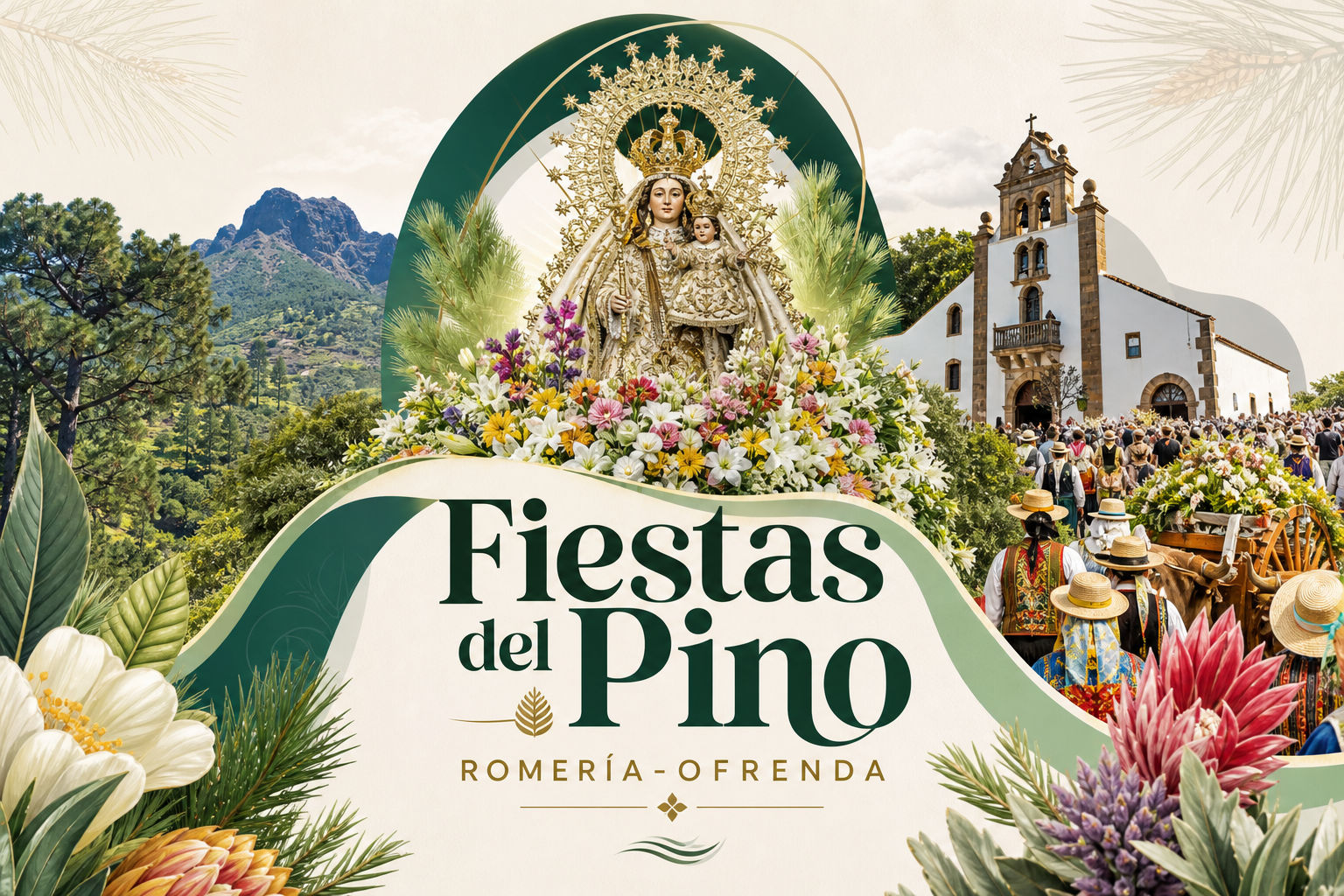
Fiestas del Pino - Romería-Ofrenda 2026 Canary Islands: The Complete Guide to Gran Canaria’s Grandest Cultural Pilgrimage
As late summer transitions into early autumn in the Canary Islands, the island of Gran Canaria prepares to celebrate its most profound cultural and religious event. The mountain peaks are often shrouded in the morning mist, local agricultural fields are rich with harvest, and a sense of shared anticipation fills the air. This time of year belongs to the Fiestas del Pino - Romería-Ofrenda 2026 Canary Islands, a spectacular festival that honors the island's patron saint, the Virgen del Pino, also known as Our Lady of the Pine. Centered in the historic town of Teror, this annual celebration peaks on September 7, 2026, with the traditional Romería-Ofrenda pilgrimage, followed by the official feast day on September 8, 2026.
For travelers and culture seekers visiting the Canary Islands in September, this celebration is a unique experience. Unlike typical tourist events, this festival is a deeply authentic expression of Canarian identity, bringing together history, music, gastronomy, and community spirit. From the colorful traditional costumes to the rhythmic sound of folk instruments echoing through the narrow streets of the Villa Mariana, the festival offers an unforgettable immersion into the heart and soul of Gran Canaria.
"This festival is a deeply authentic expression of Canarian identity, bringing together history, music, gastronomy, and community spirit."
Devotion & Apparition
To understand the scale of the Fiestas del Pino, one must trace its origins back to the late fifteenth century. According to local historical documents and religious accounts, on September 8, 1481, an apparition of the Virgin Mary was spotted high in the branches of a massive pine tree in the ancient forest that once covered the interior of Gran Canaria.
This event occurred during a critical period of the island's integration into the Spanish Crown. The site of the pine tree quickly became a place of worship for the local population. Over the centuries, the small settlement of Teror grew around this sacred site, establishing itself as the spiritual heart of Gran Canaria. Today, the town is officially recognized as a Villa Mariana, or Marian Town, reflecting its historic role as a sanctuary of devotion.
The center of this devotion is the Basilica of Nuestra Señora del Pino, a beautiful neoclassical church constructed in the eighteenth century. Inside the Basilica rests the carved wooden statue of the Virgin, adorned in rich, embroidered robes and jewels. For over five centuries, pilgrims have journeyed to Teror to pay their respects, express gratitude, or seek blessings from the Virgin. The festival is a celebration of this longstanding devotion, combining centuries of religious tradition with a colorful showcase of island folklore.
The Romería-Ofrenda
The centerpiece of the festival is the Romería-Ofrenda, which takes place in the afternoon of September 7, 2026. Established in its modern format in 1952 by the island's cultural chronicler Néstor Álamo, this pilgrimage is a vibrant celebration of Canarian agriculture, music, and regional identity.
During the event, representatives from all twenty-one municipalities of Gran Canaria, along with delegations from the other islands in the Canary archipelago, gather to present their offerings to the patron saint. Each municipality decorates a traditional wooden cart, which is pulled by a pair of massive, slow-moving oxen. The carts are loaded with the finest local agricultural produce, freshly baked bread, tropical fruits, and handcrafted products from their respective regions.
The procession is a sensory delight. Participants dress in traditional Canarian attire, known as trajes de mago, which varies in style, colors, and embroidery depending on the municipality of origin. As the carts make their way toward the Plaza del Pino, the air is filled with the sounds of live folk music. Groups of musicians, known as parrandas, play traditional stringed instruments like the timple, guitar, and bandurria, singing lively isas, folías, and malagueñas.
"The Romería-Ofrenda is a powerful reminder of the values of sharing and mutual support that define the Canarian community."
Upon reaching the gates of the Basilica of Nuestra Señora del Pino, the municipal delegations present their offerings of fresh food. These goods are piled high before the statue of the Virgin, which is brought out to the temple's portico for the occasion. In a beautiful display of community solidarity, all the collected food and produce is immediately distributed to local charities, shelters, and families in need across the island.
The Overnight Pilgrimage
While the official procession of carts is the main public event of September 7, 2026, a parallel tradition takes place as night falls. This is the overnight pilgrimage, or Caminata, a popular movement that draws approximately 85,000 people from all corners of Gran Canaria.
Starting in the late afternoon and continuing throughout the night, pilgrims set off on foot from various points on the island, heading toward the mountains of Teror. The most popular route begins in the capital city of Las Palmas de Gran Canaria, taking hikers along the winding GC-21 highway and historic walking trails, known as caminos reales. Other routes bring pilgrims from the northern agricultural plains of Arucas, the steep valleys of San Mateo, and the historic quarters of Gáldar.
Walking to Teror is a challenging trek, often taking several hours of continuous uphill hiking. Along the way, the roads are filled with a sense of camaraderie. Neighbors walk side by side, strangers share water and encouragement, and temporary food stalls set up by local families offer hot drinks and snacks. The night walk is a communal journey of self-reflection, celebration, and endurance. Reaching the historic center of Teror at dawn, feeling the cool mountain air and seeing the Basilica illuminated by hundreds of candles, is a memorable reward for the long walk.
"The night walk is a communal journey of self-reflection, celebration, and endurance."
Día del Pino
Following the excitement and physical exertion of the pilgrimage night, the atmosphere shifts to a more formal tone on September 8, 2026. This day, the official holiday of the island of Gran Canaria, is the Día del Pino.
The morning begins with a military parade in the Plaza del Pino, featuring representatives of the Spanish armed forces and local authorities. This is followed by a solemn concelebrated mass inside the Basilica of Nuestra Señora del Pino, attended by regional leaders, religious dignitaries, and thousands of faithful pilgrims.
After the mass, the solemn religious procession takes place. The statue of the Virgen del Pino is carried through the historic streets of the town center, accompanied by marching bands, church authorities, and a quiet, respectful crowd. The streets are decorated with floral carpets and colorful tapestries hanging from the wooden balconies of the historic houses. For visitors, attending the events on September 8, 2026, provides a window into the deep religious heritage and civic traditions of the Canary Islands.
Gastronomy & Local Trails
No visit to the Fiestas del Pino is complete without sampling the distinct culinary specialties of the municipality. The town of Teror is famous across the Canary Islands for its traditional gastronomy, which takes center stage during the festival.
The most celebrated local product is Chorizo de Teror, a soft, spreadable pork sausage seasoned with garlic, salt, white wine, and paprika, which gives it a bright orange color. During the festival, it is a tradition to eat a bocadillo de chorizo, a fresh bread roll spread with this rich, flavorful sausage. Another popular specialty is morcilla dulce, a sweet black pudding made with raisins, almonds, and cinnamon. These local delicacies are readily available at the numerous food stalls, local butcher shops, and the famous Sunday market in the plaza surrounding the Basilica.
For travelers who enjoy outdoor activities, Teror offers excellent hiking opportunities. A notable route is the El Álamo trail, which has been recently upgraded with wooden stairs and bridges. This path takes hikers through a lush, green ravine, past local farms and traditional stone houses, eventually leading to the historic town center. Combining a morning hike on the El Álamo trail with an afternoon tasting of local chorizo and fresh Pan de Teror bread is an excellent way to experience the natural and culinary appeal of the region.
Travel & Safety Tips
To ensure a comfortable, safe, and enjoyable experience during the Fiestas del Pino, visitors should plan ahead.
First, understand the transportation restrictions. On September 7, 2026, local authorities close all main roads leading into Teror, including the GC-21, to private vehicles starting in the early afternoon. Parking in the town is not permitted, and driving is virtually impossible.
The recommended way to travel is by utilizing the special public transport services. Global, the green intercity bus operator of Gran Canaria, runs a massive operation for the event, with buses leaving every few minutes from the Estación de San Telmo in Las Palmas de Gran Canaria, as well as from Arucas, Gáldar, and San Mateo. The bus services operate continuously throughout the afternoon, night, and the following day of September 8, 2026, providing a safe and efficient way to reach the town.
Second, if you choose to participate in the overnight pilgrimage walk, prepare with the right gear. Teror is located in the mountainous interior of the island, and the weather can change rapidly. While the coast may be warm, the mountains get cold, damp, and misty at night, a local weather phenomenon known as the panza de burro. Wear comfortable, broken-in walking shoes, bring a warm, windproof jacket, and carry a flashlight or headlamp for the dark sections of the trail.
Finally, secure your accommodations early. While many visitors return to the coast after the festivities, staying in Teror or the neighboring countryside allows you to experience the festival at a relaxed pace. Local hotels, rural cottages, and guesthouses are limited and fill up months in advance for the September holidays.
Join the Green Heart
The Fiestas del Pino represent the true cultural heartbeat of Gran Canaria. The sound of the timple, the vibrant colors of the traditional costumes, the rich aroma of fresh local bread, and the shared warmth of thousands of pilgrims walking through the night create an unforgettable atmosphere. Participating in this historic event is a chance to experience the authentic spirit of the Canary Islands. As September 7, 2026 approaches, the historic town of Teror prepares to welcome travelers from around the world to share in a tradition that has united the island for generations. Plan your journey, pack your walking shoes, and prepare to immerse yourself in the grandest celebration of the Atlantic.
Verified Information at a Glance
- Event Category: Cultural and Religious Pilgrimage Festival (Declared a Festival of National Tourist Interest)
- Romería-Ofrenda Date: September 7, 2026 (Monday afternoon)
- Día del Pino Feast Date: September 8, 2026 (Tuesday)
- Main Location: Plaza del Pino and Basilica of Nuestra Señora del Pino, Teror (Gran Canaria, Canary Islands)
- Admission Cost: 100% Free (Public street festival open to all visitors)
- Key Landmarks: Basilica of Nuestra Señora del Pino, Calle Real de la Plaza, and El Álamo hiking trail
- Local Culinary Specialties: Chorizo de Teror spreadable sausage, Morcilla dulce sweet black pudding, and Pan de Teror bread
- Public Transport Provider: Global Bus Services (Special high-frequency routes running continuously from Estación de San Telmo in Las Palmas and other key points)
Frequently Asked Questions
History of the Fiestas del Pino
The Fiestas del Pino honor the Virgen del Pino, the patron saint of the island of Gran Canaria. The devotion began in September 1481, following the reported apparition of the Virgin Mary in the branches of a large pine tree in what is now the center of Teror. The town grew around this sacred site, eventually becoming a major pilgrimage destination and a Villa Mariana.
Romería-Ofrenda 2026 Date
The main Romería-Ofrenda (Pilgrimage-Offering) takes place on the afternoon of September 7, 2026, where traditional carts and pilgrims from all municipalities of Gran Canaria present local offerings to the Virgin. The official religious feast day, the Día del Pino, is celebrated the following day on September 8, 2026.
Location of Teror
Teror is a historic mountain town located in the green, mountainous interior of Gran Canaria, which is part of the Canary Islands archipelago in Spain. The town is famous for its well-preserved colonial architecture, colorful houses with traditional wooden balconies, and its surrounding pine forests.
Traveling to Teror
Due to complete road closures for private vehicles on the afternoon and night of September 7, 2026, driving is not allowed. The best way to reach the town is by taking the green Global buses, which offer high-frequency, continuous round-the-clock service from the San Telmo bus station in Las Palmas de Gran Canaria, as well as from Arucas and San Mateo. Alternatively, many pilgrims choose to walk to the town on foot along designated historic trails.
What to Wear for the Pilgrimage
If you are walking the overnight pilgrimage to Teror on the night of September 7, 2026, you should wear sturdy, comfortable running shoes or hiking boots. The temperature drops significantly in the mountains at night, so it is essential to bring a warm jacket. Carrying a flashlight, a reflective vest, and staying hydrated are also key safety recommendations for the journey.