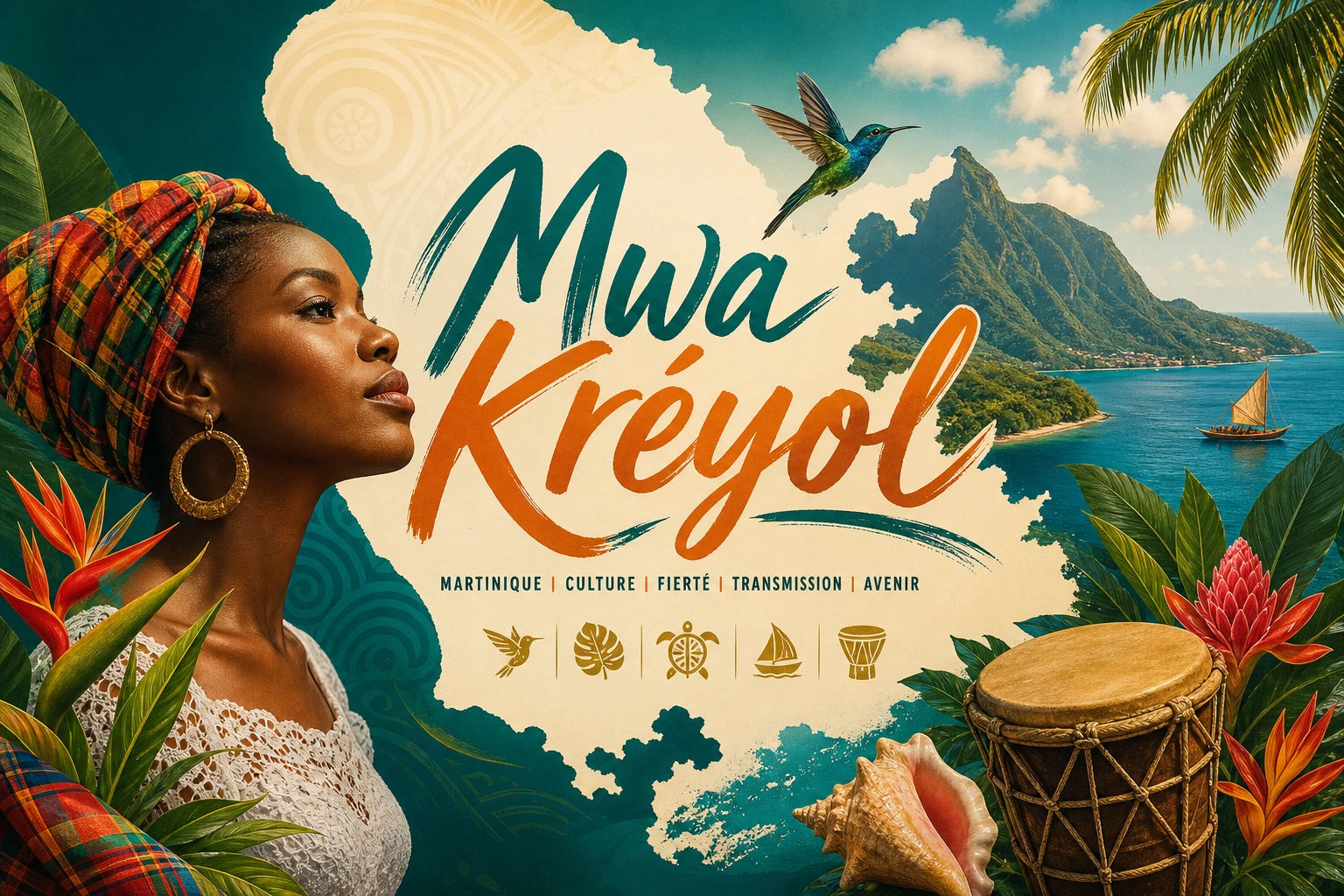

Commemoration of the Abolition of Slavery Martinique 2026: A Day That Changed the Caribbean Forever
On the morning of May 22, 1848, the Governor of Martinique signed a declaration that he had not planned to sign. The French government in Paris had decreed in April that slavery would be abolished in its colonies, but the implementation was scheduled for two months later. The enslaved people of Martinique did not wait.
A revolt that began in the town of Le Prêcheur on May 20, sparked by the imprisonment of an enslaved person, swept south along the Caribbean coast, drawing in community after community as the news and the resistance spread. By May 22, Governor Claude Rostoland faced a reality he could not contain and issued the immediate abolition of slavery on Martinique, nearly two weeks before the official French government decree arrived on June 4.
"75,000 enslaved people were freed."
That act of collective resistance, the fact that Martinique's abolition was not handed down from a distant government but was wrested by the people who had most to gain from it, is why May 22 is marked as a public holiday in Martinique with a depth of meaning that goes beyond ceremony. It is not simply the commemoration of a political decision. It is the annual acknowledgment of the courage of the people who made that decision inevitable.
In 2026, May 22 falls on a Friday, making it a three-day weekend for Martinique, and the 178th anniversary of the abolition. Across the island, from Saint-Pierre to Fort-de-France, from Le Diamant to the village squares of the north, the day and the days surrounding it will be marked with ceremonies, cultural performances, exhibitions, open stages, guided heritage visits, and the community solidarity that this date has always generated in Martinique.
The History That Makes May 22 Matter
From Slavery to Freedom
To understand the Commemoration of the Abolition of Slavery in Martinique, you need the full historical context, not just the end date.
The timeline of slavery and abolition in Martinique:
1635: French settlement of Martinique begins under Pierre Belain d'Esnambuc. Within decades, the island's labour economy becomes entirely dependent on enslaved African people brought across the Atlantic in the transatlantic slave trade.
February 4, 1794: The French National Convention decrees the abolition of slavery in all French colonies, the first time a European government had taken this step. The decree is never fully implemented in Martinique due to the ongoing conflicts of the Revolutionary period.
May 1802: Napoleon Bonaparte reinstates slavery, reversing the 1794 decree and plunging the French Caribbean back into captivity. In Martinique, the British occupation (1794-1802) had maintained the slave system throughout the Revolutionary period, so the reinstatement deepened the continuity of oppression.
April 27, 1848: Victor Schoelcher, Under-Secretary of State for the Navy and Colonies of the French Second Republic, signs the decree formally abolishing slavery in all French territories, with a two-month implementation delay built in.
May 20, 1848: In Le Prêcheur, on Martinique's northern Caribbean coast, the imprisonment of an enslaved person triggers a revolt that spreads rapidly south through the coastal communities.
May 22, 1848: Governor Claude Rostoland declares the immediate abolition of slavery in Martinique to stop the uprising. 75,000 enslaved people are freed, more than two weeks before the official French government decree arrives on June 4.
This history is why Martinique celebrates on May 22 rather than April 27 (the French government decree date) or June 4 (the arrival of the official decree). The island marks the day its own people forced freedom into existence.
Victor Schoelcher and the Political Fight for Abolition
The Man Whose Name Is Everywhere
The town of Schoelcher, the university community north of Fort-de-France that serves as the finish line of the Tchimbé Raid, is named after Victor Schoelcher. So is the Bibliothèque Schoelcher (Schoelcher Library) in Fort-de-France, one of the finest examples of 19th-century colonial architecture in the Caribbean, a cast-iron and glass building originally designed for the 1889 Paris Universal Exhibition and dismantled and shipped to Martinique piece by piece.
Schoelcher was a French politician who had visited the French Caribbean in the 1830s and returned to France with a commitment to ending slavery that he pursued for more than a decade before the political conditions in 1848 made it possible. As Under-Secretary of State in the government of the Second Republic, he authored the decree that formally made abolition French law.
"The specific complexity of Martinique's relationship with Schoelcher captures something important about how May 22 is observed on the island."
The statue of Victor Schoelcher in Fort-de-France and the broader memorial landscape of the island represent this dual acknowledgment: a recognition that freedom in Martinique was achieved through both political advocacy and direct action by the people most affected.
The Cap 110 Memorial at Anse Caffard
Fifteen White Figures Facing Africa
On the coast of Le Diamant, at a place called Anse Caffard, there stands one of the most quietly devastating public art installations in the Caribbean.
Cap 110 is a memorial of 15 large white stone busts, each one slightly different in expression and posture, arranged in a triangle on the clifftop above the Caribbean Sea. They face northeast, in the direction of Africa. They stand together, tightly grouped, their faces carrying individual expressions of suffering, endurance, and dignity.
The memorial was created in 1998 on the initiative of the Ville de Le Diamant to mark the 150th anniversary of the abolition of slavery and to honour the victims of the last shipwreck of a slave ship in Martinique's history, which occurred at this exact location. A slave ship ran aground at Anse Caffard, and many of the enslaved people aboard drowned. The 15 busts honour them and all those lost to the slave trade in the waters around the island.
"Standing at Cap 110 on or around May 22 is one of the most resonant ways to observe the commemoration."
Cap 110 is free to visit and is located on the D7 coast road at Anse Caffard, Le Diamant, approximately 30 minutes south of Fort-de-France.
How the Island Commemorates May 22 Each Year
What to Expect Across Martinique
The commemoration of the abolition of slavery in Martinique is observed across the entire island, not only in the historical towns but in every community.
The forms the commemoration takes:
Official ceremonies: Municipal and regional government ceremonies at key historical and memorial sites, including Fort-de-France, Saint-Pierre, and Le Diamant, typically including speeches by elected officials and community leaders, the laying of wreaths at memorial sites, and a minute's silence.
Open stages and concerts: From the evening of May 21 (the day before), open-air stages appear across Martinique's towns with live performances of music rooted in African and Caribbean tradition, including gwo ka drumming, biguine, zouk, and traditional Creole chants.
Cultural exhibitions: Museums and cultural venues across the island open or expand exhibitions focused on the history of slavery and abolition, the transatlantic slave trade, and the cultural heritage of the Martinican population descended from enslaved people.
Theatre and performance: Original plays and dance performances that explore specific stories and historical moments from the period of slavery and the abolition movement.
Conferences and talks: Academic and community conferences at schools, universities (including the Université des Antilles campus at Schoelcher), and cultural centres.
Guided heritage visits: In Saint-Pierre, the town that was the epicentre of the 1848 revolt, guided tours trace the route of the uprising through the historic streets and ruins of the former capital.
The flame of memory: Community marches and candlelit processions in some towns, carrying the collective memory of the date through the streets in physical form.
Saint-Pierre specifically on May 22, 2026:
The town of Saint-Pierre holds particular significance for the commemoration because the 1848 revolt began along the Caribbean coast communities to the north and swept through Saint-Pierre, which was then the most important city on the island. The Mai de Saint-Pierre heritage festival, which runs throughout May, builds toward May 22 as its most emotionally and historically significant day.
Fort-de-France on May 22, 2026:
The capital hosts the most heavily attended commemorative events, with the morning ceremony at the Slave Memorial, the opening of exhibitions at the Bibliothèque Schoelcher and other cultural venues, and open-air performances on the seafront continuing through the evening.
May 10: The National Day of Remembrance in France
Understanding the Difference
Visitors researching the commemoration of slavery in Martinique will encounter both May 10 and May 22 as significant dates, and understanding the difference between them matters.
May 10 is the National Day of Remembrance of the Slave Trade, Slavery and its Abolition in France, established in 2006 by President Jacques Chirac as the national memorial day for the entire French Republic. It is observed in mainland France and all overseas territories.
May 22 is Martinique's specific island public holiday, marking the day of the 1848 revolt and the immediate abolition of slavery on the island by Governor Rostoland, before the official French decree arrived.
In Martinique, both dates are marked, but May 22 carries the deeper local significance: it is the day that belongs to the island's own history rather than to a national French calendar.
Heritage Sites Connected to the Commemoration
Places That Hold This History
A visit to Martinique around May 22, 2026, offers the opportunity to connect the commemoration with the physical places that hold the island's slavery and abolition history:
Cap 110 Memorial, Anse Caffard, Le Diamant: The 15 white busts facing Africa, on the clifftop above the site of the last slave ship wreck. Free to visit. Approximately 30 minutes from Fort-de-France.
Bibliothèque Schoelcher, Fort-de-France: The extraordinary cast-iron colonial library named after Victor Schoelcher, housing historical archives and collections related to the abolition period. Located in central Fort-de-France.
Mémorial de l'Anse Caffard, Le Diamant: The broader memorial site adjacent to Cap 110, providing interpretive context for the slave ship wreck and its victims.
Saint-Pierre: The town where the 1848 revolt reached its critical mass and the Governor declared immediate abolition. The historic fabric of Saint-Pierre, including the sites commemorated in the Mai de Saint-Pierre festival, provides direct physical connection to the events of May 1848.
Le Prêcheur: The northern Caribbean coast village where the revolt began on May 20, 1848. A small, genuine community at the end of the coastal road north of Saint-Pierre, with a direct but quiet connection to the history of the uprising.
Musée Régional d'Histoire et d'Ethnographie, Fort-de-France: The regional museum in Fort-de-France, housed in a colonial Creole house, with collections that include slavery period artefacts, domestic objects, jewellery, and cultural materials from the Martinican population.
Practical Information for Visitors: May 22, 2026
Observing Abolition Day Respectfully
May 22, 2026 is a Friday and a public holiday in Martinique. The long weekend (Friday, May 22 to Sunday, May 24) will see significant participation from the Martinican community at commemorative events across the island.
Practical guidance for visitors:
As a public holiday, most government offices, banks, and many shops will be closed on May 22; restaurants, tourism operators, and event venues will be open.
Plan transportation and accommodation in advance: the long weekend around May 22 is one of the most community-attended periods in Martinique's calendar.
The commemoration is open to all respectful visitors; ceremonies and open stages are public and free of charge.
Dress modestly for formal commemorative ceremonies; open-air concerts and cultural events have no dress code requirements.
Check the martinique.org events calendar and the 972.agendaculturel.fr platform in the weeks before May 22 for the confirmed 2026 programme of events in Fort-de-France, Saint-Pierre, Le Diamant, and across the island.
A visit to Cap 110 at Anse Caffard on May 22 can be combined with a broader exploration of the Le Diamant coast, one of the most beautiful stretches of Martinique's southern Caribbean shoreline.
Frequently Asked Questions
When is the Commemoration of the Abolition of Slavery in Martinique in 2026?
May 22, 2026 (Friday) is the official Abolition Day (Commémoration de l'Abolition de l'Esclavage) in Martinique, one of the island's specific public holidays. It marks the 178th anniversary of the abolition of slavery on the island on May 22, 1848. Commemorative events begin from the evening of May 21 and continue throughout May 22 and the surrounding days as part of the broader Mai de Saint-Pierre heritage festival.
Why is the abolition of slavery in Martinique celebrated on May 22 and not on a different date?
May 22 is the date in 1848 when Governor Claude Rostoland declared the immediate abolition of slavery in Martinique, responding to a revolt that had spread along the Caribbean coast from Le Prêcheur on May 20. The official French government decree had been signed on April 27, 1848, but was not due to arrive until June 4. Martinique's abolition was forced by the enslaved people themselves, and May 22 marks that specific act of resistance. 75,000 people were freed.
What events happen in Martinique on Abolition Day?
Across Martinique, May 22 is marked with: official government ceremonies and wreath-laying at memorial sites in Fort-de-France and Saint-Pierre, open-air concerts and cultural performances from the evening of May 21, exhibitions at museums and cultural venues, theatre and dance performances, conferences at universities and community centres, guided heritage visits in Saint-Pierre, and community marches in some towns. All public events are free to attend.
What is the Cap 110 Memorial at Le Diamant?
Cap 110 is a memorial at Anse Caffard, Le Diamant, on Martinique's southwestern Caribbean coast, created in 1998 for the 150th anniversary of abolition. It consists of 15 large white stone busts arranged on a clifftop, each facing northeast toward Africa, honouring the victims of the last slave ship wreck in Martinique's history, which occurred at this location. It is free to visit and is one of the most powerful public memorials in the Caribbean.
What is the difference between May 10 and May 22 in relation to slavery commemoration in Martinique?
May 10 is the National Day of Remembrance of the Slave Trade, Slavery and its Abolition established for all of France in 2006, observed across mainland France and overseas territories. May 22 is Martinique's own public holiday, marking the specific day in 1848 when the island's enslaved population forced the immediate local abolition of slavery, before the national French decree arrived. In Martinique, May 22 carries the deeper local historical significance and is the primary island-wide public holiday and commemoration.
May 22, 2026, is a Friday. In Martinique, it will be a day when the island pauses, remembers, and celebrates the courage of 75,000 people who refused to wait.
Whether you arrive in Fort-de-France for a ceremony at dawn, stand at the Cap 110 memorial at Anse Caffard watching the 15 white figures face Africa across the water, walk the streets of Saint-Pierre on the coast where the revolt swept south in May 1848, or simply sit at an open stage in a village square and listen to the music that carries this history forward, you will be in a place where the past is not buried but living.
Come to Martinique this May. Not just for the beaches and the rum and the extraordinary landscape, but for a day that reminds you what an island community can do when it decides that freedom cannot wait.
Verified Information at a Glance
Event Name: Commémoration de l'Abolition de l'Esclavage (Commemoration of the Abolition of Slavery) Martinique 2026
Event Category: National Public Holiday and Island-Wide Cultural Commemoration
Date: Friday, May 22, 2026
2026 Anniversary: 178th anniversary (1848 to 2026)
Status: Official Public Holiday in Martinique (unique to the island)
Enslaved people freed in 1848: 75,000
Historical event commemorated: The slave revolt of May 20-22, 1848, which forced Governor Claude Rostoland to declare immediate abolition before the French government decree arrived
Entry: Free at all public commemorative events
Programme start: Evening of May 21, 2026 (events begin the night before)
Key venues: Fort-de-France (main ceremonies), Saint-Pierre (historical epicentre), Cap 110 Memorial at Anse Caffard (Le Diamant)
Programme highlights: Official ceremonies, open stages, concerts, cultural exhibitions, theatre and dance performances, conferences, guided heritage visits
Key heritage site: Cap 110 Memorial, Anse Caffard, Le Diamant (15 white busts facing Africa, built 1998 for 150th anniversary)
Connection to Mai de Saint-Pierre: May 22 is the central date of the Mai de Saint-Pierre heritage festival, which runs the entire month of May
Related national date: May 10 is France's national remembrance day; May 22 is Martinique's own island-specific commemoration
Programme listings: martinique.org/events and 972.agendaculturel.fr
Nearest airport: Martinique Aimé Césaire International Airport (FDF), Le Lamentin