
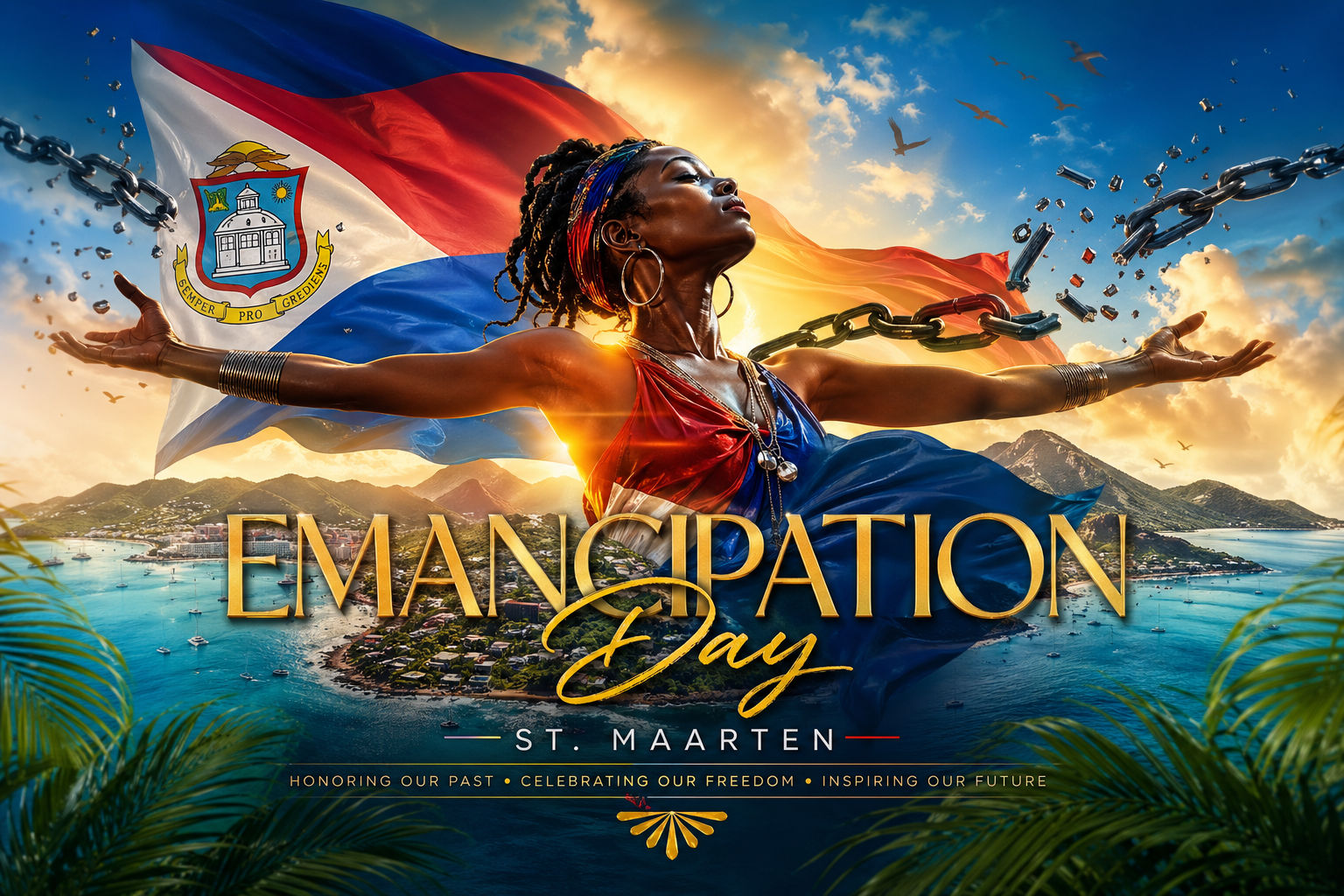
Emancipation Day 2026: Sint Maarten's Journey of Freedom
On Wednesday, July 1, 2026, Sint Maarten will commemorate the 163rd anniversary of a pivotal moment in its history. On July 1, 1863, the Kingdom of the Netherlands abolished slavery across its Caribbean territories, liberating the enslaved population of Sint Maarten and the broader Dutch Caribbean from a system of oppression that had persisted for over two centuries.
Emancipation Day is more than a public holiday; it is a testament to the island's resilience. It was the first public holiday established by the Parliament of Sint Maarten after the island attained country status within the Kingdom of the Netherlands in 2010, underscoring the importance of honoring those whose freedom laid the foundation for the future.
In 2026, Emancipation Day will be observed over two days, starting on Tuesday, June 30. Organized by the Department of Culture under the Ministry of Education, Culture, Youth and Sport (ECYS), the event will feature an ecumenical ceremony, the Freedom March through Philipsburg, cultural performances, tributes to the island's 64,000 enslaved ancestors, and ongoing discussions about the meaning and requirements of true emancipation.
"Emancipation Day is a testament to the island's resilience."
July 1, 1863: A Day of Reckoning
Dutch Caribbean Abolition
The abolition of slavery in the Dutch Caribbean on July 1, 1863 occurred fifteen years after the French Caribbean territories freed their enslaved populations in 1848, and over thirty years after Britain's abolition in 1833.
The Netherlands was among the last European colonial powers to abolish slavery, and the delay between the international abolition movement and the Dutch decree of 1863 is part of the historical reckoning that Emancipation Day on Sint Maarten addresses annually.
The timeline leading to July 1, 1863:
- 1640s onward: The Dutch West India Company establishes a slave-based economy on Sint Maarten, trafficking enslaved Africans for labor.
- Late 18th century: Abolition movements grow, pressuring colonial governments to address slavery. The Dutch resist longer than most.
- 1833: Britain abolishes slavery in its Caribbean colonies, freeing neighboring Anguilla, while Sint Maarten remains enslaved.
- 1848: France abolishes slavery in its colonies, freeing the French side of Saint-Martin. The Dutch side remains enslaved for another fifteen years.
- July 1, 1863: The Netherlands abolishes slavery across all Dutch Caribbean colonies. The Sint Maarten Department of Culture honors the 64,000 enslaved individuals through the "64,000 we have a Name" initiative.
"The Netherlands was among the last European colonial powers to abolish slavery."
What 163 years means in 2026:
The 2026 Emancipation Day marks 163 years since abolition. For a community whose identity was shaped by slavery and its aftermath, this is not just history. It is living memory, a story of families whose ancestors were born into bondage and whose freedom in 1863 marked a new beginning.
The 2026 Programme: A Living Celebration
From Service to March to Performance
The annual Emancipation Day programme follows a structure reflecting the vision of the Ministry of ECYS and the Department of Culture. Key elements include:
Ecumenical Service at Saints Simon and Jude Anglican Church:
The day begins with a religious service at Saints Simon and Jude Anglican Church in Philipsburg, bringing together community members, elected officials, and religious leaders. This moment of collective acknowledgment sets the tone for the day's events.
The Freedom March on Boardwalk Boulevard:
Following the service, the Freedom March proceeds through Philipsburg to the Boardwalk Boulevard and Sports Park, symbolizing the community's journey toward freedom.
"The Freedom March is a physical enactment of moving toward freedom."
Dignitaries Laying Flowers at the Water's Edge:
At the waterfront, dignitaries lay flamboyant tree flowers as a tribute to the enslaved who arrived on Sint Maarten's shores and those who died in captivity.
Speeches by the Governor and Government Leaders:
The Governor and government leaders deliver addresses on the meaning of Emancipation Day and the ongoing work of healing and equity.
"64,000 we have a Name" Cultural Tribute:
This initiative recovers the names of the 64,000 enslaved individuals, transforming an abstract number into a series of named human beings.
Afro-Caribbean Cultural Performances:
The day includes Afro-Caribbean cultural presentations, celebrating Sint Maarten's African-rooted heritage.
Re-enactment Run for Freedom:
The Re-enactment Run for Freedom is a community event symbolizing the movement toward liberty.
2025-2026 New Direction Under ECYS:
The Ministry of ECYS is steering Emancipation Day toward deeper engagement with decolonisation and historical foundations.
The Two-Day Observance: June 30 and July 1, 2026
Tradition of Two Days
Sint Maarten's Emancipation Day spans two days, with June 30 and July 1, 2026 as holidays. This format allows for:
- June 30 (Tuesday): Pre-Emancipation activities and cultural events.
- July 1 (Wednesday): The main programme with services, marches, and celebrations.
Emancipation Day and Carnival
Freedom and Festivity
Emancipation Day is symbolically linked to the opening of Sint Maarten Carnival registration on July 1. This alignment underscores the cultural significance of both events as expressions of freedom and heritage.
"Carnival is not just a party; it is an expression of freedom."
The French Side: Abolition Day
Two Histories, One Island
Visitors will find two abolition-related holidays on the island:
- French side: Abolition Day on May 28, marking the 1848 French abolition.
- Dutch side: Emancipation Day on July 1, marking the 1863 Dutch abolition.
The open border allows residents and visitors to attend both commemorations.
Practical Information for July 1, 2026
Planning Your Visit
Confirmed public holiday dates: Tuesday, June 30 and Wednesday, July 1, 2026
Primary location: Philipsburg, Sint Maarten (Dutch side)
Getting to Sint Maarten:
- Princess Juliana International Airport (SXM): Direct flights from major cities.
- Philipsburg: Approximately 10 to 15 minutes by taxi from the SXM airport.
Practical guidance:
- Government offices and most shops are closed on July 1; restaurants and tourism businesses remain open.
- The ecumenical service is open to respectful visitors.
- The Freedom March is a public event; the Boardwalk route is accessible.
- Dress appropriately for the solemn ceremonies.
- The cultural performances are festive; the day transitions from solemnity to celebration.
- July weather: 30 to 33°C, with consistent trade winds.
Frequently Asked Questions
When is Emancipation Day 2026 in Sint Maarten?
Emancipation Day 2026 falls on Wednesday, July 1, 2026, with observance extending to Tuesday, June 30, 2026. It marks the 163rd anniversary of the Dutch abolition of slavery in 1863.
What happens on Emancipation Day in Sint Maarten?
The programme includes an ecumenical service, the Freedom March, flower tributes, speeches, the "64,000 we have a Name" tribute, cultural performances, and the Re-enactment Run for Freedom.
Why is Emancipation Day significant for Sint Maarten?
It marks the 1863 Dutch abolition of slavery and was the first public holiday established by Sint Maarten's Parliament after achieving country status in 2010.
What is the "64,000 we have a Name" initiative?
This project honors the 64,000 enslaved individuals by recovering their names from archival records, transforming an abstract number into named human beings.
What is the difference between Emancipation Day and Abolition Day?
The French side observes Abolition Day on May 28, marking the 1848 French abolition. The Dutch side observes Emancipation Day on July 1, marking the 1863 Dutch abolition.
Verified Information at a Glance
- Event Name: Emancipation Day 2026, Sint Maarten
- Event Category: National Public Holiday and Annual Community Commemoration
- Primary Date: Wednesday, July 1, 2026
- Second Day of Observance: Tuesday, June 30, 2026
- Anniversary: 163rd (1863 to 2026)
- Side of island: Dutch side (Sint Maarten); NOT observed on French side
- Historical basis: Dutch abolition of slavery across Dutch Caribbean colonies, July 1, 1863
- Enslaved people freed: ~64,000 across Dutch Caribbean colonies
- Constitutional significance: First public holiday established by Sint Maarten's Parliament after achieving country status in 2010
- Primary location: Philipsburg, Sint Maarten (Dutch side)
- Confirmed programme elements:
- Ecumenical service: Saints Simon and Jude Anglican Church, Back Street, Philipsburg
- Freedom March: Boardwalk Boulevard to Sports Park
- Flower tribute: Dignitaries laying flamboyant tree flowers at the water's edge
- Official speeches by Governor of Sint Maarten and government ministers
- "64,000 we have a Name" cultural tribute (Department of Culture)
- Afro-Caribbean cultural performances
- Re-enactment Run for Freedom
- Key memorial site: Freedom Fighters Monument, Philipsburg
- 2025/2026 direction: New approach emphasizing decolonisation, historical foundations, lived experiences (Ministry of ECYS)
- Symbolic connection: Sint Maarten Carnival registration opens annually on July 1 (Emancipation Day)
- Nearest airport: Princess Juliana International Airport (SXM), approximately 10-15 minutes from Philipsburg
- July weather: 30-33°C, trade winds, water ~29°C
- French side Abolition Day: May 28 (separate event, separate side)
- Sources: Sint Maarten Government, AnyDayGuide, Office Holidays, The Daily Herald, SXM IslandTime, Sint Maarten Government ECYS, Wikipedia