Las Palmas de Gran Canaria International Film Festival 2026: Where Cinema Meets the Atlantic
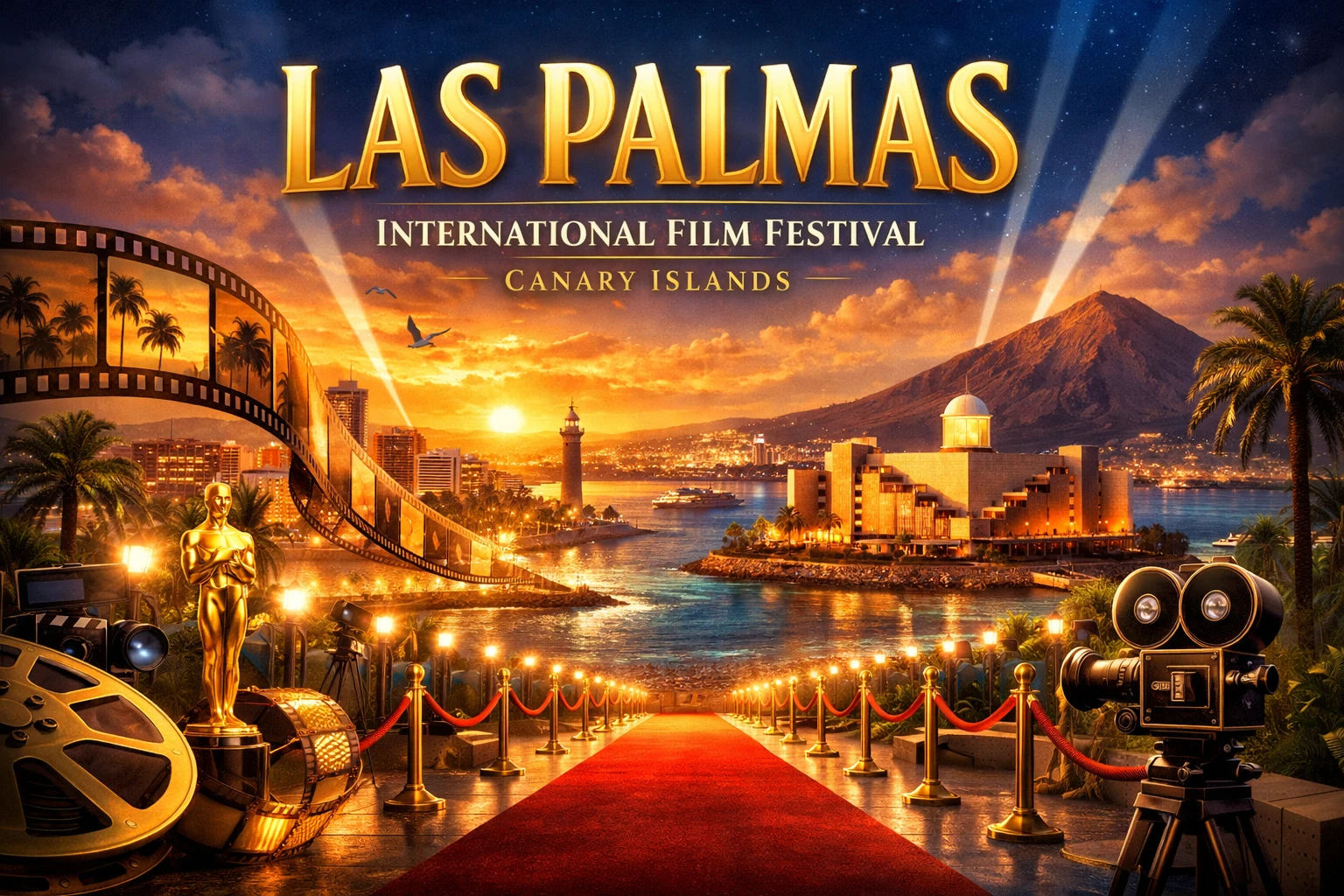
There are film festivals held in beautiful cities, and then there are film festivals held in places that feel like they were built specifically to watch movies in. Las Palmas de Gran Canaria belongs to the second category. When the screens light up in the historic theatres, cultural centres, and the dramatic seafront Auditorio Alfredo Kraus every spring, the city takes on a particular mood that only cinema can produce: a collective hunger for stories, for images, for the kind of emotional honesty that great films bring into a room.
The 25th Las Palmas de Gran Canaria International Film Festival runs from Thursday, April 23 to Sunday, May 3, 2026, bringing eleven extraordinary days of independent, arthouse, and world cinema to the capital of Gran Canaria. Twenty-five years of this festival on this island. A quarter century of stories, told across more than a hundred titles per edition, screening in some of the most culturally rich venues in the Canary Islands, to an audience that takes its cinema seriously and loves it deeply.
A Festival Born in the City That Columbus Left From
Twenty-Five Years of Independent Cinema in Las Palmas
The Festival Internacional de Cine de Las Palmas de Gran Canaria was founded in 2000, launched by the city's Culture Department as part of a broader effort to establish Las Palmas as a genuine cultural destination beyond its well-known reputation as a tourist city. From the very first edition, the festival committed to a particular vision: world cinema, independent film, auteur voices, and the kind of work that pushes at the boundaries of what cinema can do and say.
That vision has held steady across 25 years and has earned the festival a genuine and well-respected place on the international film circuit. Over the years, its red carpet and hand-printing ceremony at the Auditorio Alfredo Kraus has welcomed stars including Ed Harris, Susan Sarandon, Jeff Daniels, and Concha Velasco, all of whom left their handprints in what the festival calls its Walk of Fame at the entrance to the auditorium.
The festival is promoted by Las Palmas de Gran Canaria City Council's Culture Department and has grown steadily in scale and prestige with every edition. Reaching 25 editions is a milestone that the 2026 programme clearly takes pride in, with expanded programming, significant tribute selections, and a lineup of industry guests that reflects the reputation the festival has built across more than two decades.
"Reaching 25 editions is a milestone that the 2026 programme clearly takes pride in."
Why Las Palmas Is Perfect for a Film Festival
The setting genuinely matters. Las Palmas de Gran Canaria is a city of around 380,000 people with a cultural density that surprises many first-time visitors. The historic quarter of Vegueta, where the city was founded in 1478, is a UNESCO-recognised neighbourhood of 15th and 16th-century architecture whose winding cobblestone streets and ornate colonial buildings create an atmosphere that puts you in a contemplative, story-ready frame of mind before you even take your seat.
The city's cultural infrastructure is genuinely impressive. The Auditorio Alfredo Kraus, the iconic seafront concert hall designed by architect Óscar Tusquets Blanca and set directly beside the Atlantic Ocean and Las Canteras beach, is one of the most visually striking venues in Spain. Other festival venues spread across the city include:
- Teatro Pérez Galdós: The beautiful 19th-century theatre in the heart of the city named after the island's most celebrated literary son, Benito Pérez Galdós.
- CICCA (Centro de Iniciativas de la Caja de Canarias): A major cultural centre in the city's civic heart.
- Gabinete Literario: One of the finest examples of Canarian Art Nouveau architecture and one of the cultural institutions most closely associated with the city's intellectual life.
- Centro Atlántico de Arte Moderno (CAAM): The contemporary art museum in Vegueta that also hosts film programming during the festival.
- Cines Yelmo Las Arenas: A multi-screen cinema complex that handles much of the festival's high-capacity programming needs.
- Palacete Rodríguez Quegles: A beautiful early 20th-century mansion that adds an intimate elegance to the screenings held within it.
The 25th Edition: What Is Showing in 2026
A Landmark Edition by Every Measure
The 25th edition of the Las Palmas de Gran Canaria International Film Festival is, by all indications, one of the strongest in the event's history. Over a hundred titles are confirmed across the festival's competitive sections, tributes, and special programmes, with the full lineup announced in mid-April 2026.
The Official Competition sections award the festival's most prestigious prizes, including the Golden Lady Harimaguada for Best Feature Film, which carries a prize of €15,000, and the Silver Lady Harimaguada, which awards €8,000. A separate Best New Director award of €5,000 is given to first or second-time feature filmmakers competing in the official section.
The Lady Harimaguada, the award that gives the festival its most recognisable symbol, is named after a Guanche legend. In the oral tradition of the pre-Hispanic people who inhabited Gran Canaria before the Spanish conquest, Harimaguada were sacred women, priestesses of sorts, who served as guardians of their communities. The choice of this name for the festival's top prize is a deliberate act of cultural rootedness: the most international of festivals choosing the most local of symbols to represent its highest honour.
"The choice of this name for the festival's top prize is a deliberate act of cultural rootedness."
Festival Sections in 2026
The 25th edition is organised across a rich selection of sections, each with its own distinct identity and audience:
- Official Feature Films Section: The main competition, featuring ten films that have all previously won awards at other major international festivals. This is the heart of the festival, where the most significant films of the international independent cinema calendar compete for the Golden and Silver Lady Harimaguada.
- Official Short Films Section: A dedicated competition for short film, with its own jury and prizes, acknowledging the short form as a legitimate and vital part of cinematic art.
- Canarias Cinema: One of the festival's most beloved sections, offering the most complete and diverse showcase of current Canarian audiovisual production in existence. The 2026 edition screens 18 new pieces including four feature films and fourteen short films from Canarian filmmakers. Films in this section range from debut features to established local filmmakers' latest work, and the section has historically served as a launching pad for careers that subsequently reached international audiences.
- Panorama: An international selection of recent films that have made waves on the world festival circuit, giving Las Palmas audiences access to titles they would otherwise need to travel to Cannes or Berlin to see.
- Panorama Spain: Dedicated to the richness of contemporary Spanish cinema, showcasing the diversity and vitality of current Spanish filmmaking across all regions and approaches.
- Camera Obscura: The festival's section dedicated to experimental and avant-garde cinema, where the boundaries of what film can be are genuinely tested and celebrated.
- Bande à Part: A selection celebrating the margins, the outliers, and the films that resist easy categorisation, named after the Jean-Luc Godard film that made rule-breaking look like the only sensible option.
- The Freakiest Nights: The festival's dedicated genre section, which in the 25th edition celebrates with a strong Spanish accent, focusing on fantasy and genre filmmaking from Spain. A section that acknowledges that the uncanny and the fantastic are as legitimate a part of cinema as any realist drama.
- Bi Gan Blues: A special thematic selection curated around the work and world of Chinese filmmaker Bi Gan, whose poetic and hypnotic approach to cinema has made him one of the most discussed directors in world cinema over the past decade.
- Magic Lantern (Family Time): Programming for younger audiences and families, which in the 25th edition invites families to travel through space and time, a theme designed to make cinema feel like the adventure it was always meant to be.
- Déjà Vu (Restored Treasures): Classic and restored films presented by the Film Heritage Foundation, reminding audiences that the history of cinema is as exciting and alive as its present.
- Special Tribute Screenings: Each edition dedicates special screenings to filmmakers and figures who have shaped cinema. In previous editions, these have included figures like David Lynch and retrospectives of major directors.
Film Conferences: An Industry Within the Festival
One of the features that elevates the Las Palmas Film Festival beyond a simple screening programme is its Film Conferences series, which brings major names from Spanish cinema into conversation with audiences and industry professionals.
Confirmed participants in the 25th edition's Film Conferences include some of the most significant figures in contemporary Spanish filmmaking:
- Óliver Laxe: The Galician-French director whose films have competed at Cannes and won major European prizes.
- Alberto Rodríguez: The Seville-based director behind some of the most acclaimed Spanish crime films of the 21st century.
- Albert Serra: The Catalan filmmaker whose radically singular approach to cinema has earned him a global cult following and prizes at the most prestigious international festivals.
- Javier Cámara and Laia Costa: Two of the most celebrated actors currently working in Spanish cinema.
- Asier Etxeandia: The Basque actor whose range and presence have made him one of the most compelling performers on Spanish screens in recent years.
These conversations, which combine formal presentation with audience Q&A, are among the most intellectually rewarding events of the entire festival and are typically free or low-cost to attend.
Canarias Cinema: The Festival as Mirror for the Islands
The Canarias Cinema section deserves particular attention because it represents something genuinely important: a film festival using its platform and prestige to give the local audiovisual industry a prominent and well-attended showcase.
The 2026 edition includes a notable film: Tal vez / Love on a Tightrope, the debut feature from Arima León, a filmmaker who has grown entirely within the festival's ecosystem, having competed in Canarias Cinema with six different short films since 2018. Her debut feature is a drama about homosexuality in the 1960s, and the fact that her career has been nurtured and celebrated by the Las Palmas Film Festival before culminating in her first feature film says something meaningful about what this section actually does for Canarian cinema.
The Canarias Cinema prizes are partly sponsored by Televisión Canaria, and the section also includes a Foro Canario, a meeting point for Canarian filmmakers and a showcase for Canarian production to international visitors.
Practical Information for Festival Visitors
Getting to Las Palmas de Gran Canaria
Gran Canaria Airport (LPA) receives direct flights from across Europe and is approximately 25 kilometres from the city centre. Public buses (Lines 60 and 66) connect the airport to Las Palmas regularly, and taxis are easily available. For late April travel, booking flights at least six to eight weeks in advance typically secures the best fares.
Where to Stay
Las Palmas offers accommodation across all categories. For festival attendance, the most convenient locations include:
- Triana neighbourhood: The elegant pedestrianised district close to the main cultural venues and the CICCA, where you can walk to most screenings.
- Vegueta: The historic quarter where the Gabinete Literario and CAAM are located, and where the atmosphere suits a festival week perfectly.
- Las Canteras seafront: Close to the Auditorio Alfredo Kraus, with the bonus of one of the best urban beaches in Europe available for evenings after screenings.
Tickets and Admission
Individual screening tickets are typically priced between €3 and €8, making this one of the most affordable major international film festivals in Europe. Festival passes are also available for regular attendees who plan to see multiple films per day. Many of the Film Conference events and some special screenings carry free entry, particularly those held at public cultural institutions.
The festival's full ticketing information is available at lpafilmfestival.com, where the complete programme is also published in advance.
Tips for Getting the Most Out of the Festival
- Book screenings in advance online. Popular titles in the Official Competition and tribute sections sell out, particularly the late evening shows at the Auditorio.
- Allow time between screenings to explore the city. Las Palmas rewards slow walking, and the routes between festival venues take you through some of the most beautiful streets in the Canary Islands.
- Attend at least one Film Conference. These conversations with major Spanish filmmakers are among the most stimulating events of the whole week and are not available anywhere else.
- Visit the Auditorio Alfredo Kraus Walk of Fame. The handprints of Ed Harris, Susan Sarandon, and the other international stars who have attended over 25 years are cast in the entrance pavement and are worth seeking out.
- Allow an evening for Las Canteras beach. After eleven days of cinema, the three-kilometre golden urban beach beside the Auditorio is the perfect place to decompress.
Why the 25th Edition Matters
Every festival that reaches 25 years has earned its milestone, but the Las Palmas de Gran Canaria International Film Festival has done it while staying true to a genuinely difficult ambition: world-class cinema, curated with integrity, presented in a city that takes culture seriously, at prices that make it accessible to everyone.
The 2026 edition brings the Bi Gan Blues tribute, the strongest ever Canarias Cinema programme, Film Conferences with the finest names in contemporary Spanish film, and over a hundred titles from across the world. It is being staged in a city where the walk from your hotel to the cinema takes you past 500-year-old colonial architecture, and where the greatest concert hall in the Canary Islands sits with its feet practically in the Atlantic Ocean.
There are film festivals with bigger budgets and more famous red carpets. But for eleven days every April and May, the 25th Las Palmas de Gran Canaria International Film Festival makes a very strong case for being exactly the right size, in exactly the right city, at exactly the right moment of year. The programme is waiting for you. Get to Gran Canaria in late April 2026 and give yourself the gift of eleven days of seriously good cinema in one of the most beautiful film festival settings in the world.
Verified Information at a Glance
- Event Name: Las Palmas de Gran Canaria International Film Festival 2026 (25th Edition)
- Event Category: International Arthouse and Independent Film Festival
- Edition: 25th Anniversary Edition
- Dates: Thursday, April 23 to Sunday, May 3, 2026
- Duration: 11 days
- Number of Films: Over 100 titles confirmed
- Location: Las Palmas de Gran Canaria, Gran Canaria, Canary Islands, Spain
- Main Venues:
- Auditorio Alfredo Kraus
- Teatro Pérez Galdós
- CICCA (Centro de Iniciativas de la Caja de Canarias)